
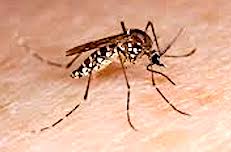
WESTPORT — Westporters should take precautions as a potentially dangerous virus is poised to spread locally.
And it’s not another variant of COVID-19.
West Nile virus has been detected in mosquitoes trapped in Westport, according to an announcement Wednesday from town Health Director Mark Cooper.
Data about the infected insects was provided by the Connecticut Agricultural Experiment Station. The agency also reports West Nile mosquitoes have been trapped in about 15 other state communities so far this year.
Cooper said that as of Wednesday no human cases of West Nile virus have been reported in Westport or elsewhere in the state.
Mosquitoes that tested positive for West Nile were Culex pipiens, Cooper said, These mosquitoes feed primarily on birds, but given the opportunity, will bite humans, he said.
“With plenty of time before the first frost that ends the mosquito season locally,” the health director said in his statement, “there is concern that the number of infected mosquitoes will continue to increase, increasing the potential for human exposure.
“With weather conditions favorable for mosquitoes and with the number of infected mosquitoes likely to be increasing, precautions should be exercised to avoid being bitten by a mosquito,” he added.
While Cooper said there is “no need to panic” about the West Nile findings, he suggested people take precautions to minimize the mosquito population as well as to protect themselves against insect bites.
Personal precautions include:
- Dusk and dawn, when mosquitoes are most active, are periods of greatest potential exposure.
- Wear shoes, socks, long pants, and long-sleeve shirts. Tightly woven clothing offers the most effective shield.
- Use mosquito netting when sleeping outdoors.
- Consider using CDC-recommended mosquito repellents containing DEET, picaridin, oil of lemon eucalyptus, IR3535 or 2-undecanone.
- When using DEET, use the lowest concentration effective for time spent outdoors. For example, six percent lasts approximately two hours and 20 percent for four hours. Wash treated skin when returning indoors. Do not apply under clothing, to wounds or irritated skin, the hands of children or to infants less than two months old.
To control mosquito population:
- Remove objects outdoors that can hold water and become breeding places.
- Clean house gutters that may retain water.
- Empty wading pools and bird baths every few days.
- Chlorinate swimming pools regularly.
- Make sure that covers for grills, boats, pools and other equipment do not collect water.
- Ensure door and window screens have no holes and fit snugly to avoid mosquito bites indoors.
For more information about West Nile virus, visit the Westport-Weston Health District website, wwhd.org, and the Connecticut Mosquito Management Program website, ct.gov/mosquito










Recent Comments