
By Dave Altimari / CTMirror.org
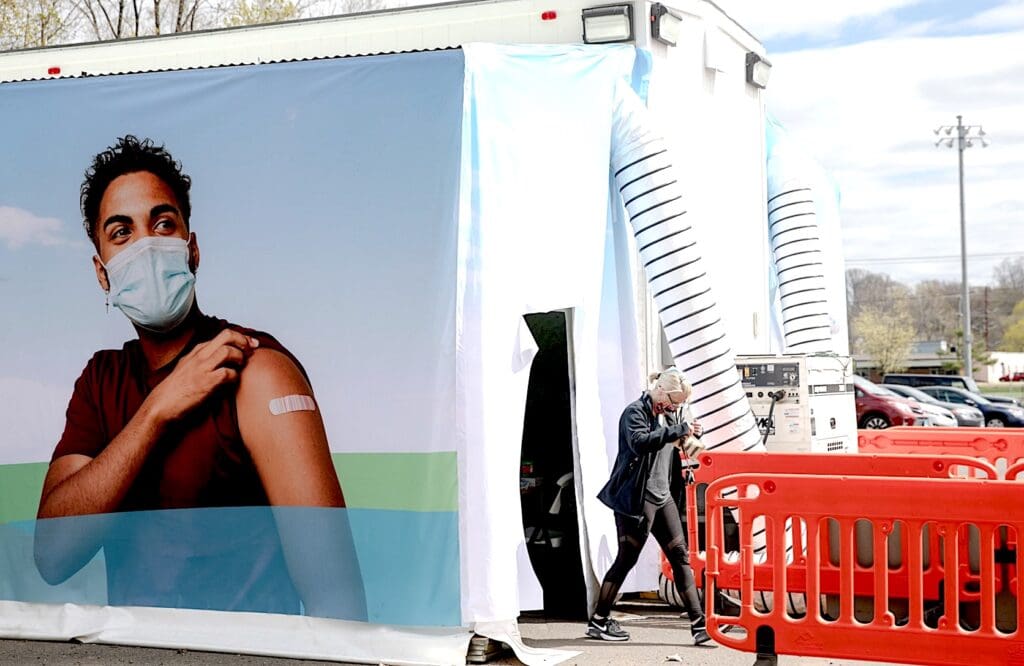
Hospitals and health districts across the state are gearing up to administer booster shots of COVID-19 vaccines after federal authorities announced Wednesday that booster shots for the broader population should begin in late September.
Latest data indicate the Pfizer and Moderna vaccines are losing efficacy as the Delta variant spreads, according to the federal Centers for Disease Control and Prevention.
Keith Grant, senior system director for infection prevention at Hartford HealthCare, said there has been an increase of breakthrough cases among the vaccinated elderly reported within that system. In Fairfield County, Hartford HealthCare includes St. Vincent’s Medical Center in Bridgeport and affiliated medical practices in Westport, Fairfield and Norwalk.
On Wednesday, Hartford HealthCare reported 67 COVID-19 patients overall — 24 were breakthrough cases, and 19 of those were in patients over 65 years old.
Dr. James Cardon, Hartford HealthCare’s chief clinical integration officer, said it has started giving booster shots to immunocompromised patients. Since the group was isolated for vaccinations during the first go-round, the hospital was able to contact those patients and schedule vaccines.
As with the initial vaccine rollout last December, first responders, hospital employees and long-term care residents will get their booster shots first, officials indicate.
Everyone else will be asked to schedule an appointment eight months after they got their second shot of either the Pfizer or Moderna vaccine.
People who got the one-shot Johnson & Johnson vaccine will be asked to wait until more data is available on whether they will need a booster. The J&J vaccine wasn’t administered until March.
Gov. Ned Lamont said earlier this week that state officials would have a formal plan for the booster shot rollout by next week.
Westport protocols follow national, state guidance
The Westport-Weston Health District plans to follow closely the latest health guidance from the CDC and state Department of Public Health, said Mark Cooper, the district’s director.
“We have vaccine and will be able to administer boosters when appropriate,” he said Thursday.
“Our initial focus will likely be the immune compromised and others that may be considered at higher risk for severe disease.”
Vaccine effectiveness drops over time
The decision to offer booster shots to everyone comes as the Delta variant continues to spread in many areas of the country.
CDC Director Rochelle Walensky said that recent studies have led health officials to conclude three things:
- Vaccine-induced protection against COVID-19 begins to fade over time.
- Vaccine effectiveness generally lessens against the Delta variant.
- Vaccine effectiveness against severe disease, hospitalization and death remains relatively high.
While health officials have maintained the variant has mostly infected the unvaccinated, particularly when it comes to hospitalizations and deaths, new data show the efficacy of the Pfizer and Moderna vaccines is waning.
From May 3 through July 25, New York examined COVID-19 tests and linked them to individuals’ vaccination status to study vaccine effectiveness over time.
Walensky said that for more than 10 million New Yorkers, the vaccine effectiveness during the early stages of the rollout was 92 percent, but months later, vaccine effectiveness declined to 80 percent.
The Mayo Clinic analyzed vaccine effectiveness for both the Pfizer and Moderna vaccines among over 80,000 vaccinated and unvaccinated individuals across all age groups with data through July 16 and saw that efficacy declined over time — more so with the Pfizer vaccine, where efficacy fell from 76 to 42 percent. For Moderna, efficacy fell from 86 to 76 percent.
The third study was from the CDC’s National Healthcare Safety Network, a nursing home cohort that analyzes more than 85,000 weekly reports from more than 14,900 facilities. The data show that vaccine effectiveness declined over time from 75 percent percent in March to 53 percent as recently as Aug. 1.
“This represents a substantial decline in vaccine effectiveness against infection among those who are most vulnerable, including during months when delta was the predominant circulating barrier,” Walensky said.
With additional reporting from the Westport Journal.






Vaccinated or Not, Acute COVID-19 in High-Risk Patients Demands Early Treatment –
Dr. Peter McCullough
https://www.americaoutloud.com/vaccinated-or-not-acute-covid-19-in-high-risk-patients-demands-early-treatment/