
By Thane Grauel
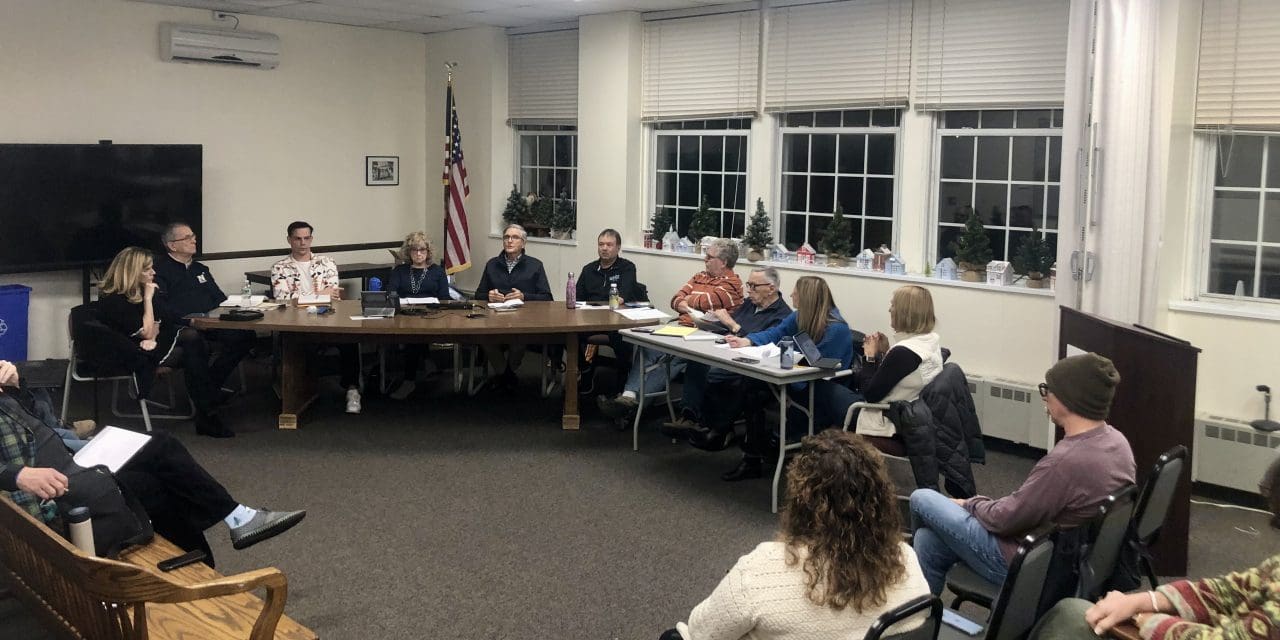
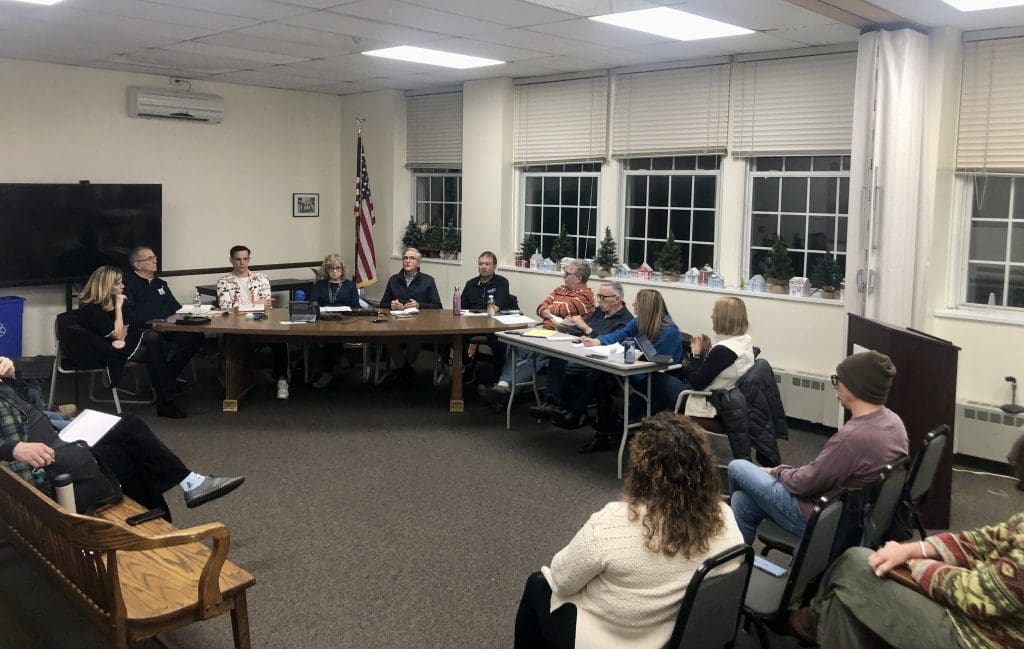
WESTPORT — The Rules Committee of the Representative Town Meeting met Wednesday to discuss ways to ensure the public can express concerns after the controversy that followed citizen petitions being denied a place on the legislative body’s agenda.
The chairman of the committee was Moderator Jeff Wieser, who faced criticism this year for denying petitions a place on the RTM’s agenda. The right to the petition the RTM, by 20 voters or two members of the RTM, has been in place more than seven decades since the General Assembly approved the town’s transition to a representative town meeting form of government.
Wieser has said, and repeated Wednesday, that the Town Attorney’s Office issued an opinion saying he could decide what does and does not make the RTM agenda — in the first case, a petition regarding the plans to overhaul Parker Harding Plaza.
“So, I didn’t act on the petition,” Wieser said. “Clearly, other people had objections to that, the petitioners and others, and so they then sent another petition asking that we recognize that we had to hear petitions of 20 or more electors and that went to the RTM.”
“The RTM, as we know, voted 83 percent that we did not have to do that … that the moderator could decline that petition.”
He pointed out that the RTM could have overturned his decision with a two-thirds vote but did not.
“We as a body have decided that we have discretion over petitions,” Wieser said. “And I don’t want this meeting to argue that point because that has been decided.”
Wieser might have wanted to avoid a rehash of that altogether, and speakers tried to tiptoe around the subject. But it was the elephant in the room.
There were suggestions about allowing 15 minutes of public input at every RTM session like the Board of Education does, but many saw problems with that, including how to limit speakers, and what subjects could be discussed.
Some RTM members said there are many ways the public can be heard these days through technology, on blogs, news websites, brown-bag lunches, email and the like. It was also pointed out that RTM committees generally allow much freer discussion than the full RTM.
Some from the public said, and RTM members agreed, that information can be difficult to find on the town’s website.
One speaker appeared uncomfortable with the recent developments.
“I think the idea of the coffee klatches, or meeting in the library or venting in some other form is nice, but I think the real reason … people come to the RTM is they’re looking for action on something,” Sam Levenson said.
‘As a member of the public and the electorate my concern is that everyone elected is here to represent the public. And to be denied the opportunity to be represented is really frightening.’
Sam levenson
“As a member of the public and the electorate my concern is that everyone elected is here to represent the public,” Levenson said. “And to be denied the opportunity to be represented is really frightening.”
Rules Committee member Matthew Mandell, District 1, came with a checks-and-balances proposal to ensure a moderator’s unilateral action to deny a petition could be reviewed.
Mandell is the only member of the RTM serving on the Rules Committee who voted against agreeing the moderator has the discretion to choose what is added to the agenda.
He suggested any denial by the moderator, deputy moderator or town clerk (the hierarchy spelled out by town charter for petitions) be reviewed by the Rules Committee.
The moderator and deputy moderator could participate in the discussion, but could not vote on whether the matter should be placed on the RTM agenda. Overruling a moderator’s denial would require a simple majority of those voting.
Mandell’s proposal had other caveats.
“This may be called into effect once every 10 or 15 years,” Mandell said, noting that in the first 17 of his 18 years on the RTM it wasn’t an issue.
“I think this is a pretty good solution,” Mandell said. “It’s basically an overturn of the one person saying no. It’s a check-and-balance.”
Jennifer Johnson, a member of the committee from District 9, wondered why not allow petitions, which meet the Town Charter requirement, and refer them to an appropriate committee.
“We know that this has never really happened,” she said of the reasoning behind denying recent petitions, that all kinds of topics RTM members don’t want to discuss would flood in.
“So why wouldn’t we allow an item to go forward on the full RTM, and at the meeting just say, ‘Thank you, we refer this to committee,’” Johnson said.
“Why don’t we just work with what the law says now, when we all swore to uphold and that one person can put it on, two people can put it on, or 20, and then it comes on and at that point the RTM votes, oh we want to this to go to committee, and encourage it to go committee before it grows into a problem.”
Several RTM members appeared supportive in general of Mandell’s proposal.
Louis Mall, a committee member from District 2, was not among them.
“First of all, there are four members of the public here, and none of them are the people who objected to how we handled the situation last time, so thank you for coming,” he said, adding that the critics were “rude and nasty” to the RTM.
Janine Scotti said there could be reasons they couldn’t attend.
“You think they’re cowards?” she asked.
“Yeah,” Mall replied.
“I don’t think that,” Scotti said.
“The malcontents aren’t here,” Mall said.
“This meeting was planned a couple months ago and only announced two days ago,” former RTM member Harris Falk said from the audience.
After much murmuring and people talking over each other, Mall continued.
“One of the things that I feel very strongly about in the RTM is that we have one person, one vote,” he said. “No committee is more important than any other committee so to take the requirement from a two-thirds vote of 24 members down to five members I think is the wrong direction to take.”
He said he did like the idea of referring an idea to a committee.
“When you’re saying one man one vote, at the moment, one person decides what gets on the agenda,” Mandell said.
No decisions were made by the Rules Committee. Wieser thanked the people who came and said the next meeting would be on Zoom because he wanted greater participation.
“I have to thank everybody for this really terrific meeting,” he said. “I just so appreciate everyone behaving and having a really terrific conversation.”
Thane Grauel grew up in Westport and has been a journalist in Fairfield County and beyond for 35 years. Reach him at editor@westportjournal.com. Learn more about us here.







These angry RTM cancel warriors really slay me. First they crouch behind a literally absurd, bespoke legal opinion, then they carjack our charter in broad daylight – and get away with it. But now they want their reputations back. Good luck with that.
The cowards and malcontents who treated the rtm so badly weren’t there. Lol.
First of all nobody treated anybody badly. We just wanted our rights upheld !
Not trashed by the rtm 29.
It’s rude to give 2 days notice for a meeting.
It’s the holidays. End of school term for some with children.
2 days notice is a joke. A joke and it’s rude.
Next I’m tired of groups using a lack of presence at meetings to assume a subject is not important.
By that very insinuation then when 100 people come to a meeting such as did over the petition to begin with then we can assume the subject to be very important. Lol. That assumption needs to go both ways, yet conveniently that is never the case.
Read on WJ Dr Jay Walshon brilliant piece. It’s about our right to petition. Oh and read comments.
Homework for the rtm 29.
Literal confirmation that the rtm 29 were 100% incorrect.
Oh and against the charter so, were someone to take this to a court of law, the petitioners right would win all day long.
It is high time for the rtm to have seperate council and not the town attorney.
Conflict of interest all day long.
The town attorneys opinion was absolutely WRONG !
The fact that 29 rtm’ers did not see that is unbelievable.
So, Lou Mall…. Wrong again, no cowards out here. Just residents calling BS.
Study carefully every word of DR Walshons piece.
The rtm 29 were wrong then and are still wrong.
The moderator was wrong then and is still wrong.
The town attorneys opinion was wrong and it’s still wrong.
This is flagrant abuse of power ! As per usual I might add.
And the contemptuous attitude of the likes of Lou Mall is unacceptable.
Wake up and stop denying the public their rights as stipulated in the charter.
And grow up. I for one am not a coward. And I will continue to stand up for my rights !
I can’t for the life of me understand why someone with a denied petition hasn’t sued the Moderator, RTM, and Town.
“The RTM, as we know, voted 83 percent that we did not have to do that … that the moderator could decline that petition.” The RTM can’t change the Town Charter just because the moderator is uncomfortable with it.
If people want to amend the Town Charter in order to raise the bar for bringing items to RTM, there is a process for Charter revision. It is in State Law. RTM can’t violate State Law at the Moderator’s behest, either.
Memo to Mr. Wieser:
Sadly Sir, I must seriously question your judgement. How is it that you were able to gushingly evaluate last nights RTM Rules Cmt, which you chaired, as “a really terrific meeting” when RTM member Lou Mall found it necessary to publicly deride as “rude and nasty”, “cowards” and “malcontents” myself and countless other town residents who, in recent months, have sought to preserve town electors legal right to petition the RTM?
How does his action last night – and yours for allowing it – square with the RTM’s own Conduct Guidelines and Behavior?
Indeed, perhaps you and the rest of the RTM Rules Committee would do well to complete a professional training session to refamiliarize yourselves with your own Rules of Conduct and Behavior?
John F. Suggs
A heartfelt thank you to RTM D9 member, Jen Johnson for suggesting that the RTM quit it and simply comply with our Charter. Doing the right thing is the only way out of the mess the RTM has created. As a sidebar, I trust that RTM Mall’s well known habit of attacking and disparaging others in public will be dealt with as appropriate.
I know the moderator and those who supported him in refusing to consider a petition to add an agenda Item to RTM’s recent proceedings acted in good faith and relied upon a legal opinion by the town’s attorneys. I believe that legal opinion and RTM’s actions depending on it are deeply flawed on public policy grounds and in violation of Westport’s Town Code.
Our Founders established a government that turned persons who were previously subjects of a ruling elite into citizens. A legitimate government derives its “just powers from the consent of the governed”. We should guard these rights, even in local government proceedings. That right to be heard by our elected representatives was enshrined in the Town Code provision that the “Moderator…shall place on the agenda of the Representative Town Meeting such matters as…20 electors of the Town may request by written notice….”
The Connecticut General Statutes state that “words and phrases shall be construed according to the commonly approved usage of the language”. Westport’s Planning and Zoning regulations built on this concept by stating “Words not specifically defined herein shall be used as defined in Webster’s New Collegiate Dictionary no more than 5 years old. The most recent Webster’s (1999) states the word shall when used in laws, regulations or directives is mandatory.
Finally, Section 1-2 of the general provisions governing the Westport Code of Ordinances states in part: “The term ‘shall’ is to be construed as being mandatory.”
Today marks the 250th anniversary of a group of Boston patriots engaging in civil disobedience against the King. We call it the Boston Tea Party.