
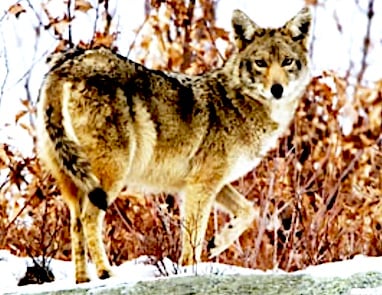
WESTPORT — A recent series of coyote attacks on dogs in town has prompted officials to warn pet owners to take precautions because of the threat.
None of the local attacks was fatal, police said in a Monday statement.
Coyotes, whose habitat has spread to populated areas throughout the Northeast, primarily prey on small, wild animals such as mice, squirrels, rabbits and sometimes small deer, according to the state Department of Energy and Environmental Protection.
But in search of food, sometimes attracted by garbage to prowl through developed areas, coyotes also are known to attack livestock, poultry and small dogs and cats.
Tips issued by police to help owners protect their pets include:
- Supervise pets while they are outdoors at all times of day, since coyotes are known to avoid conflicts with humans. Coyotes may be on the prowl day or night.
- If a pet owner comes into contact with a coyote, they should give it a wide berth, maintain eye contact and, lacking a whistle or horn, yell at the predator.
- Coyotes often can be scared off by loud noises, as generated by a high-decibel whistle or air-horn, or objects thrown in their direction.
- Pets smaller than 30 pounds are at greatest risk from coyote attacks, although the predators occasionally have gone after larger pets.
- Motion-activated lighting can help deter coyotes, while alerting homeowners to nighttime wildlife intruders.
- Owners accompanying pets at night should carry a powerful flashlight to be aware of possible predators.
- Fenced enclosures can help prevent wildlife intruders, but smaller animals like coyotes are often able to slip under fencing designed to exclude deer.
For questions or more information, call Westport Animal Control at 203-341-6011.







Recent Comments