
By Ken Valenti
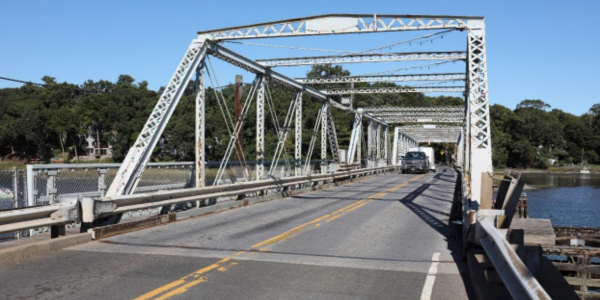
WESTPORT–Discussion of the William F. Cribari Bridge project is ramping up as the Connecticut Department of Transportation (DOT) asks for public input and three Representative Town Meeting (RTM) districts plan a community discussion.
CTDOT called for comments on the plans to address the Saugatuck River span’s “deficiencies” when it posted the draft environmental assessment of the project yesterday. The agency posted this form seeking comments on a range of topics, from traffic, bridge design and impact on quality of life to airport connectivity – or anything else people want to discuss.
The 60-day public comment period will close April 17. CTDOT will also gather feedback in person on the project at a public hearing at 6 p.m. March 19 in Westport Town Hall, 110 Myrtle Ave., Westport.
Before that hearing, however, RTM Districts 1, 4 and 9 – those closest to the span – have set up a virtual session for 7 p.m. Feb. 24. The public is invited to attend and participate at this Zoom link.
Residents have complained that the state has not engaged the public sufficiently in the discussions of the historic steel truss bridge that carries Bridge Street (Connecticut Route 136) over the river. RTM District 1 member Matthew Mandell spearheaded the districts’ meeting for the community to strengthen its position in discussions with the DOT – similar to when a town Project Advisory Committee worked with the state on the matter.
“This meeting essentially gives the community the opportunity to talk about…what we would like to happen with the bridge,” he said. “We need to engage with (the DOT) in a collaborative effort to find a solution that works for the residents, the town and the state.”
The 142-year-old span, also known as the Saugatuck River Swing Bridge, is listed on the National Register of Historic Places. More than a decade ago, the DOT flagged the structure as “severely deficient.” The agency estimated that replacing it would cost between $78 million and $80 million.
“The Saugatuck River Swing Bridge is an important part of Westport’s history and Connecticut’s transportation network,” said DOT Deputy Commissioner Laoise King. “As we plan for its future, we are committed to a transparent process that values public input, meets the current and future needs of travelers, and preserves the character of this historic landmark.”
Yesterday, the agency also asked for letters of interest from anyone interested in buying the existing bridge, in case the state “in coordination with the community,” chooses to replace the span completely.
Last week, a CTDOT spokesman stressed that the agency has not made a decision whether to rehabilitate or replace the bridge. His comments came days after the agency issued the Request for Letters-of-Interest seeking an engineering firm that can address the bridge’s “structural and functional deficiencies” and to “provide a structure that accommodates safe vehicular, bicycle, pedestrian, and Marine travel.”
Interested firms must respond by March 5.

Ken Valenti
A career journalist and lifelong resident of the New York City region, Ken Valenti has enjoyed decades of reporting local, regional and national news in New York and Connecticut. Topics of special interest are development, the environment, Long Island Sound and transportation. When not reporting, he’s always on the lookout for the perfect coffee shop or used book sale.






A key gap in the Cribari Bridge Environmental Assessment deserves public attention: truck traffic.
The Environmental Review emphasizes the operational limitations of the existing bridge — including the need for overweight trucks to back up — framing those constraints primarily as problems to be solved. What it does not clearly evaluate is how removing those limits could change the character of traffic in the surrounding area.
Today’s bridge restricts heavy vehicles, which helps shield the adjacent historic district and feeder roads from through-truck impacts. A replacement that allows unrestricted vehicles could fundamentally change that dynamic. Yet the environmental analysis from the Connecticut Department of Transportation appears to give limited attention to the long-term effects of introducing heavier trucks into a National Register historic district.
Truck traffic affects more than congestion — it influences noise, vibration, pedestrian safety, emissions, and neighborhood character. These are long-lasting changes that deserve transparent public discussion.
If you’re following this issue, consider adding comments, attending the March 19 hearing and asking how truck impacts are being analyzed.