
By Gretchen Webster
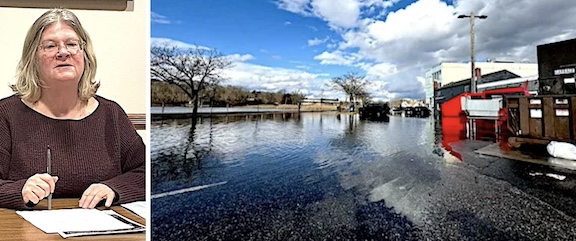
WESTPORT — Weather over the past two weeks — which caused extensive flooding, as well as frigid, stormy conditions — can only support concerns about the impact of climate change and rising sea levels along coastal Connecticut.
One Westport official has decided to dedicate this year to highlighting the effects of climate change on the town and what can be done about it.
“Climate change is a given, I’m not going to consider that it’s not,” Peter Gold, chairman of the Representative Town Meeting’s Long Range Planning Committee, told the panel at its first meeting of the new year Jan. 11.
Each month, the committee plans to study one climate-change issue, and prepare a report at the end of the year for potential steps the town can take to help stave off locally related problems, said Gold, a District 5 member of the legislative body.
Since the RTM’s Long Range Planning Committee does not directly oversee any town department or budget, “We can look at a problem from a broader perspective,” Gold said. When it comes to the impact of climate change locally, “no one is looking at it from a long-range perspective.”
One of the biggest problems already confronting Westport, which will worsen because of climate change is flooding, Alicia Mozian, the town’s former conservation director, told the committee.
“Westport is a very wet town,” she said.
Mozian laid out her views on what can and needs to be done about climate change in Westport as the first expert invited to speak to the committee for its year-long study.
The town has been working to help mitigate flooding since the early 1990s, Mozian said, and she is proud of Westport’s membership in the Community Rating System, a national program offering discounts on flood insurance to residents in municipalities that meet minimum requirements for flood prevention.
She also said that Westport was the first town in Connecticut to adopt a hazard-mitigation program. But more flood-protection steps need to be taken to help prevent other negative impacts of climate change, she said.
Among actions that should be studied, Mozian said, are tax incentives for flood mitigation on individual properties and requiring developers to set aside open space as flood-storage areas.
She outlined eight steps she believes Westport should seriously consider to combat negative environmental changes from climate change:
1. Start with review of the town’s hazard mitigation plan and the Community Rating System. Identify applicable activities and start actively pursuing and achieving them. Enlist the help and direction of the Planning and Zoning Department’s deputy director, who oversees the Flood and Erosion Control Board. The town may need to form a CRS committee to be more vigorous in pursuing goals.
2. Meet with the town engineer and staff of the Flood and Erosion Control Board to review drainage-improvement plans for each watershed, and employ new 25-year flood predictions for sizing drainage structures for new development applications. Amend the role of the Flood and Erosion Control Board to be more involved in flood management and preparedness.
3. Revisit the 2000 Land Acquisition Committee report and the town’s 1997 plan of suggested properties for acquisition. Buy vacant land particularly vulnerable to flooding so it can be used for flood storage during large storms.
4. Review the 2017 town plan’s recommendations in the natural resources section. Many goals and objectives identified in that document pertain to climate change. Start implementing them. The town may need to resurrect the Town Plan Implementation Committee.
5. Engage citizen input. Educate citizens with the inundation maps done by FEMA. Start messaging via Facebook and town webpages, and include real estate agents in the education process. Promote the benefits of wetlands and other open space that help with flood storage. Encourage state lawmakers to enable town adoption of a conveyance tax to be used to purchase open spaces.
6. Engage all applicable land-use commissions and the Parks and Recreation Department to work together on applications that need to be viewed through the lens of climate change and sea level rise. For example:
- Land coverage requirements.
- Landscaping requirements.
- Tree clearing and replanting.
7. Although it will be very difficult to impose limits on house sizes, the town could employ:
- Tax incentives to renovate existing buildings.
- Requirements for energy efficiency.
- Reuse of applicable materials that would otherwise end up in trash bins.
8. Seek assistance from area colleges and grants from the Connecticut Coastal Resiliency Center to study issues related to climate change. College groups might perform shoreline surveys to chart trends in coastal erosion and help with measures to rebuild beaches.
During the meeting, committee members took on roles to start working on the climate-change project.
Future speakers at the group’s monthly meetings will include town staff involved in areas related to climate change, as well as outside experts.
Freelance writer Gretchen Webster, a Fairfield County journalist for many years, was editor of the Fairfield Minuteman and has taught journalism at New York and Southern Connecticut State universities.






Recent Comments