
By Jarret Liotta
WESTPORT — Whether or not it’s even going to be possible, members of the Representative Town Meeting’s Long-Range Planning Committee are going to attempt to steer more of Westport’s ARPA spending toward social and human services, among other preferred areas.
With $8.4 million in American Rescue Plan Act federal funds coming to town in two $4.2-million installments over the next several years, town officials have had debates over how that pandemic relief-related money should be spent.
Almost $2.5 million has already been approved by the RTM for various items, including $1.3 million allotted for the reconstruction of the water breaker at Burying Hill Beach, a $250,000 reimbursement to the town’s General Fund for COVID-19-related expenses, $250,000 spread among various art-related nonprofits, and $150,000 each for bus shelters and for an affordable housing project feasibility study at West Parish Road.
Funding Planned Projects
First Selectwoman Jennifer Tooker said recently that the overriding plan has always been to use the money for existing capital projects that were planned and ready to go — items the town intended to fund down the road anyway, possibly through bonds.
However, while the town has great leeway in what it chooses to fund within the federal guidelines, some RTM members have expressed consternation that the spirit of the funding — coupled with it being veritable cash in hand for the town — demands choices more in line with pandemic-related needs and challenges.
“The intent behind it was to use it as a response to the pandemic and the people who were hurting,” said Stephen Shackelford (RTM-8), who wants to see some of the items that are currently planned for funding with the remaining $1.7 million in the 1st “tranche” or installment of the ARPA funding, changed.
“An Uphill Battle”
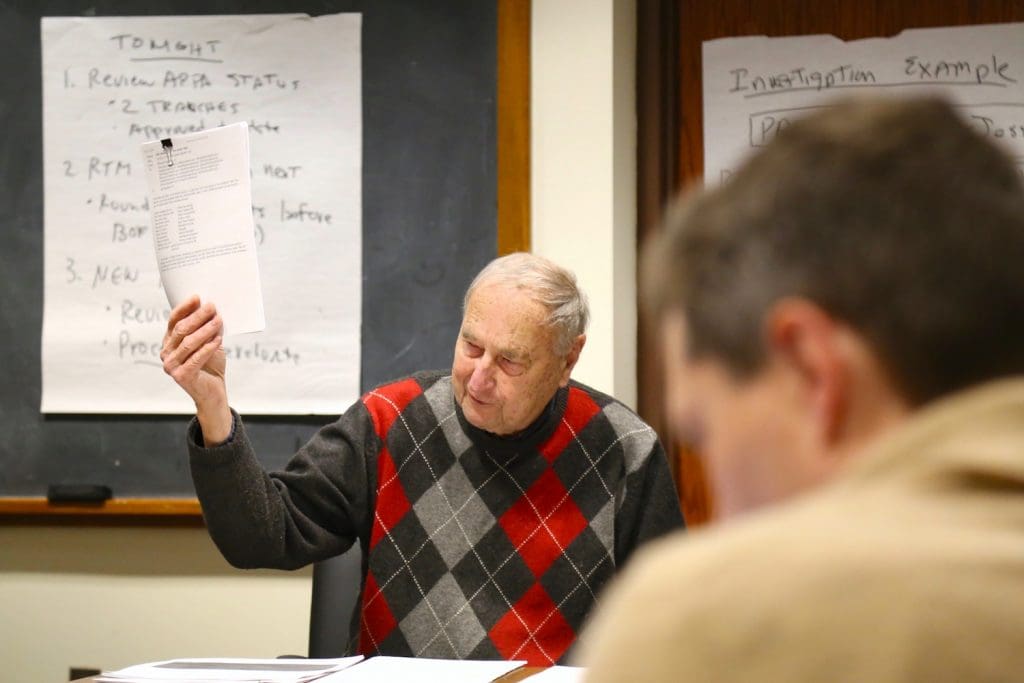
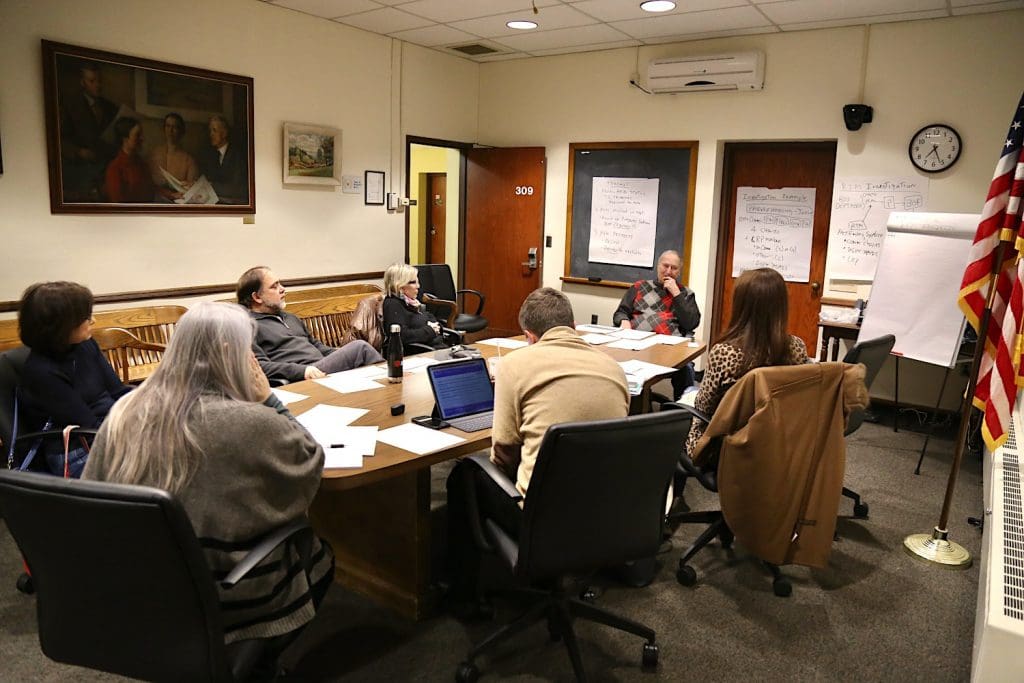
LRP Committee Chair Jack Klinge (RTM-7) told his committee Monday night, however, that it will be an uphill battle and it may be more practical for members to try and influence how the 2nd “tranche” of $4.2 million is allocated.
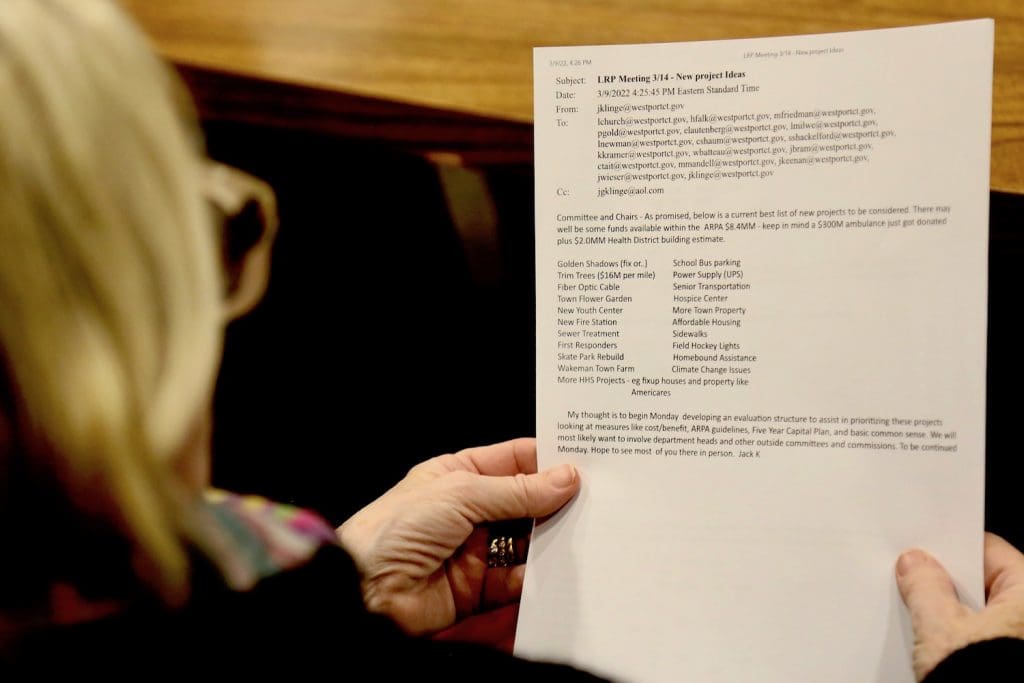
What some committee members see as debatable items on the current list of 2nd “tranche” projects include $900,000 for regional broadband infrastructure, a riverside boardwalk extension costing $350,000, and $200,000 for wayfinding for downtown parking.
“I really do think that we can improve on this list,” Klinge said, but cautioned it would be a delicate process swaying Tooker and the Board of Selectwomen, which has the sole authority to officially bring the items before the Board of Finance for consideration.
“It’s appropriate for us to say, ‘Hey, we think four or five of these merit discussion … We can make a case if we believe in it,” he said.
A sense of the meeting confirmed that committee members were interested in trying, citing needs through the Department of Human Services and student-related initiatives at Wakeman Town Farm, among other items, that are not on the list.
“Be a Little Louder”
“Maybe we need to be a little louder,” said Liz Milwe (RTM-1).
While she and others acknowledged that the items currently under consideration all have merit, they see a need to speak to the spirit of these appropriations, as well as whether some wouldn’t be better off bonded instead.
Klinge also raised a question about whether they and other relevant RTM committees shouldn’t be brought into the process of considering any and all items much earlier, prior to their being presented to the BOF.
“Jen is not cheering about this approach,” he said, but noted the RTM has limited investigatory powers that could help get questions answered in advance of BOF and RTM approvals, providing members are brought into the loop earlier, potentially through informal discussions with department heads and related field trips.
Klinge, a long-standing member of the RTM, called it “early intervention” and said RTM Moderator Jeff Wieser supported the idea.
“My thought is we want to get involved before they tell us what it’s going to be,” he said.
Seeking Sufficient Background
Claudia Shaum (RTM-5) concurred that members did not have sufficient background on some of the items they were asked to vote on as a full RTM.
“We’re not asking anybody to do more work … We’re just asking to be let in,” she said.
“It’s going to facilitate the things actually being approved,” she said of early RTM involvement.
Klinge said the next step will be to “get some sense from Jeff Wieser and Jen Tooker that we’re not chasing our tail.”
He said members of the Board of Selectwomen or department heads could potentially get defensive about the RTM’s desire to be more involved, but also noted he didn’t care if they did.
“We’re an independent body,” he said. “We don’t work for the (BOS).”
To view the list of projects funded and under current consideration, as well as the most current details about the process of allocating the ARPA funds, visit the town website at this link.






Recent Comments