
By John Schwing
WESTPORT — Complaints about noise in Westport are growing louder.
“All we had to do was put the word noise on our agenda” to prompt an unexpected level of public interest, Ellen Lautenberg, chair of the Representative Town Meeting’s Environment Committee, acknowledged at last week’s meeting of the panel.
The committee’s preliminary discussion set the table for considering a comprehensive noise ordinance in the future, since the regulation now on the books addresses only construction-generated noise.
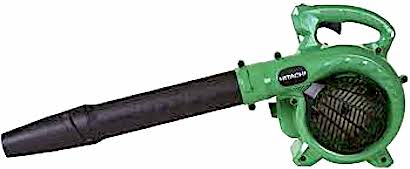
Most noise complaints these days, however, concern landscaping-generated noise — primarily, the cacophonous roar from gas-powered leaf blowers used by landscaping crews — even though the town has an ordinance designed to curb use of those devices.
The ordinance, which took full effect in May, explicitly prohibits any use of gas-powered leaf blowers between May 15 and Oct. 15, as well as on state and federal holidays. Adopted in January 2023 after lengthy debate and various compromises, the ordinance has no actual enforcement authority — other than an “educational” letter sent by conservation officials to offenders — and no penalties.
That, in effect, has rendered the ordinance largely unenforceable, several RTM members acknowledged, judging by the volume of complaints received about continued use of the gas-powered equipment in spite of the official ban.
Several members also pointed out that landscapers insist that electric-powered leaf blowers — which are not banned — lack the power and battery longevity to meet the demands of their jobs.
Committee member Matthew Mandell, District 1, said he has heard that electric-powered devices “just don’t cut it” for many landscapers because the equipment’s battery packs drain quickly. “I’m just not doing it [complying with the ban] … you’re not going to enforce it anyway and I’m not going to step forward and do it,” appears to characterize how many landscapers feel about the ordinance, he said.
Mandell said the committee should proceed with caution in fashioning a broad-based noise ordinance to avoid the “neighbor vs. neighbor” disputes that already appear to have sprung up around the leaf blower ordinance.
Instead, he suggested the initial focus should be on enforcing the rules already in place to control noise generated by construction, which is prohibited between 8 p.m. and 7 a.m. weekdays, and between 8 p.m. and 9 a.m. weekends and legal holidays.
Planning a potential noise ordinance would have to “be careful about the enforceability issues,” agreed Claudia Shaum, District 5, adding that such rules can be “an invitation for neighbors to be mean to neighbors.” Shaum said that she had no specific solution how to address that thorny issue, but cautioned, “it’s something we need to think about.”
Shaum posed another issue for the committee to consider: Should a noise ordinance be punitive or encouraging? She suggested the panel may want “to craft something that rewards good behavior rather than punishing behavior that the RTM … deems to be not OK.”
Lautenberg noted that many people appear to have misconstrued the primary intent of the leaf blower ordinance. Those regulations, she said, were developed from an environmental-impact standpoint and not mainly to control noise.
Mandell agreed with that assessment, but said many people considered the leaf blower ordinance a way to address “a noise issue, and they’re completely unsatisfied with the unenforceability of it,” as reflected in the many emails received by the committee.
“We’ve seen a lot of various reactions to the leaf blower ordinance, to its enforcement, or lack thereof, and we’re learning a lot in the process,” Lautenberg said.
The leaf blower ordinance “will be revisited in the fall,” she said, in consultation with Conservation Director Colin Kelly, to review its impact after the first full season. Judging how effective the implementation and enforcement of the leaf blower rules have been, she added, will be “a big piece” of planning a noise ordinance.
Additional ideas could come from noise-control ordinances on the books in other communities, Lautenberg said.
Wendy Batteau, District 8, said a potential noise ordinance needs to be “holistic” and not focused only on leaf blowers and other landscaping-generated sounds. In her neighborhood, she said, the primary source of loud noise is thumping music played at outdoor parties.
Others agreed that an ordinance would need to address multiple sources of noise, such as construction, music, sporting events and vehicles, in addition to landscaping. On the other hand, they said, it also should include exemptions, such as for Levitt Pavilion performances and community events on town properties.
All the issues involved in writing a noise-control ordinance, Batteau said, should be considered with care, advocating an approach she likened to using a “scalpel rather than with a leaf blower.”
John Schwing, the Westport Journal consulting editor, has held senior editorial and writing posts at southwestern Connecticut media outlets for four decades. Learn more about us here.





RTMers: it’s wonderful that you are looking at this issue. Luckily, there’s probably no need to reinvent the wheel. Many of our peer towns – such as Fairfield
– have had reasonable and actionable noise ordinances for years. Most seem to share a similar template. At times, the intrusive noise in downtown is problematic for residents – especially from a basic, quality of life standpoint. I feel that a noise ordinance – one with clearly defined terms – would be helpful.
The rail road parking lot crew are still using leaf blowers. Parking lot is the responsibility of the police department. The unintended consequence of not thinking through enforcement. I have no doubt there are higher priorities for our law enforcement officers. I guess the law is the law, except when it isn’t.
Why would our commercial landscapers respect an ordinance that the town’s Parks & Rec. Department refuses to comply with? This ordinance was created by a group of town dilettantes who failed to consider the realities of a landscaping business and the workload of the police department who would be required to check the “documentation” of the offending workers who use the leaf blowers.
When the town exempts themselves from the very crux of the issue, how on gods green earth will anyone else follow this. Nor by the way should they.
How can a town asking landscapers to follow this rule make an exception for itself.
It’s unconscionable.
If it’s a ban on gas leaf blowers, then it’s for everyone… including the town properties. No they do not get an exception.
I’ve no idea why we are even still fighting about this.
Lead by example.