
By Gretchen Webster
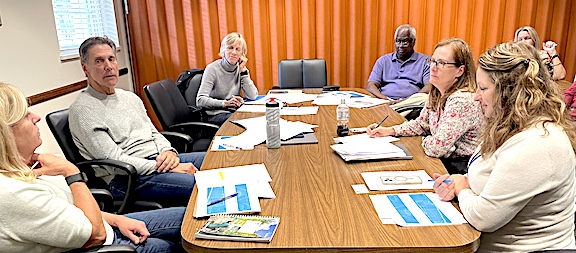
WESTPORT — Members of the town’s Affordable Housing Committee, appointed in September, met officially for the first time Monday for an organizational session that included guidance on their role in helping the town provide a more diverse, affordable inventory of housing.
The five-person committee’s primary responsibility is to oversee the town’s Affordable Housing Trust Fund, and make recommendations on its use.
The fund now totals $659,784, Michelle Perillie, the town’s planning and zoning director, told the group. The fund, which can be spent only on affordable housing initiatives, was established in February and is bankrolled by “inclusionary zoning fees” set at $5 for every $1,000 on construction project costs.
Donations can also be made to the fund, Perillie said. In fact, the first money deposited in the fund was a $10,000 anonymous donation.
There are several ways the town can use the money in the trust fund, including buying land, paying development or construction costs for affordable housing, and buying down the cost of units to make them more affordable for purchase or rent.
But allowable uses for money gathered from the inclusionary fees are more limited than for donated money, Assistant Town Attorney Eileen Lavigne Flug explained.
The inclusionary zoning fees can be used “only for construction, rehabilitation or repairing units for families with low or moderate incomes,” she said. Therefore, zoning fees channeled to the fund should be kept separate from donations, she said.
Westport has been adding more inclusionary zoning regulations to help promote development of affordable housing in Westport, according to Perillie.
Planning and Zoning Commission members “over the course of decades have adopted 30 zoning regulations” to help make affordable housing more accessible, she said. They include regulations for converting office or other non-residential buildings into multi-family dwellings, allowing two-family or multi-family housing in designated districts and approving units for residents with special needs.
Other more recent inclusive zoning initiatives include a regulation that would permit “Cottage Cluster” communities of small cottage-style dwellings, and rules to allow accessory dwelling units on the properties of single-family homes.
There are currently 397 units of housing in Westport that comply with affordable criteria set by the state, Perillie reported, which represent 3.77 percent of Westport’s total number of housing units. And there are 79 additional affordable units approved and now under construction, she said.
Perillie also reviewed the state-mandated Affordable Housing Plan adopted by the town in 2022. Goals of the plan include:
- Working with the state Department of Housing on affordable housing for families.
- Using $1.7 million in the town’s Real Property Fund to buy land for future development of affordable housing.
- “Buying down” market rate units in Westport.
- Allowing greater density of smaller units in residential districts with a historic component.
Committee member Jim Foster said he was eager to gather more information about affordable housing in the area, and the committee discussed touring existing affordable housing in Westport as well meeting with housing and zoning officials in other towns.
Matthew Mandell, a Representative Town Meeting member who co-sponsored the Affordable Housing Trust Fund ordinance with Seth Braunstein, said that some other area towns have had affordable housing funds in place for several years. They include Darien, New Canaan and Fairfield, with the latter town’s trust fund serving as a model for Westport, he said.
And as far as town zoning regulations to encourage affordable housing, “We have the strongest inclusionary regulations in the state,” Mandell said of Westport.
At Monday’s meeting, Flug also instructed the committee on Freedom of Information regulations and Foster, a former vice chairman of the Board of Finance, was elected unanimously as chairman of the new commottee.
Other committee members are: Gail Kelly, a former assistant town attorney; Kate Weber and Ralph Yearwood, both board members of the nonprofit Homes with Hope dedicated to ending homelessness, and Jon Olefson, a former member of the Planning and Zoning Commission, who did not attend Monday’s meeting.
Freelance writer Gretchen Webster, a Fairfield County journalist for many years, was editor of the Fairfield Minuteman and has taught journalism at New York and Southern Connecticut State universities.







Recent Comments