
By Gretchen Webster
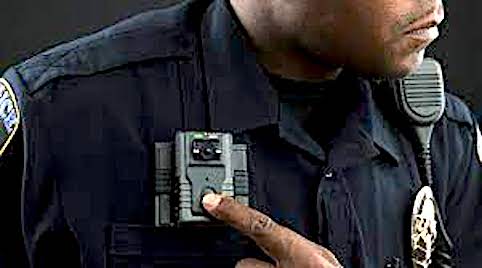
WESTPORT — Violent incidents that recently injured at least two officers — sending one to the hospital — highlight the need for additional body cameras for local officers, patrol car dash cameras and new surveillance cameras in police headquarters, Police Chief Foti Koskinas told the Board of Finance on Wednesday night.
Koskinas requested an appropriation of $843,844, approximately 30 percent of which would be reimbursed by a state grant. The appropriation was approved unanimously by the finance board and now must be approved by the Representative Town Meeting.
“In the last 30 days we’ve had two incidents where officers have been assaulted … by people out of control,” the chief said.
One officer required surgery, another had a back injury and another suffered lacerations, he said. “It’s stressful enough to be involved in an incident like that.”
Chief: Cameras help ensure accountability
Koskinas said, “Body cameras show proof of how much force was used, the officers’ actions … I can’t emphasize enough the importance of this equipment,” which helps to ensure accountability for everyone involved, he said.
The state Police Accountability Act, passed last year, makes several changes to policing, including new restrictions on police searches, a requirement for officers to intervene in cases where they witness use of excessive force by another officer, and changes in immunity police had in the past to lawsuits filed against them.
Purchase of the camera equipment can help make sure there is police accountability in Westport, the chief said. “The Westport police already meet and exceed those accountability expectations,” he added.
New body, patrol car cams will not need to be turned on
The Police Department will purchase the body and car cameras under a five-year contract with WatchGuard Motorola, and unlike older equipment currently in use, the cameras will not require the officer to switch them on.
“They would always be on,” the chief said.
Some helmet cameras also will be purchased to be used by officers on the emergency response team. In serious emergencies, officers work in “SWAT” teams made up of officers from six other area communities, he said.
In cases where officers may be heavily armed and working in close quarters, a body cam would be able to record visuals only of the back of an adjacent officer, so helmet cameras are required to take more inclusive views, the chief said.

Surveillance cameras inside police headquarters are also part of the new technology package, he said, since the 20-year-old cameras there now are not adequate to accurately record incidents inside the station.
Finance Board Chairwoman Sheri Gordon asked if camera videos viewed by others after an incident will be exactly the same footage recorded by the camera in question.
Koskinas said that since the new cameras do not have a 30-second activation period before they record or need to be switched on, with the new cameras an incident will be completely recorded from the start. The videos will be useful not only for officers, but also for prosecutors, victims and any others involved in police incidents, he said.
IT employee suggested for PD
The chief told the board that in addition to the equipment purchase, he believes that a police IT person to maintain increasingly complicated technology is needed.
However, board member Brian Stern, disagreed. “I’m not in favor of a town department having a dedicated IT person,” he said.
Stern said he believes that an employee already on the Police Department payroll could be trained to operate and maintain the equipment.
Stern was in favor of the appropriation to buy equipment, however. “The criminal justice system without cameras is not a criminal justice system,” he said.
Fast-changing technology prompts shorter contract
Finance board members James Foster and Michael Keller asked the chief how much confidence he has in the vendor selected to sell the town the cameras.
Koskinas said the Police Department already has been using the same vendor — Motorola — for the Police and Fire departments’ radio system, and the bid for the cameras was low because the town is purchasing both cameras and the radio system from the same vendor.
All of the new equipment will be subject to testing and a trial period, he said. Although many towns have entered into 10-year contracts for similar equipment, his department has chosen a five-year contract instead.
“Technology changes so fast,” Koskinas said.












Recent Comments