
By Gretchen Webster
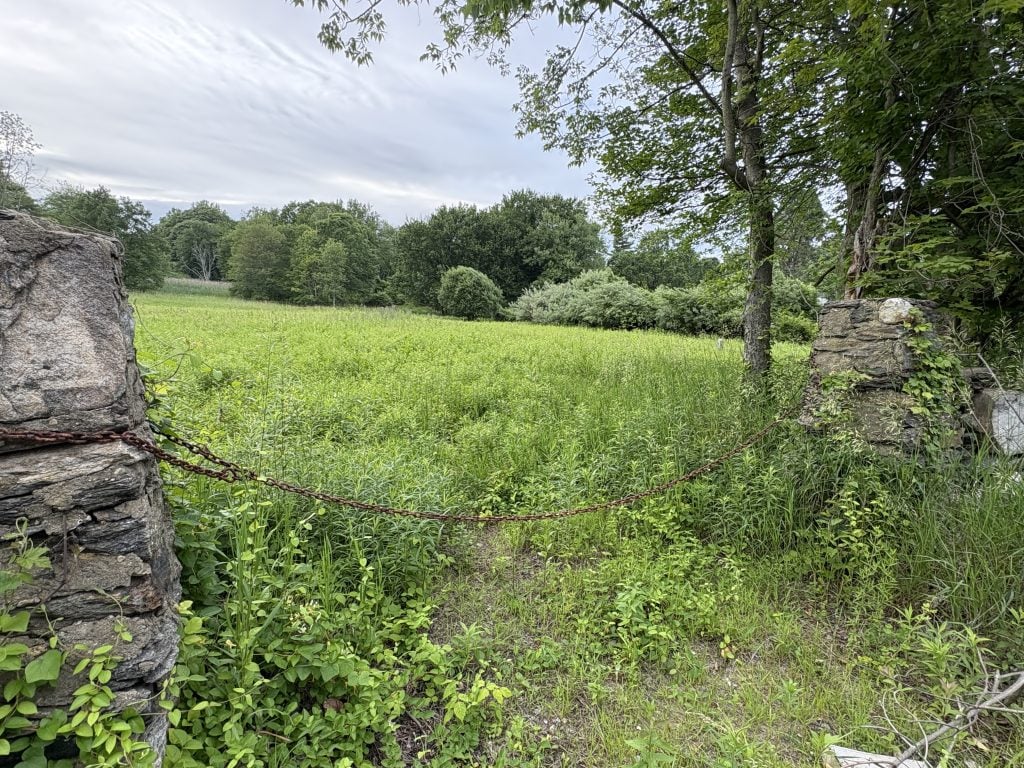
WESTPORT – A plan to build a new emergency facility for Westport’s police, fire and emergency medical services on Greens Farms Road may run into a snag because the proposed site is a state archeological preserve and may be full of historical artifacts, according to Catherine Labadia, an archeologist for the State Historic Preservation Office.
An archeological survey, including digging on parts of the property, will likely be required, she said.
“There is a kind of criminal penalty if somebody should harm the archeological site without some prior consultation,” she told the Westport Historic District Commission (HDC) at a commission meeting June 10.
If the facility can’t be built on the town-owned property it would not only delay the plan for centralized emergency services, it could also throw a wrench into plans to add more parking downtown. Moving the police station from its current site was expected to make room for additional parking space in the Jesup Green area.
But the plan for building the emergency services facility is only in the very early stages, and much more information must be gathered before decisions are made, Fire Chief Nick Marsan said on Tuesday.
“It is our intent to honor the area that has archeological significance,” he said. “It is definitely important to get all of this right – to handle this with the respect and consideration.”
Site is part of Westport’s history
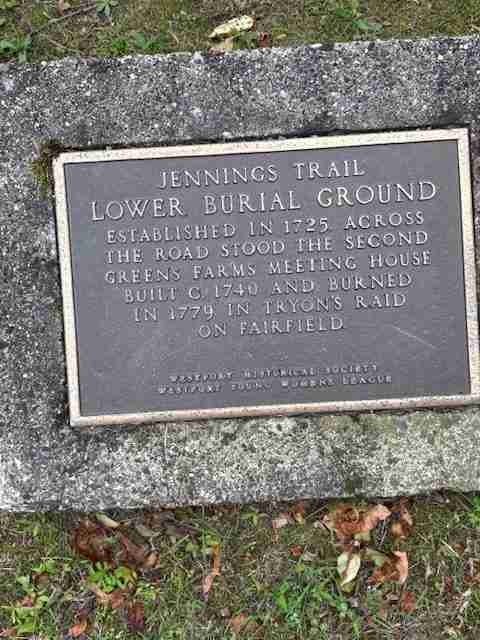
The six-acre Greens Farms Road property, north of Greens Farms Road and east of the Sherwood Island Connector, was the site of one of the first meeting houses built in the town of Fairfield, when Westport was still part of Fairfield, according to the town website. The meeting house, called the West Parish Meeting House, was built in in 1737 and was used both to house the town’s government and as a church. It was burned down in 1779 by British General William Tryon’s troops during the Revolutionary War. Westport became incorporated as a separate town later, in 1835.
“That meeting house is really the beginning of Westport,” Grayson Braun, chairman of the HDC, said after the meeting.
The historic property, also the site of an early schoolhouse, is protected in two ways, she said. Not only is it an archeological preserve which comes under the purview of the state, it is also listed as a local historic property under the jurisdiction of the Westport HDC. “It is double designated,” Braun said.
One-third of the property was surveyed by archeologists several years ago, according to Labadia, “using ground penetrating radar, like a giant x-ray,” and some trenches were dug.
“It did in fact show that there are things there … we do know there are artifacts there – we just don’t know if there are artifacts sprinkled in the entire six-acre site,” the archeologist said. “It’s an area of archeological sensitivity.”
The entire property is considered an archeological preserve, but the sensitive area containing artifacts could be much smaller, Marsan said. “What we want to do is just find out where that area might be,” he said.
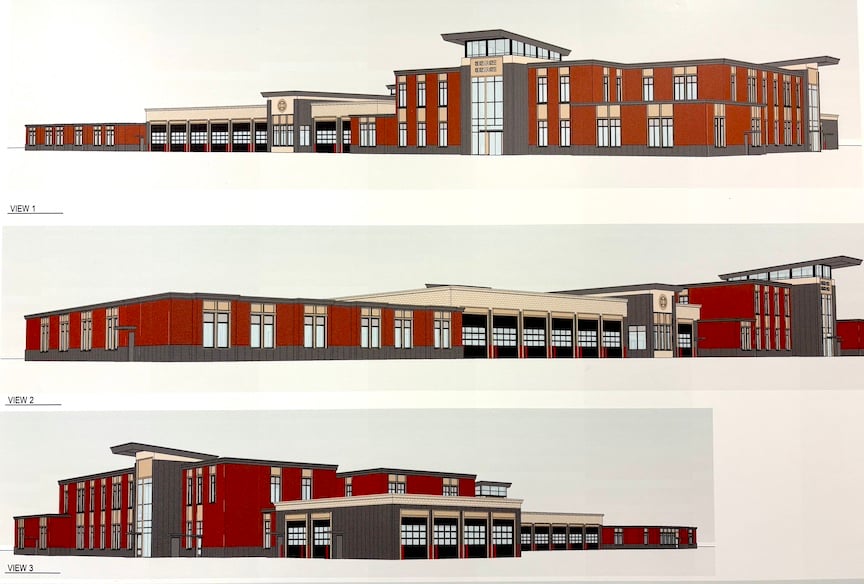
The estimated $92 million project is currently in the conceptual phase, and would house offices and dispatch facilities for the town’s fire, police and EMS headquarters.
Some proponents of the public safety complex say there is another possible benefit from relocating Police Department headquarters from its current downtown location on Jesup Road. That could free up space for additional parking, a chronic issue in the town’s core commercial district.
The new complex would be designed with enhanced ventilation, designated decontamination areas and clear separation of living and workspaces to mitigate the health risks associated with repeated exposure to harmful contaminants from the firefighters’ clothing and equipment.
Additionally, Westport currently lacks a dedicated fire training facility. The new complex would include a training tower, improving readiness and efficiency while reducing the need to rely on outside locations.
Plans on hold until survey can be completed
With the property under consideration as a future site for the emergency services facility, and the scope of the archeological portion of it unclear, it is extremely important that a full archeological survey of the preserve be conducted, Labadia said. That would involve digging trenches at intervals, hand excavation with shovels, soil screening, and ultimately processing artifacts that are found.
The boundaries of the site must also be laid out, and the complete history of the land, its ownership and past uses should also be recorded. The entire process would take about four months to complete, she told the HDC.
Her office does several hundred archeological reviews a year, Labadia said, and about 50% of the time they find artifacts. Sometimes the artifacts are so common that they are not that important for gathering information about the site. They also may not be in good enough condition to show a particular function or time period of the site, she said.
Sometimes it is necessary to open a bigger section of the dig to carbon date objects or to gather more information in other ways. “What people were eating, fences … they all tell something,” she said.
“It is important to have in mind what the goals are,” she added. If the town is intent on developing the property, flexibility in the design for the use of the property, such as moving the proposed building site to a different spot on the property, for example, or changing the location of a parking lot might be considered if artifacts are found on only part of the property. “It’s balancing the needs of development versus the needs of preservation.”
The HDC budget does not have enough funds for an extensive archeological survey, Braun said, and would have to ask for funding from the town or the state. The town would need to pay for the historical research before moving forward with the emergency facility project, Marsden agreed.
“If we decide to continue with this, we would have to ask the town [for funding] to get this done. None of these decisions have been made,” he said.
“We’ve never really had anything like this here,” Braun said. “I definitely think that whatever archaeologically winds up happening at that site is going to be crazy interesting. How often are there archeological digs in your town?”
Freelance writer Gretchen Webster, a Fairfield County journalist for many years, was editor of the Fairfield Minuteman and has taught journalism at New York University and Southern Connecticut State University.








What a gorgeous photo. So sad we have to pave over everything in sight.
I observed this work session where the public was barred from participating. The political appointees on the HDC must be under a lot pressure from the administration. How else to explain their – I’ll call it “strong interest” – in helping the town short sheet the setting of the town’s most historic site. Yeesh.
By the way, in 1986, the first official archaeological investigation at this site uncovered prehistoric artifacts dating from the Middle Woodland period – including Native American “flint debitage and pot sherds” along with a possible hearth and charcoal”(Source: Westport Historic District Commission report dated 12/09).
For some reason, the above information wasn’t mentioned at this work session.
This is a time capsule, in that it informs us of our daily lives hundreds and in some cases thousands of years ago. Not unlike Pompeii, in this case the earthquake of AD 62 is the fire set by Tyron’s Dragoons in 1776, and now the new fire training and police station would correspond to the eruption of Vesuvius 18 years later.
This is the most fascinating and historically significant moment for Westport.
Im not going to say the firemen should be sleeping in and amongst the fire equipment, however, it will be informative about our town government how much of a priority they put on the preservation of this site.
How big of a sheesh moment shall be seen…!