

By Linda Conner Lambeck
WESTPORT — An attempt by the Board of Education last week to set guardrails around district equity efforts has failed to achieve consensus.
Instead, the two-hour dissection of proposed guiding criteria last Thursday shows the seven-member panel remains divided at a basic level about how to make all Westport students reach their potential and feel valued, regardless of their race, ethnicity, gender or abilities.
At one point during the discussion, board Vice Chairwoman Liz Heyer asked why the district keeps track of student data-based demographics.
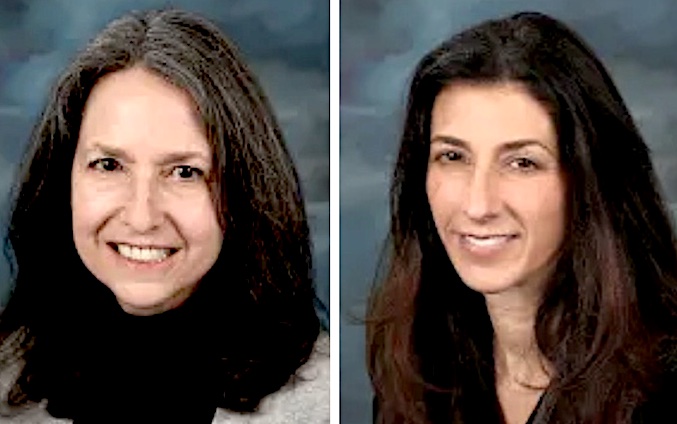
“Why do they do that in education?” Heyer asked. “It is a really important question to understand the answer to. If we knew why, we could understand whether or not it makes sense to be doing it in Westport right now.”
Heyer was told the school district is required to collect disaggregated data and submit that information to the state, and the data also help identify and address gaps in achievement and participation.
Heyer said her assumption was that laws are designed to look at achievement gaps between districts. She questioned its relevance in a district like Westport, which has a lot of resources and regularly achieves higher than state standards.
“Do any of our groups in Westport ever fall below that [standard]?” Heyer asked.
“We do have subgroups that perform lower [than their peers],” Assistant Supt. of Schools Anthony Buono told Heyer. Generally, those numbers are so small that they fall below state reporting thresholds.
Heyer said the district’s guiding criteria for equity should focus not on demographic categories, but rather treating all students as individuals.
“I think the entire special education community would vehemently disagree with just about everything you just said,” Supt. of Schools Thomas Scarice said.
If there are student subgroups not reaching their potential, the district should be able to identify who they are so the issue can be addressed, Buono added.
“I don’t know what the potential of a group is. I think it’s about every individual reaching their fullest potential,” Heyer said.
Board Chairwoman Lee Goldstein said it’s not equity work without discussing race, ethnicity and abilities status.
Some impediments, she said, need to be looked at through historic marginalization and how that intersects with belonging, preparation and access.
“You also don’t ignore there are differences that make kids feel unseen and unheard and unaffirmed,” Goldstein said.
Scarice told the school board the equity study is less about academic achievement and more about social experiences.
Potential criteria
The guiding criteria under discussion included a compilation of suggestions from board members assembled by board member Dorie Hordon.
Board member Kevin Christie submitted a separate document that suggested adding a short bullet-point list of guiding criteria onto a vision and mission statement for the diversity, equity and inclusion work.
Hordon had suggested the exercise in May as a way for the board to find common ground on an equity plan that she said remains unclear to her.
The district has developed a three-year plan to create a more welcoming and affirming school community, increase access to hard courses and extracurricular activities, overhaul district discipline polices and provide more staff training.
Guardrails could actually bring some confidence to the community, suggested board member Robert Harrington.
Proposed criteria from board members addressed identity, curriculum, viewpoints on diversity, transparency and oversight.
Among the anonymous suggestions:
- Student participation in any school programming not be subject to quotas.
- Staff members not solicit preferred pronouns from students.
- Educational strategies be culturally sensitive, yet not based on race.
- Vendors engaged with the district be ideologically neutral in presentations and materials.
- Teacher training not promote approaches that vary on the basis of race or ethnic background of students.
- Staff members avoid expressions of political bias.
- Initiatives should work toward equal opportunities and not seek to achieve equal or equitable outcomes.
The document also included a statement affirming the school district’s commitment to academic excellence, rigorous courses and helping all students thrive and reach their potential as socially responsible, lifetime learners.
“We should seek to learn and educate our students; unique and individual identities and not make assumptions based on race, ethnicity, religion, gender, sexual preference or hair color,” the document states.
Goldstein said some items in the document are givens. Others, she said, seek to prohibit things that are already illegal — such as setting quotas — and others appear to suggest unapproved practices are taking place, such as staff soliciting student pronouns.
Why wouldn’t the district have a policy around soliciting pronouns, Hordon asked.
When the equity work began, the district used a consultant, NYU’s Metropolitan Center for Research on Equity and the Transformation of Schools, that made recommendations that Hordon said “made my hair stand on end.”
She worried those recommendations are now part of the equity plan.
“How do we avoid another NYU?” asked Heyer.
Goldstein said the district never takes a report verbatim and always adopts its own interpretation. She also said the tone of a lot of the proposed guiding criteria is negative.
“What I would support is ensuring all students reach their full potential,” Goldstein said.
Hordon said she wants a plan that calls on staff to look at a student and not make assumptions based on their cultural background.
“That cuts to the heart of the problem,” she said.
Buono said accommodations are appropriate based on demographics in some cases.
If a student is Muslim and fasting on Ramadan, should that student have to take a test during that time, Buono asked.
Scarice cautioned the board about establishing policy based on speculation or becoming too specific.
He said the equity work began because a number of students reported three years ago not feeling a sense of belonging or comfort in school.
Harrington suggested there is some discomfort among some students who won’t express viewpoints they think may be different than teachers’ views on topics like politics.
“I agree,” said Hordon. “They will write what the teacher wants to hear, get the grade and move on.”
There has to be room for different views, Hordon added.
Goldstein said the district is committed to viewpoint diversity.
Board Secretary Neil Phillips said the equity plan is about finding a way to make life a little better for students.
“I don’t understand what the hang up is,” he said. “What we are doing is something positive and good.”
The board will revisit the proposed guiding criteria next month.
Public comments
Only a handful of audience members remained in attendance when they were offered the opportunity to weigh in.
Harris Falk, a Representative Town Meeting member from District 2, said the suggested criteria appear unfocused.
For instance, he questioned the opening line on identity that singled out “hair color,” but not hair style.
Falk also wondered why school officials would hire expensive consultants if they weren’t expecting advice and recommendations that the district would be free to follow or not.
Lori Freeman, another speaker, said ignoring underperforming groups because the district as a whole is doing well is a great way to leave students behind.
A third member of the audience to stick around was Camilo Riano, a Republican nominee for the school board in this year’s election.
Riano did not offer a comment at Thursday’s meeting, but last May he labeled the district’s DEI effort as unAmerican and said he did not want his children “in equity heaven.”
Freelance writer Linda Conner Lambeck, a reporter for more than four decades at the Connecticut Post and other Hearst publications, is a member of the Education Writers Association.






I’m pretty sure the group of DEI leftists is not living up to their potential as educators. Ms. Heyer is of course, absolutely correct that each individual child should be encouraged to live up to his or her potential. If his demographic group tends to lag scholastically does the child have an obligation to not excel? There are communities where that is the case. Support children by encouraging them to strive to be the best they can be. Stop focusing on what they look like or other meaningless characteristics.