

By Linda Conner Lambeck
WESTPORT — With a pending update on efforts to make all students feel comfortable regardless of who they are, a Board of Education member still uneasy about the initiative wants the board to establish criteria to guide the work.
Board member Dorie Hordon this week called it the perfect time to get board members to come together and develop criteria for the district’s version of equity, diversity and inclusion.
“Our job as a board is governance,” said Hordon, “and come up with parameters. This will impact district for years to come.”
The ensuing discussion, however, generated mostly questions from other board members at the Monday meeting, and the suggestion from one audience member that Hordon’s suggestion was a bad idea meant to delay the process.
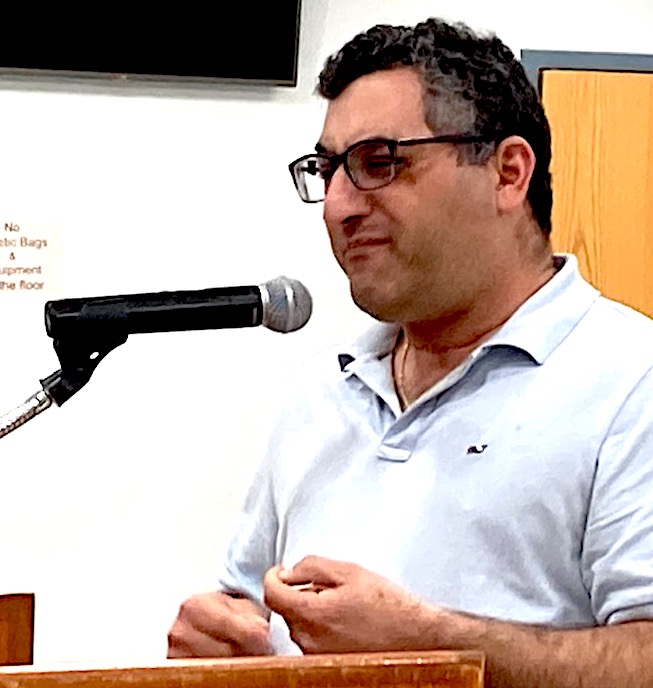
“And no one is willing to call her out and say we don’t want to do this,” Jonathan Alloy, a parent, said after listening to the board discussion.
A hot-button topic in town for the past several years, efforts to help students succeed regardless of their race, gender, ethnicity or sexual orientation, culminated in a 72-page report last spring.
That was followed by development of a three-year plan to focus on creating a welcoming and affirming school community, increased access to hard courses and extracurricular activities, an overhaul of the district’s discipline policies and more professional development for staff.
When presented to the board last October, some members were impressed.
Others, including Hordon, pressed for specifics on how students would be made to feel more supported. She said she didn’t want assumptions made about students based solely on their race.
On Monday, Hordon said some common ground parameters should be discussed and incorporated in a board document to guide the district’s equity efforts. For instance, she suggested there be no hard or soft quotas for how many students get into tough courses.
Once developed, Hordon also suggested the plan be reviewed annually, if not twice a year to start.
“An initiative as big as this, you want to get it right,” she said.
Board member Christina Torres said she wished Hordon had brought up her idea sooner.
Hordon said timing shouldn’t matter and that board members’ thoughts feed into other district initiatives, such as redistricting.
“What is it you want us to do tonight?” asked board Chairwoman Lee Goldstein.
“I am just getting the ball rolling,” said Hordon. “I would like for there to be a document created that we can all get behind and have a conversation about and vote on it. With specifics.” Particularly, she added, when it comes to what happens in the classroom.
Board member Kevin Christie said he was open to the idea of developing criteria that board members all could agree upon to guide the equity effort.
Goldstein agreed that consensus is always the goal, but that unanimity is not essential.
There may ultimately be disagreements, she said.
“I like board parameters that are broad,” Goldstein added, parameters that allow the work to happen.
Board Vice Chairwoman Liz Heyer said she is open to a public discussion and creating criteria and guidelines.
“I do question the timing,” said Goldstein.
After the plan was presented in the fall, Goldstein said, there was board discussion and input sought.
Hordon said she wasn’t ready at the time.
Heyer said she still has questions and suggested some pieces of the plan may require board votes.
“I just don’t think there is any wrong time to enhance the process,” said Heyer. “It is never too late to improve on something.”
Hordon said the conversation is one the community needs to hear, but not necessarily that night.
With two school board members, Neil Phillips and Robert Harrington absent, it was suggested that the board collect possible criteria for a future discussion and forward them to Hordon.
Hordon agreed.
Grooming vs. needed: Parents divided over diversity
During the public comment portion of the meeting, several parents spoke.
Katerina Medina asked that the policy not downgrade any subjects, remove deadlines or water down requirements.
“Do not apply race-based criteria for grading and discipline,” Medina said. “Judge all our children according to their actions and not their immutable characteristics.”
She went on to suggest that diversity, equity and inclusion efforts would groom minority children and immigrants into believing they are being targeted and that mere curiosities are micro-aggressions when they are not.
Stephanie Frankel, another parent, said as a white, Jewish town resident, she is all for equity, diversity and inclusion.
“It is disturbing to hear people who are not on board with this,” Frankel said, calling it a national disgrace.
“All kids need this,” she said. “Our kids need this.”
Camilo Riano, a parent opposed to DEI, called it unAmerican.
“I don’t want my kids in equity heaven,” he said. “I don’t want my kids to be treated differently.”
Riano suggested the board could put the equity initiative on hold at any point.
Alloy said diversity, equity and inclusion are all good things and that bureaucratic manipulation and maneuvering to try and kill the effort is a bad thing.
If the board is developing something that is research based, Alloy said there is no reason to hamstring the effort with a guidance document.
Freelance writer Linda Conner Lambeck, a reporter for more than four decades at the Connecticut Post and other Hearst publications, is a member of the Education Writers Association.





Recent Comments