
By Gretchen Webster
WESTPORT — Westport’s churches and synagogues have discovered a silver lining when it comes to coping with the pandemic.
Religious leaders have found that the technology they used to reach their congregants when their doors were closed continues to bring more people into the fold now that restrictions are easing. And many say that this new form of worship will continue indefinitely even as in-person worship services have returned.
When the pandemic struck, religious leaders had to think creatively about how to reach their congregations, many of them report. Worshipers of many faiths have joined in livestreamed worship services from hospital beds, while traveling, from their offices, and of course from home, clergy say.
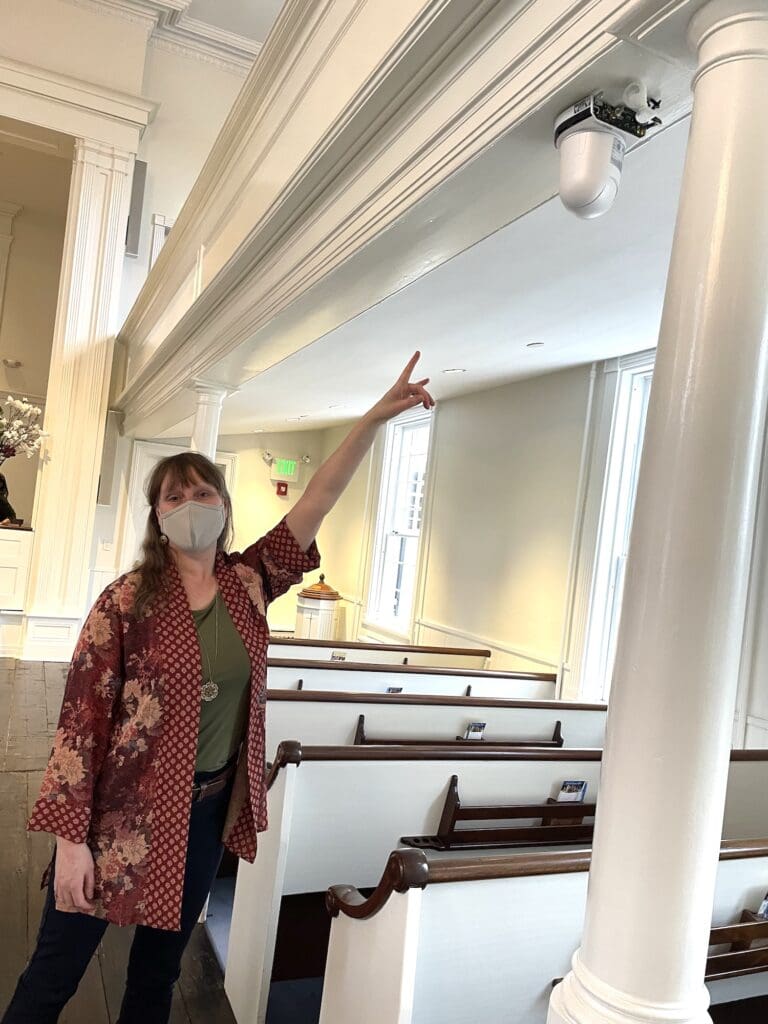
Live-streaming allows grandparents, or others who can’t travel or are housebound, to participate in baptisms, bar and bat mitzvahs, weddings and funerals, as well as weekly worship services, meetings, and other church or synagogue events.
“What we discovered is having these tools allows us to connect with a broader audience,” said the Rev. Alison Patton, pastor of Saugatuck Congregational Church. “Technology allows us to stay connected. It is our intention always to live-stream.”
Participation Has Increased
At Temple Israel of Westport, reaching congregants in a variety of ways has increased participation in worship services and other events at the synagogue, according to Senior Rabbi Michael Friedman.
“Overall we’re reaching more people,” he said, when adding together all those congregants who now attend in–person, watch via live-stream, or later view recordings of services.
“A permanent change for us is to live stream essentially in perpetuity,” he said.
Representatives of various worship groups say that their knowledge of how to use technology to deliver worship services evolved over the course of the pandemic.
“We’re very grateful that technology has allowed us to continue,” said Beth Cliff, volunteer with The Unitarian Church in Westport.
Interaction Changed
“It’s been a real learning experience for us and really changes the way we interact with congregants,” she said, with worship services recorded for later viewing.
In addition to weekly live streaming of services, the church began sending out four-minute videos daily from its ministers to help their parishioners navigate difficult times in the early spring of 2020.
“Our objective was to be in front of our congregants every day because we knew that they were adrift,” she said. “We made sure [they] heard from us every day.”
At Saugatuck Church, services in warmer weather were held outdoors in the church’s memorial garden, their outdoor labyrinth garden, and chapel, Patton said. As weather got colder, they moved to recording services for congregants to watch later, and eventually to live streaming.
Thanks to a Generous Donor
When the church received funds “from a generous donor … we were able to expand the project,” she said.
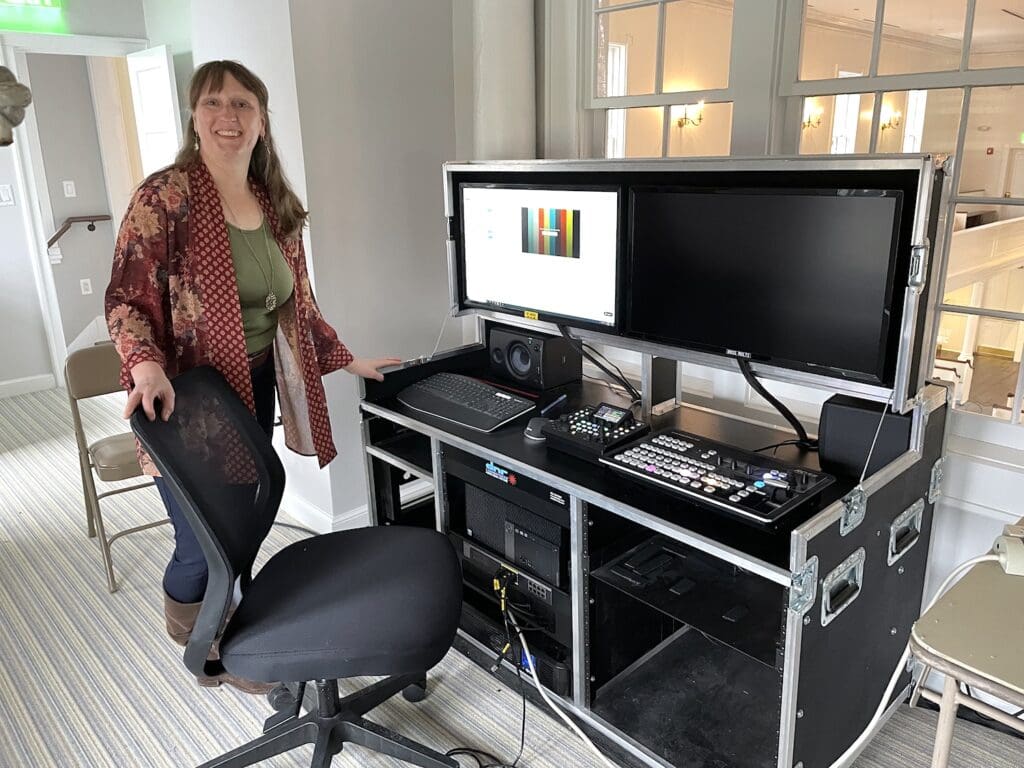
The church’s audio and visual equipment in several areas of the church was upgraded, including their Wi-Fi, she said.
Temple Israel started holding services in a tent on the patio at the beginning of the pandemic, as well as continuing popular beach services in the summer.
But as the weather got colder in March, 2020, the synagogue’s services moved online, engaging professionals to manage the technology to live stream services, meetings and other events.
“Live-stream was much better in many ways than many people had expected,” Friedman said.
Some of the hardest parts of delivering a full religious program to parishioners online has been working with children, Cliff said.
“It was hard, but we had kids with their parents online participating in whatever topic that was being discussed for that week,” she said, with all the children’s programs moving online.
Challenges Faced
And some religious leaders said that delivering music programs before services were live-streamed posed a particularly difficult problem because of pandemic protocols.
For Patton the changes brought about by the pandemic involved not only modifying locations, but also reflecting on different ways to worship.
“We’ve expanded our thinking about sacred space,” she said. “We’re now including people thinking about their kitchen table as a place for communion, their living room or their back porch as sacred space.”
Friedman said the new technology is proving to be “much better in many ways (than) expected.”
“Our reach is wider,” he said.







Recent Comments