
By Thane Grauel
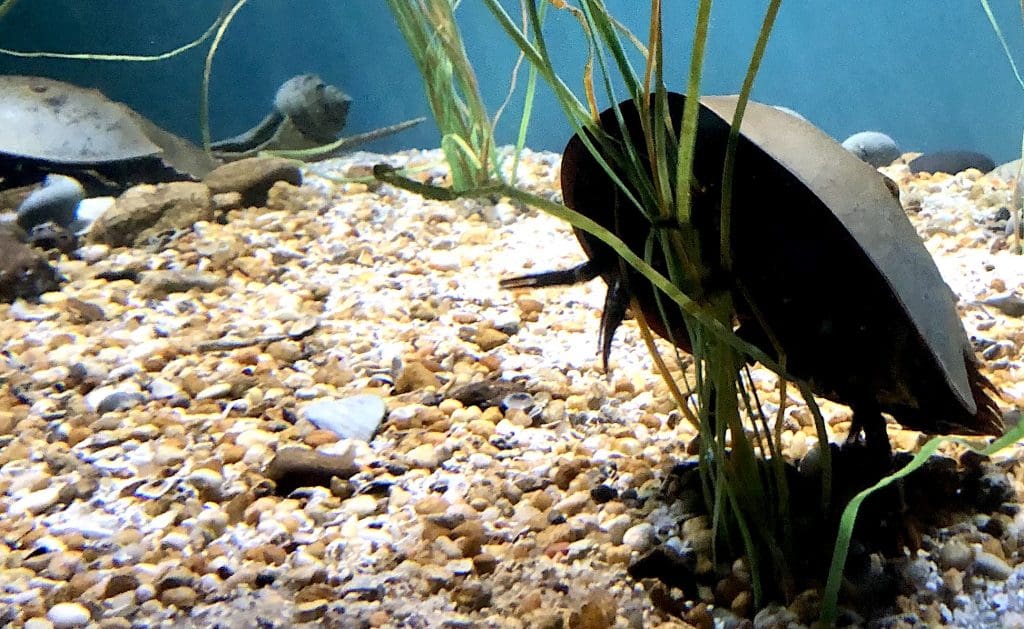
WESTPORT — For more than 300 million years, horseshoe crabs survived major extinction events, including the big one that ended the age of dinosaurs 65 million years ago.
But humans, not much more than a blip on Earth’s timeline, are another story. They’ve been harvesting the living fossils, mostly for baiting whelk traps, to the point where one expert called Long Island Sound’s population “functionally extinct.”
However, a bill in the legislative pipeline in Hartford could help the arthropods bounce back, according to supporters.
That proposal, House Bill 5140, would ban all hand-harvesting of horseshoe crabs by fishermen statewide. It would allow crabs to be captured for scientific reasons, including pharmaceutical development, though that isn’t currently happening in Connecticut.
Crabs “functionally extinct” despite conservation efforts
The state Department of Energy and Environmental Protection currently issues 15 hand-harvesting permits a year.
The long, steady decline in horseshoe crab numbers was not remedied by earlier conservation measures, including making three areas of Connecticut’s coast off-limits in 2005.
One expert, Dr. Jennifer H. Mattei of Sacred Heart University, said females crabs are having difficulty finding males for mating to keep the population sustainable.
Mattei has studied horseshoe crabs more than 20 years, and, working with the U.S. Fish and Wildlife Service, has run a longtime study tracking the crabs’ population with tagging.
She wrote to the commissioner of the DEEP last month about the legislation: “Due to multiple stressors, the population is in decline and due to very low population numbers the horseshoe crab is functionally extinct in Long Island Sound.”
She told the Westport Journal that while the species is not threatened at this point with outright extinction in the Sound, “functionally extinct” means it no longer is fulfilling its role in the food web.
“The meaning of that is they no longer supply enough eggs to supply the species that rely on them for food,” Mattei said. “They’re a big part of the food web.”
“We recommend stopping the harvest and letting the population recover,” Mattei said.
Other factors affecting the population are habitat loss, she wrote, pollution, “ghost nets” (abandoned or lost nets adrift in the water), abandoned lobster pots and getting trapped in power plant water intakes.
Westport legislators back harvesting ban
The legislation has the support of state Rep. Jonathan Steinberg, D-Westport, and state Sen. Will Haskell, D-Westport, according to Scott Smith, communications director for Friends of Animals, a nationwide advocacy group based in Darien.
Smith, who lives in Westport, said Friends of Animals worked with state Rep. Joseph Gresko, D-Stratford, to help draft the bill. Gresko was successful a few years ago getting part of Stratford posted off-limits to horseshoe fishing.
Smith agreed that measures by the state to restrict some harvesting among the 15 license holders haven’t been sufficient.
“We have concerns there would still be poaching,” he said. “It’s a lot easier to enforce a total ban.”
“Obviously, if you’re down at the beach late May or early June under a full moon at midnight, it wouldn’t be hard to fill up a pickup truck with them.”
Prehistoric creatures inspire young minds
Smith noted that horseshoe crabs are prehistoric creatures.
“I believe seeing a horseshoe crab along the beach has inspired countless children to learn more about the mysteries of the sea and the wonders of nature,” he said. “We’d be much poorer off without them.”
Horseshoe crabs were ubiquitous along Connecticut’s beaches decades ago. You couldn’t spend a summer swimming or walking along the beach without encountering some swimming underwater by flapping their gills, mating along the waterline under the moonlight in late spring, or digging into the sand around the high-tide line to deposit eggs.
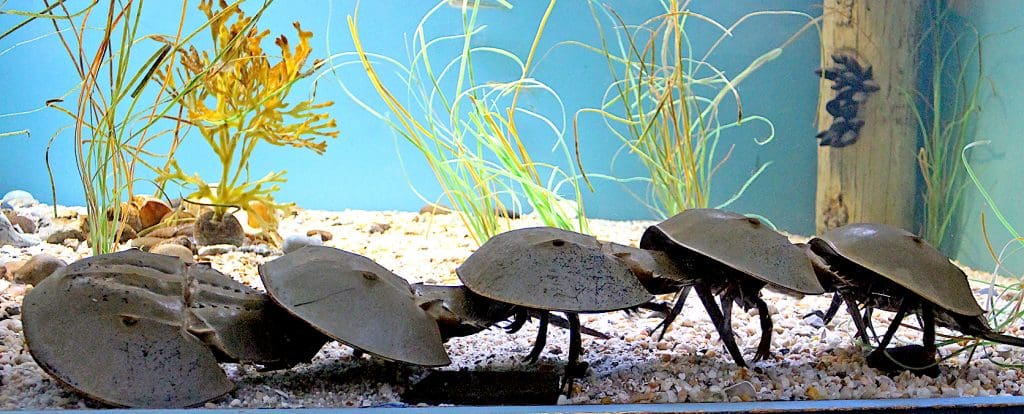
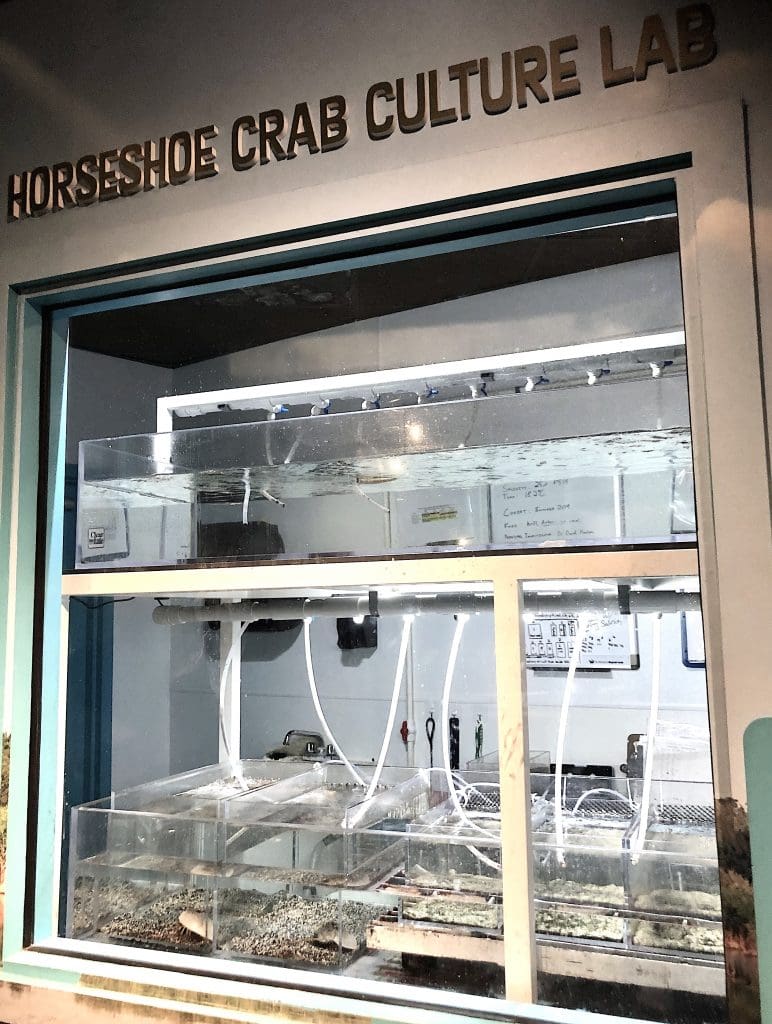
Horseshoe crabs can be seen year-round in several tanks at the Maritime Aquarium in Norwalk. The aquarium also has a Horseshoe Crab Culture Lab, with tiny hatchlings.




Recent Comments