
By Thane Grauel
WESTPORT — Eighty years ago Saturday, a keel was laid down at a shipyard on the Delaware River south of Philadelphia.
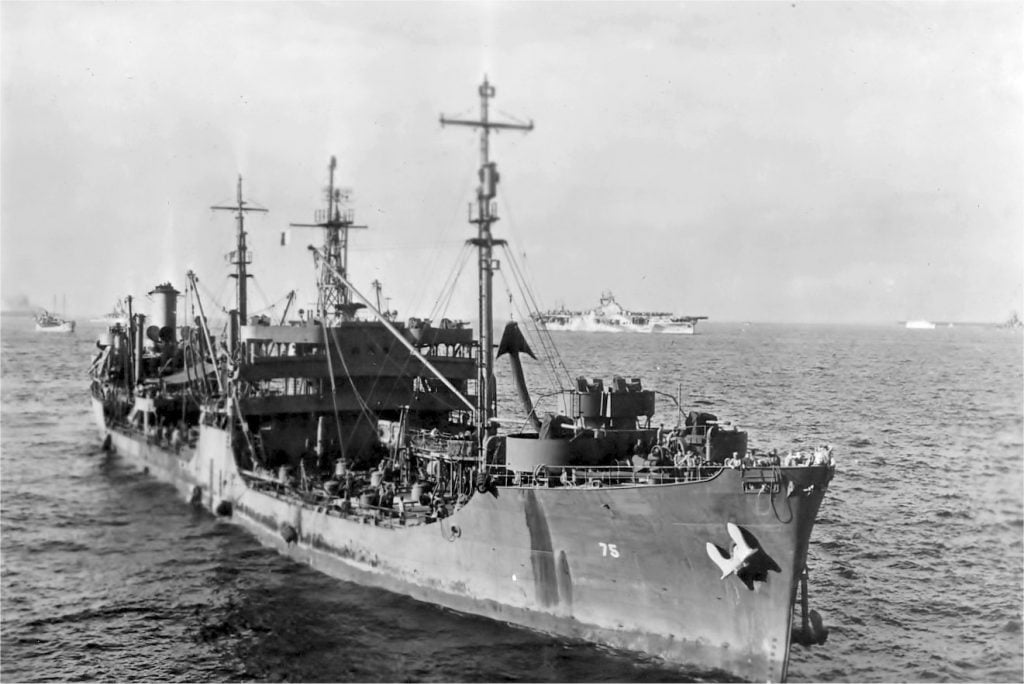
It would become the USS Saugatuck, AO-75, a U.S. Navy fleet replenishment oiler, and she would see plenty of action in the South Pacific during World War II.
The vessel born Aug. 20, 1942, was first named SS Newtown, but a few months later was drafted for naval duty and renamed USS Saugatuck. (SS was the designation for a “Steam Ship” merchant vessel; USS, “United States Ship,” is the designation for a Navy ship.)
Connecticut is not the only state where the Native American name Saugatuck can be found, but Navy records make it clear this ship was named for the river in Fairfield County.
The 23.7-mile waterway has its headwaters in Danbury. It includes the Saugatuck Reservoir in Redding and Weston, and makes its way down through the center of Westport, then the longtime maritime-area known as Saugatuck, before fanning out into Saugatuck Harbor and Long Island Sound.
Saugatuck was a T2 tanker. Some 533 of the 500-foot-plus vessels were quickly built in the early 1940s. Many were ready for sea trials in just 10 weeks, one in just 33 days (it was a different time).
If “T2 tanker” sounds familiar, you’ve been around a while or might have seen the 2016 Walt Disney Pictures film “The Finest Hours.”
Because of a high sulfur content in the steel hulls, T2s were prone to metal fatigue and cracking in cold waters. Two busted in half off Cape Cod on the same stormy day in February 1952. Those events were chronicled in the film.
One of those tankers was SS Fort Mercer. Only five of 43 crewmen survived.
But remarkably, 32 of the 41 crewmen from the other T2, SS Pendleton, were saved by a small crew of Coast Guardsmen aboard CG 36500, a 36-foot lifeboat (built for a crew of 12) out of Coast Guard Station Chatham, Mass.
Back in 1942, after the being drafted by the Navy and renamed, anti-aircraft and other gunnery was added to the USS Saugatuck.
After commissioning and a shakedown cruise, Saugatuck transited the Panama Canal, and steamed into war in the Pacific.
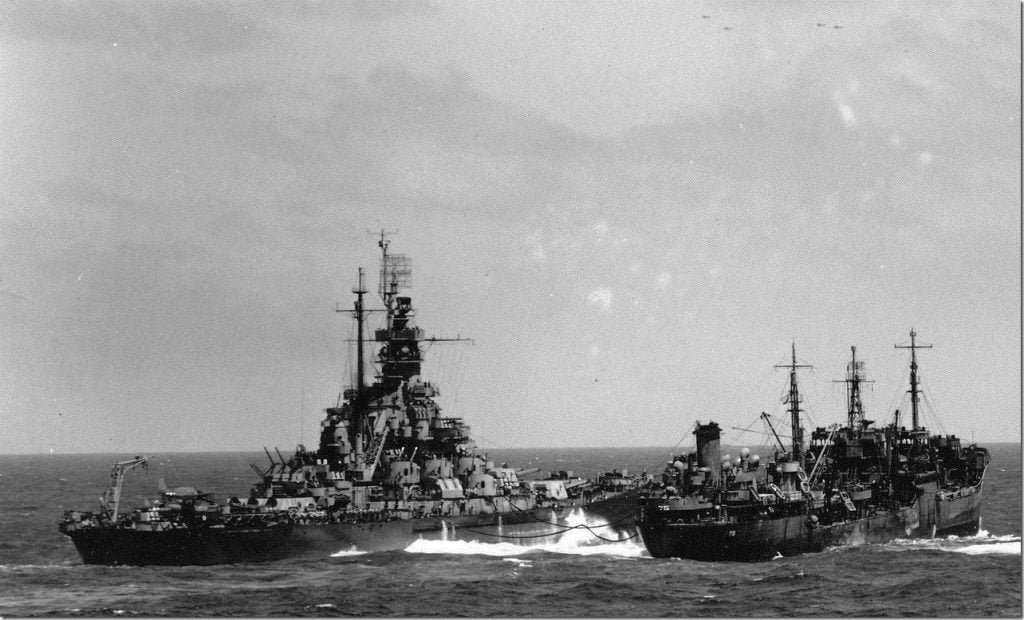
On June 18, 1944, while refueling the battleship USS Massachusetts, aka “Big Mamie,” the ship took fire from Japanese aircraft.
“For two days, she refueled ships of the Saipan assault force; then, late in the afternoon of the 18th, the refueling area was attacked by Japanese aircraft,” reads a narrative by the Naval Heritage and History Command.
“The oilers were the targets. Saugatuck underwent three attacks during which she was peppered by shrapnel and strafing bullets. She lost only one of her crew during the 15-minute engagement, and within the hour, resumed refueling operations.”
Saugatuck earned seven battle stars for her WWII service in Pacific campaigns (Marianas, Tinian, Western Caroline Islands, Luzon, Iwo Jima, Okinawa and Third Fleet Operations against Japan).
The scrappy oiler was stricken from the naval record in 1946 and mothballed.
But she saw more service in commercial use, and again in future military conflicts, shuttling fuel to Korea and Vietnam.
In 1978, she was mothballed again, in Virginia. Then sold for scrap on June 2, 1996, and towed by tug to Chesapeake, Va., for dismantling.
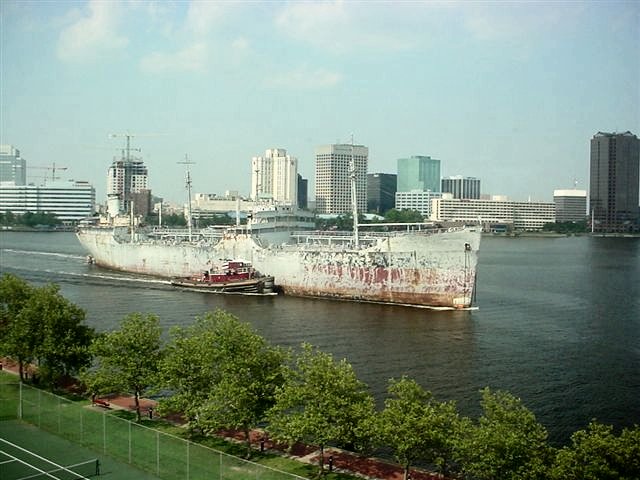
It appears no T2 oilers remain afloat. The last of them had been mothballed in National Defense Reserve Fleet locations on rivers around the country, but, like Saugatuck, were scrapped in the coming years.
The curious can still visit the USS Massachusetts at Battleship Cove in Fall River, Mass.
And CG 36500, the modest vessel involved in what is considered the greatest small boat rescue in Coast Guard history, also has been preserved. It can be visited in Orleans, Mass.
Thane Grauel, the Westport Journal executive editor, grew up in Westport and has been a journalist in Fairfield County and beyond more than three decades. Learn more about us here.







Recent Comments