
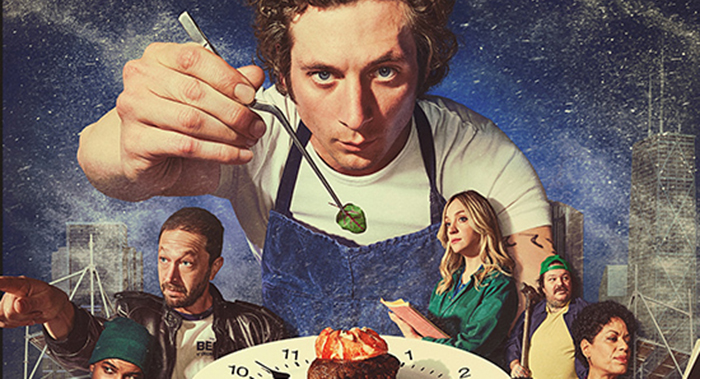
Have you been watching FX’s Emmy-nominated series “The Bear”? The first season introduced a prodigal Manhattan chef, Carmen ‘Carmy’ Berzatto (Jeremy Allen White), who returns home to Chicago after his drug-addicted older brother commits suicide and leaves him the local family sandwich shop.
As Carmy copes with crippling debt, unbridled chaos and a recalcitrant staff, he’s helped by ambitious sous-chef Sydney (Emmy-nominated Ayo Edebri), baker Marcus (Lionel Boyce), line cooks Tina (Liza Colon-Zayas) and Ebraheim (Edwin Lee Gibson) and handyman Neil (real-life Toronto chef Marty Matheson).
Of the second season’s 10 frenetic episodes, two are outstanding. The first – “Forks” – involves Carmy’s angry, abusive cousin Richard ‘Richie’ Jerimovich (Emmy-nominated Ebon Moss-Bacharch), his late-brother’s best friend who works as the manager.
As Carmy strives to open his rebranded, rebuilt, upscale restaurant, called The Bear, Ritchie becomes increasingly antagonistic. So Carmy dispatches him to apprentice at a world-class fine dining spot to learn skill development and teamwork, an experience (enhanced by Olivia Colman) in which he develops a sense of self-respect that he’s never had before.
The second, titled “Seven Fishes,” flashes back five years as Carmy’s drunk, dysfunctional mother, Donna (electrifying Jamie Lee Curtis), who’s having a nervous breakdown, prepares an elaborate Italian-American Christmas Eve feast that becomes a full-blown fiasco because she feels unappreciated.
Plus, gentle Marcus is sent to Copenhagen to learn pastry perfection, skeptical Tina goes to basic culinary school and Carmy finds romance with Claire (Molly Gordon). Show creator Christopher Storer once again demonstrates the power of food and the way in which it connects people.
On the Granger Gauge of 1 to 10, “The Bear: Season 2” is an intense, engrossing 8, streaming on Hulu.
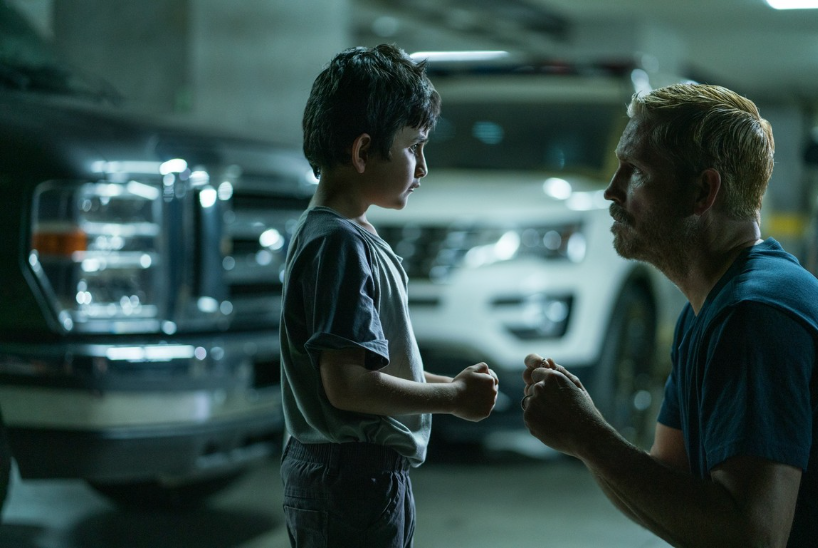
When “Sound of Freedom” was released in theaters a couple of weeks ago, it ignited a storm of controversy, so I was curious about this crowd-funded, contemporary thriller, reportedly based on a true story.
On the surface, it raises awareness of the horrors of global child-trafficking and sexual exploitation, introducing Homeland Security Investigations Officer Tim Ballard (Jim Caviezel), who reportedly worked for more than a decade tracking missing children and arresting the pedophiles who molested them.
His investigation of a kidnapped brother-and-sister leads him deep into the Colombian jungle. Their story begins in Honduras as a single father allows his 11 year-old daughter and her seven year-old brother to audition for glamorous modeling jobs. He’s told to drop them off at an apartment and not to return until that evening. When he arrives, the apartment is deserted and the children are long gone.
Eventually, there’s a confrontation on a tropical island that bears a striking similarity to Caribbean island connected to pedophile Jeffrey Epstein.
Director Alejandro Monteverde emphasizes the narrative’s pious nature as Ballard’s colleague (Bill Camp) says, “When God tells you what to do, you cannot hesitate,” followed by Ballard’s own declaration: “God’s children are not for sale.”
Problem is: The U. S. Department of Homeland Security will neither confirm nor deny Ballard’s employment history and the New York Times notes that outspoken Ballard has been accused of exaggerating his rescue narratives.
Plus, last summer, Ballard’s anti-child sex trafficking organization – Operation Underground Railroad (OUR) – promoted a ridiculous, since-debunked claim that the online furniture retailer Wayfair was promoting the sale of stolen children.
Best known for playing Jesus in Mel Gibson’s “The Passion of the Christ,” Jim Caviezel is an opinionated conservative Christian who embraces a fringe QAnon conspiracy theory called “adrenochroming.”
Rooted in anti-Semitism, it alleges that liberal elites are secretly killing children to harvest ‘adrenochrome’ from their blood for psychedelic experiences, satanic rituals and extending their lifespan.
As quoted by the Daily Beast on Yahoo News, Caviezel explains: “When you are scared, you produce adrenaline…If a child knows he’s going to die, his body will secrete this adrenaline…It’s the worst horror I’ve ever seen.”
Angel Studios claims this is not a QAnon movie, yet in late 2001, Caviezel spoke at a QAnon convention in Las Vegas invoking the QAnon slogan, “The storm is upon us.”
So why is this relevant? Because – in reviewing a film of this nature – it’s almost impossible to separate the artist from a piece of work that’s deeply rooted in his personal beliefs. Perhaps that’s why Netflix, Amazon, Disney and 21st Century Fox refused to distribute it.
On the Granger Gauge, “The Sound of Freedom” is a solemn, faith-based 5, playing in theaters.





Recent Comments