
By Thane Grauel
WESTPORT — The Historic District Commission on Tuesday stood by its November decision not to waive the 180-day waiting period to demolish six houses on Hiawatha Lane.
The demolitions are planned to make way for a three-building, 157-unit affordable housing development, a project that has been the subject of disputes for nearly two decades.
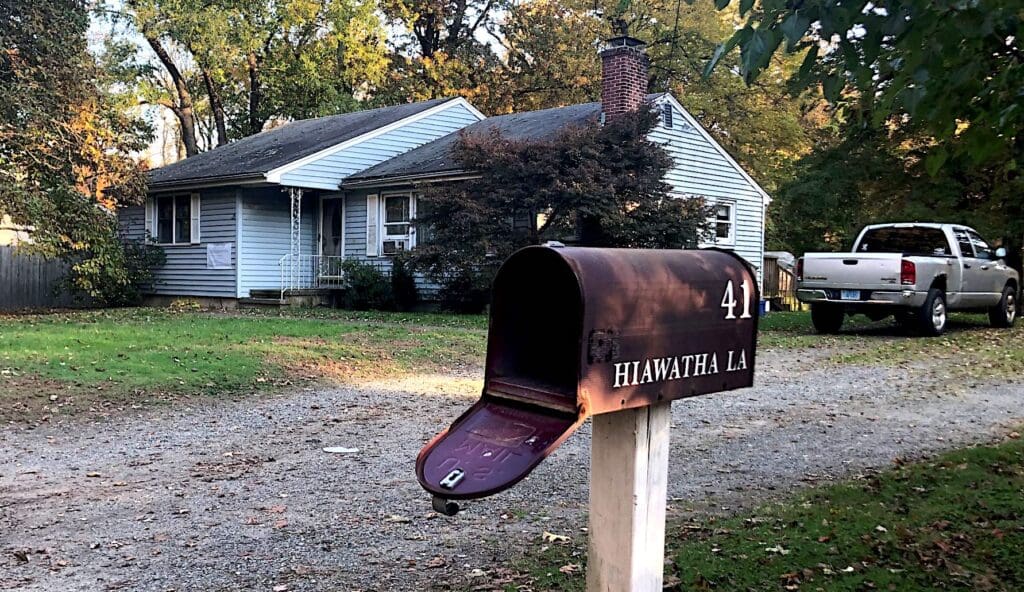
The commission previously allowed two houses on the street to be razed because they had been significantly altered, but would not allow demolition of the homes at 38, 39, 41, 42, 44 and 47 Hiawatha Lane before the full 180 days of the delay period expire.
The commission members at the time noted the area is one of the last middle-class neighborhoods in town with mid-century construction, which is becoming increasingly rare.
The neighborhood is nestled between Interstate 95, Saugatuck Avenue, the Metro-North tracks and the Norwalk city line.
The affordable housing factor
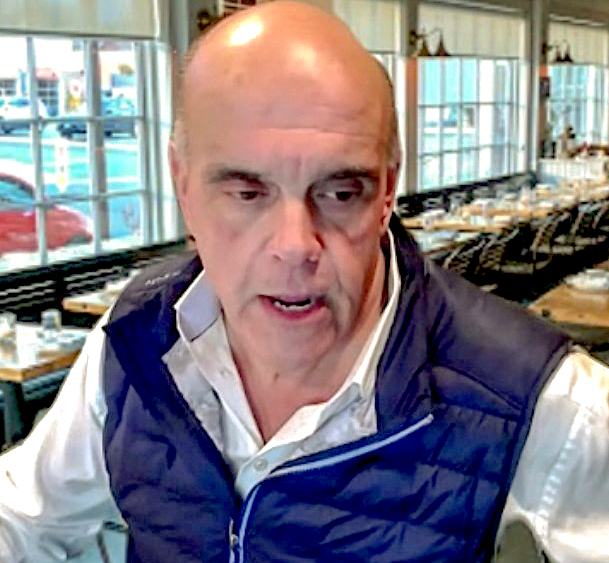
Peter Romano of LandTech, speaking on behalf of Summit Development on Tuesday, told commission members that 90 days had passed since their decision and that no one had come forward to try and save the houses.
“Not allowing us to move forward jeopardizes the moratorium in Westport,” Romano said. “If the [affordable housing] moratorium gets lifted, it opens up the town to more Hiawatha Lanes. I’m sorry, I don’t see the value.”
If 10 percent of a town’s housing stock is not considered “affordable” under state criteria, developers have greater leeway to build such developments using a state law.
In March 2019, Westport secured a four-year moratorium on the “8-30g” developments from the state as it works on plans to increase its stock of affordable housing in town. However, the moratorium could be jeopardized if the affordable units planned in the Hiawatha project are never built.
A legacy marked by controversy
The Hiawatha Lane apartment plan has been engulfed in controversy — and several lawsuits — for nearly 20 years, but a court-stipulated agreement settlement approved last July between the town and the developer appeared to give the project a green light.
However, last October several residents of the Hiawatha Lane neighborhood filed suit against the project, contending the 157-unit development would “irreparably harm” them through increased traffic, impeded roadways and other health and safety risks. That complaint has not been resolved.
Commission’s focus is solely on historic criteria
Commission Chairman William Harris said Tuesday the board does not take affordable-housing issues or the 8-30g law into consideration in making its decisions.
“We cannot make decisions based on financial hardship to developers, or homeowners, or anyone else,” Harris said. “We make decisions based on, are these structures emblematic, contributing structures, to the historic fabric of, in this case, mid-century Westport?”
“It’s not an arbitrary and capricious decision on our part,” he said.
The other commission members agreed with Harris.
Carolanne Curry, who lives in the neighborhood, said the houses could easily be renovated.
“The person representing the developer and the attorney did make a serious mistake in reducing this to personal animus or 8-30g,” she said. “All we want, very much, is for you to observe the 180 days [of the demolition delay] because of what that represents.”
Harris said if the commission took no action through a motion to the contrary, the 180-day waiting period would stand. No one proposed a motion to that effect.
Romano wasn’t pleased.
“I think you’ve diminished the value of the Historic Commission by trying to save these homes,” he said.
“While you commented how I was making economic comments and 8-30 comments, I think there’s an ulterior motive on the Historic Commission to think that you’re trying to save these homes for 180 days.”





“…the moratorium could be jeopardized if the affordable units planned in the Hiawatha project are never built.” Can someone explain to me how a moratorium which was granted based on the number of actually built 8-30g compliant units could be threatened by anything having to do with unbuilt units that were not part of the moratorium calculation. What am I missing?
I applaud the decision of the HDC. Under Chair Bill Harris, the HDC is doing many good things, not perfect and sometimes the law restricts the body, but they are trying. It is too bad that Peter Romano seems so often to be on the wrong side of an issue. He and his firm are quite capable. i just wish he could find better clients. it is sort of like Cohen and Wolfe with the Cell Tower being sought for 92 Greens Farms Rd. Yes, all deserve good representation, but still ethical choices can still be made.
Don Bergmann
These residents are still fighting diligently and actively in court with deeded covenants that exist since they properties were set in place 100 or so years ago, that most houses on Hiawatha and Gilette were to remain single family houses in perpetuity.
Done by wise and generous early families whose charity is now being ignored in Westport’s neighborhood where few affordable owned homes are threatened by greed. NOTHING SHOULD BE ALLOWED UNTIL THE COURTS FINAL RULE.
BTW Pete Romano is a good and generous businessperson who grew up in town, he should not be singled out and maligned for performing his business.
Our neighborhood of Old Saugatuck has had interaction with just about every Town of Westport department and commission, but this was the first encounter with HDC and I deeply appreciate the moral and ethical compass that directs their adherence to the rules concerning the demolition process as it affects houses of a certain age.
This is the 19th year of our effort to Save Old Saugatuck from the ill-conceived project of apartment buildings that violate even the most basic land use principles.