
Editor’s Note: The following is an opinion by Toni Simonetti, who is a 25-year resident of Westport.
I am not an attorney, nor am I schooled in municipal law. I am merely a layman student of governance and democracy and a taxpaying citizen of Westport. I am opining only for myself, but with hopes that my ideas help to better serve the taxpaying property owners of Westport, most especially the residential sector.
Despite my lack of professional expertise in this area, what I see playing out in Westport is crystal clear. The time has come for our elected boards and commissions to more fully respect their independent roles in town governance by engaging independent legal counsel.
It is clear in many cases that come before the Planning and Zoning Commission, the Board of Finance, and the Representative Town Meeting and other elected bodies that a single town attorney cannot adequately represent various independent branches of town government. These boards and commissions are meant to provide a check-and-balance system of government. The present town attorney is engaged by the town administration, whose interests and decisions are to be assessed, reviewed and either affirmed or rejected by these other elected bodies.
The need for independent legal counsel
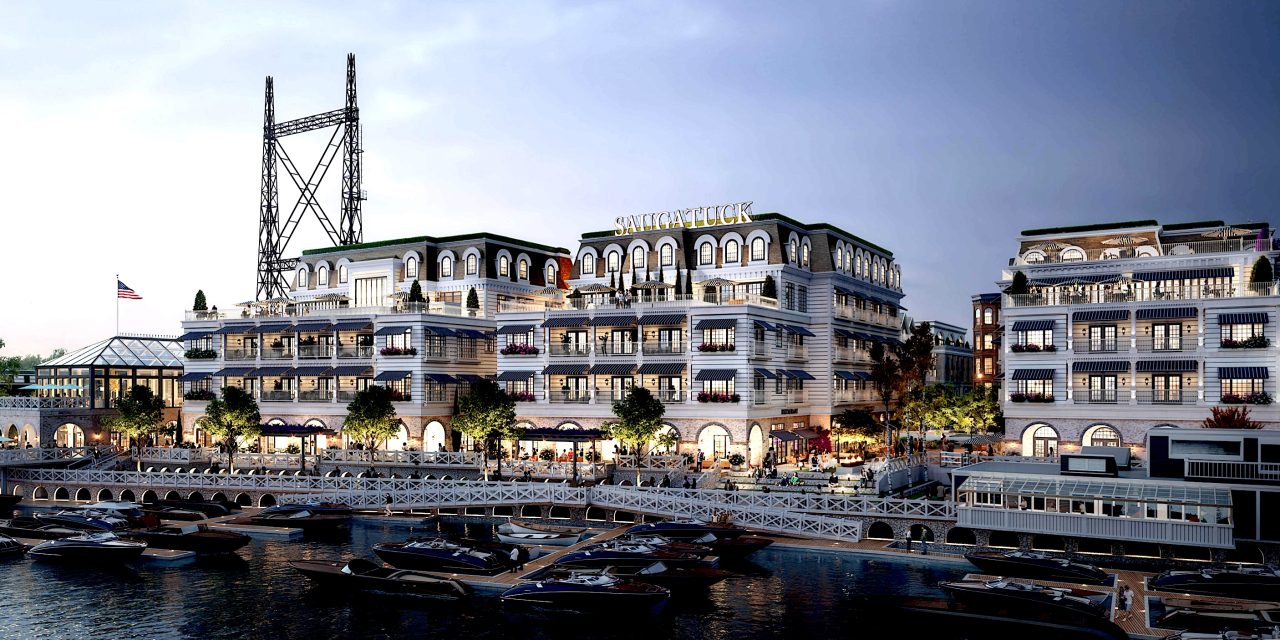
For starters, the Westport Planning and Zoning Commission needs independent legal counsel NOW. This is illustrated in no better fashion than the current hearings and upcoming deliberations over the massive redevelopment proposal in Saugatuck village.
Our planning and zoning commissioners have been working diligently to sort through the tangle of a highly complicated, large, dense development proposed for an area that is contaminated, on the riverfront, in a flood zone, and serves as the main transit hub for thousands of commuters. It doesn’t get more complicated than that.
The developers are to be lauded for investing in a Brownfield site redevelopment, and I believe their intentions are generally good; I hope they continue their endeavor, but to date they have been tone deaf in their approach by overdeveloping this 3-acre spit of strategic land, creating more problems than it is solving.
Surely the Planning and Zoning Commission must leave no stone unturned in their deliberations. Their final determination surely will face legal scrutiny, so they would do well to think about how their decision can be upheld beyond their final vote.
In this regard, Town Attorney Ira Bloom made an appearance at Monday night’s public hearing to provide some legal insights (he was juggling appearances at multiple meetings that night).
He counseled the commission about a recent (April 2022) State Supreme Court ruling, McLoughlin vs. Planning and Zoning Commission of Bethel, in which the high court reversed a Planning and Zoning Commission decision that was upheld by two lower courts.
How is this relevant to a decision on The Hamlet? Attorney Bloom explained that what little discretion is left for the Planning and Zoning Commission (most was given away in the ill-advised 2022 text amendment written by the developer), lies in “general standards” provision of the special permit. The Planning and Zoning Commission has discretion in special permitted land uses based on health, safety and well-being considerations. The catch is that these general standards, if cited as reasons for denial, must be supported by sound evidence.
In McLoughlin, at issue was the allowance of a crematory in an existing industrial park in the town of Bethel. The owner of a cement factory wanted to add this crematory to his 6-acre parcel within the industrial park. The objections were loud but largely unsubstantiated about how neighboring businesses and property owners would be negatively affected. The idea of a crematory was creepy to some. The appearance of hearses to and fro would be concerning to business owners who feared their customers would be spooked away. There was some concern about “excessive” excavation and fill to build their new facility. A farmer was concerned about whether potential particulate and gas emissions would affect his ability to obtain an organic designation for his crops.
The Supreme court ruled these concerns were speculative and not substantiated in fact.
To that, I say, “Hold My Beer.”
The myriad problems in Saugatuck: environmental, coastal, flooding, traffic, parking, transit, pedestrian safety, police and fire service, neighboring residential areas, existing businesses to be disrupted by three years of construction … shall I go on? This is NOT a NIMBY situation (Not In My Backyard). Dare I speculate that substantiated problems already exist and will be exacerbated by the size and scope of this development.
It was good for the town attorney to highlight this recent case so that the Planning and Zoning Commission makes sure their deliberations are grounded in good fact and evidence. However, in doing so, I could feel a chill ripple through the virtual room with respect to the authority of the Planning and Zoning Commission. It would have been helpful to also delineate how McLoughlin v. Planning and Zoning Commission of Bethel is in no way similar to the The Hamlet of Westport.
As a constituent of Westport, I’d love to hear from other land use experts and legal counselors at the next Planning and Zoning Commission meeting on whether we should be spooked by the crematory that the State Supreme Court resurrected in Bethel.







Ira Bloom runs this town. He is smart enough to let the elected officials think they actually have a say in what happens.
Could not agree more. It’s been this way for decades.
I completely agree, that all elected town bodies should have their own attorneys to avoid conflicts of interest and maintain a check and balance.
Too often I’ve felt that the recommendation from the town attorney is directly in line with what the administration wants to hear especially with contentious issues.
Many rtm’ers have asked for this over the years.
I think it would be a good thing for town residents, to know all bodies were represented by their own council.
The town attorneys interpretation of the CTDOT parking contract at the railroad is a prime example.
I’ve heard several attorneys opine and all have a different opinion depending on who they are representing.
Parker Harding, same thing. Gardens same thing..
It is and should be a concern.
Right on, Toni. As a resident, its been somewhat dispiriting to observe this particular problem fester in plain sight – for years.
What is the process to make this separation of representation part of the town policy? Is it a fiat/executive order by the Selectperson’s office, is it the RTM, is it some other special committee created to come up with it? What needs to be done or coordinated, to make this happen? We should be laying the foundation in order to see the change within the next electoral cycle here, or we’re just going to be getting more of the same.
Good luck petitioning your RTM to address this issue. The current RTM decided to strip residents of that right.
https://westportjournal.com/government/new-petition-to-rtm-seeks-clarity-on-how-petitions-are-handled/
Sadly Morley you are correct.
There are a handful who do what is right and what they were elected to do by the public.
It’s an absolute no brainer to have their own separate attorney.
But I can name on 5, possibly closer to 6 hands the rtm ‘ers who will balk.
Maybe another 10 lawsuits ( not as far fetched as it sounds from the “sip sip” out there,) and more pressure will be brought to bear.
It should be made clear who the Town Attorney works for. If he and his firm are hired by the town, they have an ethical responsibility to represent the town–not the FS. Having elected town bodies retain their own attorneys is appealing on its face, but $500/hour (whatever the going rate) for each of the multiple attorneys will not benefit the taxpayer.
Jerry
The boards and commissions are calling on the attorneys for counsel regularly, so that money is being spent no matter who is providing the counsel.