
By Thane Grauel
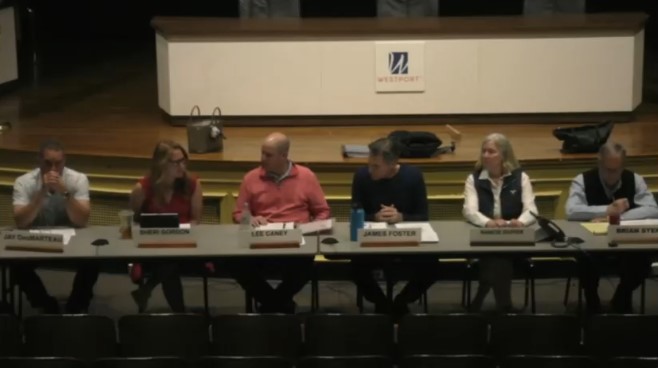
WESTPORT — With a new school and other major projects potentially tripling the town’s debt in coming years, members of the Board of Finance had a discussion Wednesday night about improving the capital planning process.
It was cordial, but differences in opinion were clear, as were the board’s limitations. Though the body is typically made up of Westporters with considerable financial expertise, its powers under the Town Charter are eclipsed by other elected bodies and officials.
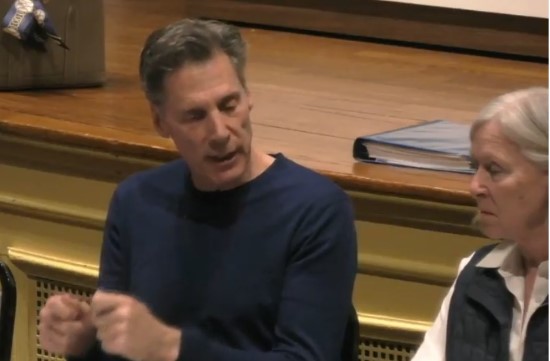
The discussion was led by Jim Foster, the board’s vice chairman.
“It’s been a pretty big topic in the past year,” Foster said. “One of the good things that we, the collective we, did early last year was to change the structure of the capital planning process. To move into the third quarter to detach it from the operating budget. I think that was wise.”
He suggested members look at ways to move that process forward.
“I think we’ve gone from a plan where we’ve gone from a five-year plan to a 10-year plan,” Foster said. “I know that it’s not official yet, it’s not published on the town website.”
He suggested they make it official and have a document that’s published “for the sake of transparency.”
“It was published as a part of that meeting’s materials,” member Sheri Gordon said.
“It was, but it’s not on the website,” Foster replied.
“The state only requires a five-year plan, right?” Foster asked Finance Director Gary Conrad.
Foster said he liked the 10 years because in the past, the town should have probably taken some debt out “when money was really cheap.”
“Having some visibility 10 years out seems like a wise thing to do,” he said.
“It’s the responsibility of the first selectwoman’s office and the Finance Department to make those determinations, right?” Gordon said. “We could make those recommendations, but …”
Member Brian Stern said he agreed with the longer outlook, but had concerns about information from various departments.
“A 10-year plan is as good as the input you get,” he said. “If you go through the departments that we have — I’m not going to give each department a scorecard — but I think if we step back and say which departments were disciplined and which ones were not so disciplined, I think we’d have a different score by department.”
“I’m not here to say which ones were good, but I think standing out as a super, a super input was public works,” Stern said. “Which I thought was excellent.”
“The other ones had good points and bad points,” he said.
He said there’s a long way to go “to get such discipline.”
“I’ll give you just one example …” Stern said. “When the public safety group comes and says, ‘Oh, by the way, the numbers in the capital plan are in 2019 dollars,’ that’s a problem for me.”
“We need to make sure that there are rules of the game for each department,” he said. “All inputs to the capital plan should be in period dollars.”
Board Chairman Lee Caney said the capital forecast should be a process like the operating budget.
“The operating budget we do the working sessions, we have all the department heads come before us. I think we should do something like that, maybe over a three-day period,” he said.
With a sizable debt load coming, “this is going to be just as important as the operating budget,” Caney said.
Member Nancie Dupier said the town has been good at adjusting its financing strategy so far, “But as we look at a longer term, and a higher level of debt than we’ve never carried before, be agile in how we’re ready to do that, you know, and maybe look at a change in structure …”
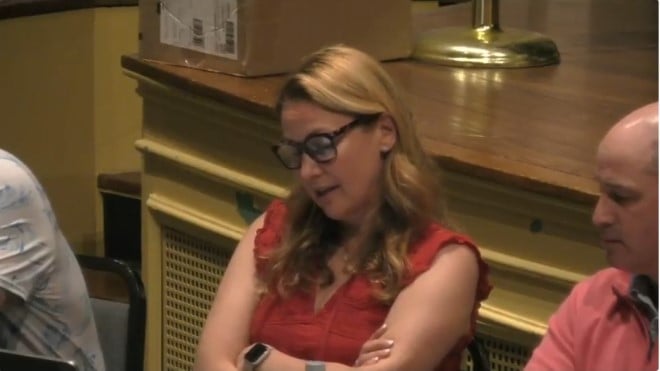
Gordon, with arms crossed, did not appear onboard.
“The five-year plan is solid,” she said. “I think years six through 10, everybody feels like it’s a little bit of a guestimate.
“Anyone sitting here who thinks years six through 10 are solid is not being realistic,” Gordon added. “You can’t look out and tell me what you’re going to need to do in year eight, or year nine or year 10.”
Foster agreed the later years would not be as clear the first five.
“Corporations, various entities, create 10-year, 20-year plans all the time,” he said.
Dupier framed the discussion in terms of governance.
“We’re not trying to dictate the management decisions, but we’re saying from a governance perspective we think that a longer view, and a more strategic discussion, narrative, along the way, can help us oversee a better process,” she said.
‘We’re not trying to dictate the management decisions, but we’re saying from a governance perspective we think that a longer view, and a more strategic discussion, narrative, along the way, can help us oversee a better process.’
board of finance member nancie dupier
Gordon later said the town had gone through periods of debt like the one that might be coming, with simultaneous school projects.
“Proportionally, it was very similar to what we’re looking at right now,” she said. “I think we have to remember this is not a new situation that we’re finding ourselves in in Westport, we will get through this …”
First Selectwoman Jennifer Tooker spoke near the end of the meeting.
“I heard the importance of transparency,” she said. “I think we’re incredibly transparent right now, that doesn’t mean we don’t have more work to do.”
‘Nothing comes before you unless I say it does. I just want to remind everybody.’
first selectwoman jennifer tooker, with a laugh
Regarding the discussion about the operation budget and the capital forecast, she said, “It’s not a plan, it’s a forecast.”
She called it a living, moving document, being changed.
“Nothing comes before you unless I say it does,” Tooker said, with a laugh. “I just want to remind everybody.”
“Any time anything comes off that capital forecast it does because the first selectperson’s office brings it off of that capital forecast, because we have done the research, because we have done the benchmarking, because we have done all our due diligence, because we do have real numbers, because we know we have the operational capacity to actually execute the project,” Tooker said.
“All of those things are answered before we would ever ask you to do due diligence on the expenditure.”
Thane Grauel, executive editor, grew up in Westport and has been a journalist in Fairfield County and beyond for 35 years. Reach him at editor@westportjournal.com. Learn more about us here.

