
By Gretchen Webster
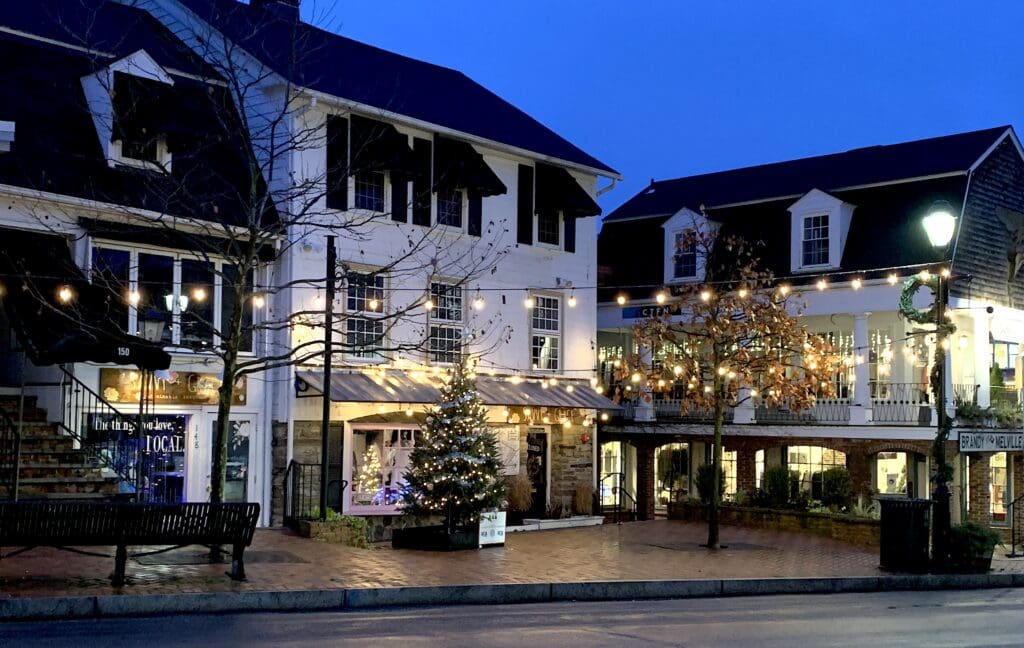
WESTPORT — Is more, or less, regulation key to downtown’s vitality?
That topic was debated as a Planning and Zoning Commission subcommittee on Wednesday reviewed proposed changes to regulations affecting the central business district.
Under consideration was whether the size of stores and other businesses should be limited in the downtown district, and if retail outlets should be allowed on the second floor of buildings.
Architects, developers and members of the public attended the virtual meeting held by the P&Z’s Zoning Regulation Revision Subcommittee to discuss the proposed zoning changes.
Time to change decades-old regulations?
On the table was proposed revision of two regulations, both enacted years ago, which restrict the size and location of certain businesses.
One regulation restricts store size to under 10,000 square feet, and another prohibits retail tenants on the second floor of downtown buildings while allowing residential, office and restaurant uses.
“We need to embrace any opportunity that we can to attract retailers,” said Neil Cohn, P&Z committee member. Removing restrictions could help, he said.
Much of the discussion centered on how to make Westport’s downtown vibrant, and whether small “mom-and-pop” stores, national brands, larger stores or more unique and creative establishments contribute to making the district successful.

Larger outlets could squeeze out “mom-and-pops”
Matthew Mandell, executive director of the Westport-Weston Chamber of Commerce, said he was surprised the P&Z is considering lifting the 10,000-square-foot limit on the size of downtown businesses.
“We should be looking at this as downtown rather than another Post Road,” he said.
More than 20 new stores opened in downtown Westport in the past year, he said, and many of them are so-called “mom-and-pop” stores.
“The question is would we rather have a 3,000-square-foot [building] coming in or a 10,000-square-foot?”
He said that smaller, locally run businesses are more likely to stay, and their owners care more about the town than national retailers, who usually occupy larger stores.
“A lot of national chains have checked out and a lot of mom-and-pops have come in … what is the impact if 10,000-square-foot retailers move in?”
Waldman: Size limits hinder development
Disagreeing with Mandell were developer David Waldman and architect Frederick Hoag.

Waldman said that it was the very regulation on store size that made it extremely difficult for him to develop the Bedford Square project on the former site of the YMCA.
“I am 100 precent in favor of removing this regulation,” he said. He called the regulation “a roadblock” hindering sensible development. “I take great offense to this regulation,” he said.
Hoag, the architect for a new grocery store — widely rumored to be an Amazon Fresh outlet — being renovated at the former site of Barnes and Noble on Post Road East, said concerns that oversized national retailers would move downtown are unfounded.
“You’re not going to get big-box stores because they don’t get the access they need on Main Street,” he said. “You can’t control use by size.”
Pandemic accelerated ways many businesses operate
P&Z subcommittee members indicated it a good time to loosen some restrictions, particularly because the COVID pandemic has stressed business owners, and changed the way many do business.
“We all know that retailing has changed. How a retailer finds space and the kind of space a retailer needs has changed,” said subcommittee member Paul Lebowitz.
Offering curbside pickups and using outdoor space are two examples of how businesses have had to re-assess how they do business, he said, and P&Z members also need to update their thinking.
“We’re making a positive change based on what we have learned since we enacted this [regulation],” he said. “I’m not afraid of change.”
Would stores on second floors help widespread vacancies?
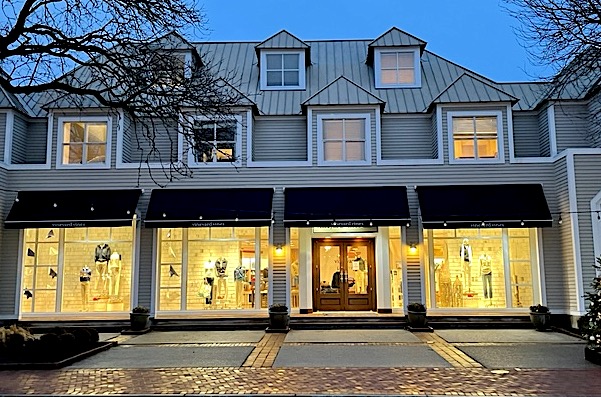
The second proposed revision — allowing retail tenants on buildings’ second floors in the center of town — would help smaller businesses since rental of a second floor would be less expensive, P&Z Chairwoman Danielle Dobin said.
Restaurant, residential and office space uses are already permitted on second floors, but not retail outlets, she said.
The prohibition of second-floor retail use downtown has been in place since the 1990s, and is limiting rentals, explained Mary Young, the planning and zoning director. There are currently “double-digit vacancies” on the second floor of downtown buildings, she said.

Although residential use would be preferable because it underpins a lively commercial area, Main Street apartments are not popular because of parking issues. And office space is not in strong demand, Young said, because the pandemic has changed where many people work.
Mandell said that although the Chamber of Commerce supports second-floor retail, he hopes that removing the existing restriction doesn’t drive out restaurants.
If second-floor retail use becomes popular then rents may rise to levels beyond reach of restaurants, he said.
But David Wright, of Paragon Management, a real estate development company, said that restaurants generally don’t want second-floor space because they are doing more take-out business now and need access to the outside.
“It’s nonsensical not to allow retail there,” he said.
Architect Bill Achilles told the subcommittee that he has clients who can’t rent second floors because of the regulation. Removing the regulation would make the second floor, and even an entire building, more commercially viable, he said.
Dobin: P&Z needs to remain flexible
Dobin summed up the discussion on amending the two regulations, saying that in the years since those rules were approved, the P&Z has learned not “to micromanage downtown to prevent certain things or manage certain things. All of these efforts were leading to the downtown dying,” she said.
“We’ve worked really hard to change that attitude … the commission needs to stay flexible.”
Both zoning regulation changes will be discussed by the full P&Z commission at a work session set for 6 p.m. Thursday, Jan. 13.







I think that the change to the 10,000 sq. ft limit has the potential to do a lot of harm. I am very unsympathetic to the support of this change by developers, architects and real estate professionals because their interests are often about near term “more”, with little interest in long term consequences. Malls could well be a thing of the past, with modest downtown locations being the kind of retail that will actually do well. People love the charm of downtown Westport, a charm taht will be greatly enhanced with the likely changes to Parker Harding, including a pedestrian bridge to the Waldman Save the Children site development. Matt Mandell’s concerns are particularly noteworthy since he has vast experience with all of our regulations and yet is also the Director of our Chamber of Commerce. This change could also pertain to Saugatuck Center. The present P&Z has prided itself on being sensitive to business interests. My judgement is that the present P&Z and the present Director of the P&Z Dept. are too supportive of business interests. The P&Z should focus on the input from the general public and pretty much ignore, at least in this instance, the views of those who will financially benefit from this change. The benefits to those who will reap short term benefits will cease quickly. The harm will last forever.