
By Gretchen Webster
WESTPORT — Thanksgiving leftovers can be a problem for family cooks — what to do with them, how to reheat or re-purpose what’s left after the feast.
But for Westporters there is another solution: They can recycle food waste at the town’s transfer station on Sherwood Island Connector and help protect the environment by reducing garbage volume.
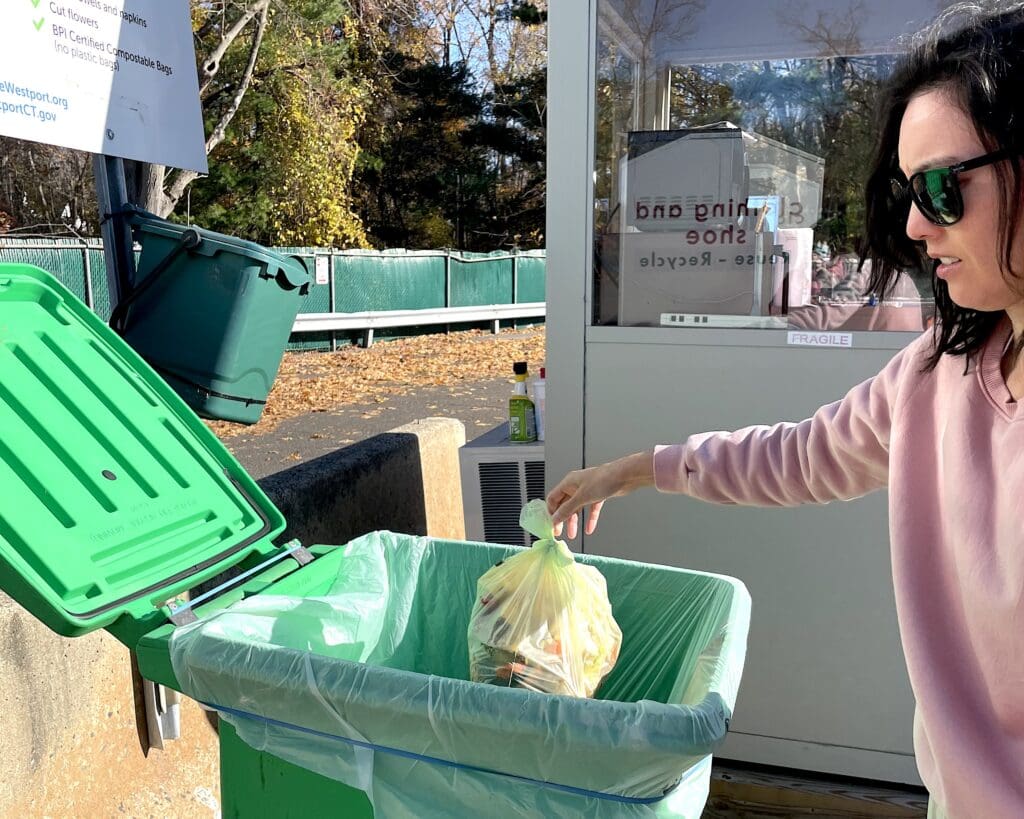
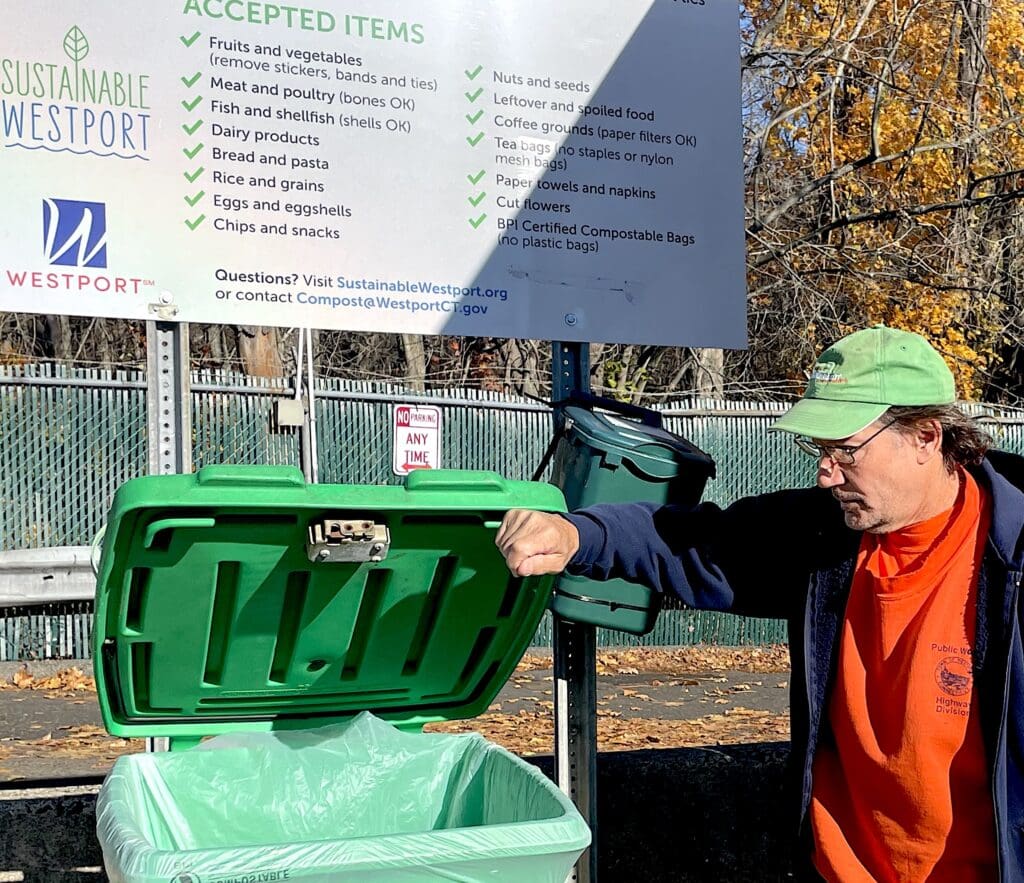
Every day there are Westport residents who collect their banana peels, leftover pasta, cut flowers and tea bags and take them to the transfer station. There, they deposit the scraps in a large bin at the designated drop-off area, part of the town’s Food Scrap Recycling Program.
By saving and depositing their scraps to be composted, they are helping to reduce the 30 to 40 percent of the U.S. food supply that goes to waste, according to Sustainable Westport, a nonprofit organization dedicated to sustainably managing energy, water and waste.
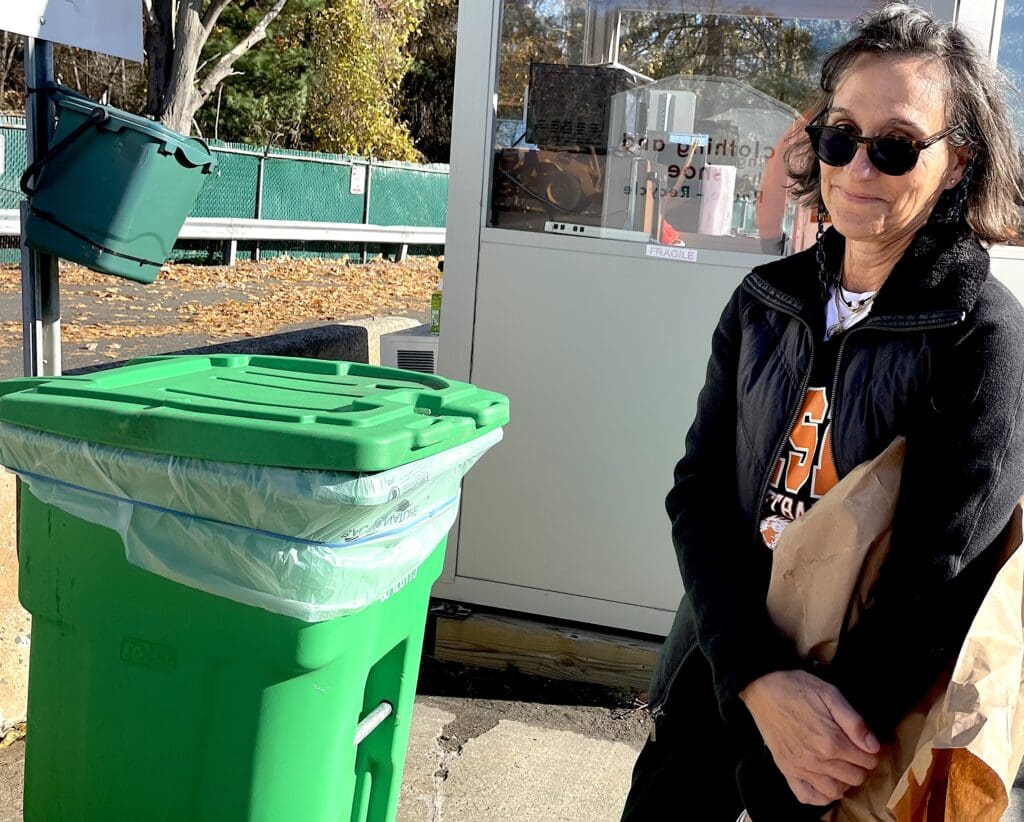
“We should all be doing this,” said Marie Rossi, who recently moved to Westport full-time. “It’s part of being a good environmental citizen,” she said as she dropped several compostable bags of food remnants into a large, green bin at the transfer station. Town residents’ concern about the environment is one reason she moved to Westport, she said.
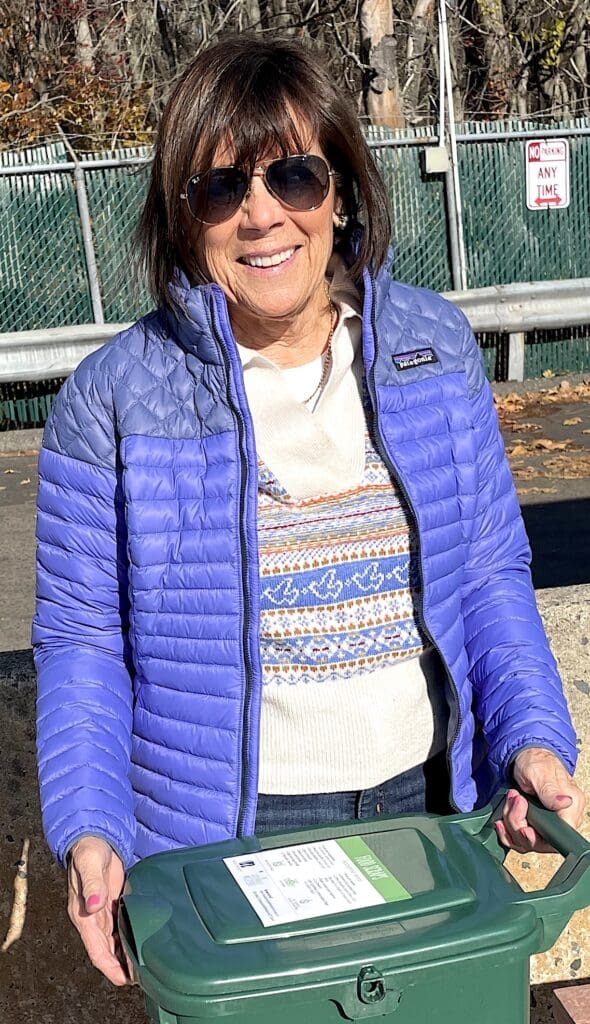
“It’s the right thing to do,” agreed Patty Gabal, also dropping off scraps. “We’re putting back into the earth what we took out of it,” she said. She was carrying a smaller bin, part of a food waste recycling starter kit that can be purchased at Earthplace, 10 Woodside Lane.
She has been collecting thrown-away food in the smaller container, and comes once a week to deposit it at the transfer station. “Every small thing we do will help,” she said.
“I hope it’s enough,” commented Jeff Carpenter, another Westport resident at the transfer station recycling food remainders last week.
It isn’t enough, according to Johanna Martell, co-director of Sustainable Westport, but food scrap recycling is definitely a step in the right direction, she said. Her organization is trying to get at least 25 percent of the food waste in town recycled for composting. “You can also compost at home,” she added.
Sustainable Westport has started to approach local restaurants to get them to join in food scrap recycling, Martell said. For restaurants, the cost of recycling can be a burden, she said, but she believes their customers will be happy to hear that food they leave on their plates doesn’t just get tossed in the garbage can.
Pippa Bell Ader, the team leader of the Zero Food Waste Challenge and a volunteer for Sustainable Westport, is credited with starting food scrap recycling here in July 2020. Just over a year later, “We’re collecting about four tons of food scraps a month [at the transfer station], or about a ton a week,” she said.
In addition, another four tons per month are sent to industrial composting facilities by licensed food waste haulers, who pick up food remainders at subscribers’ homes, while an estimated additional two tons of food waste is composted at home by residents, she said. Not only does food scrap recycling help reduce waste, it also prompts people to consider other environmental problems, she added.
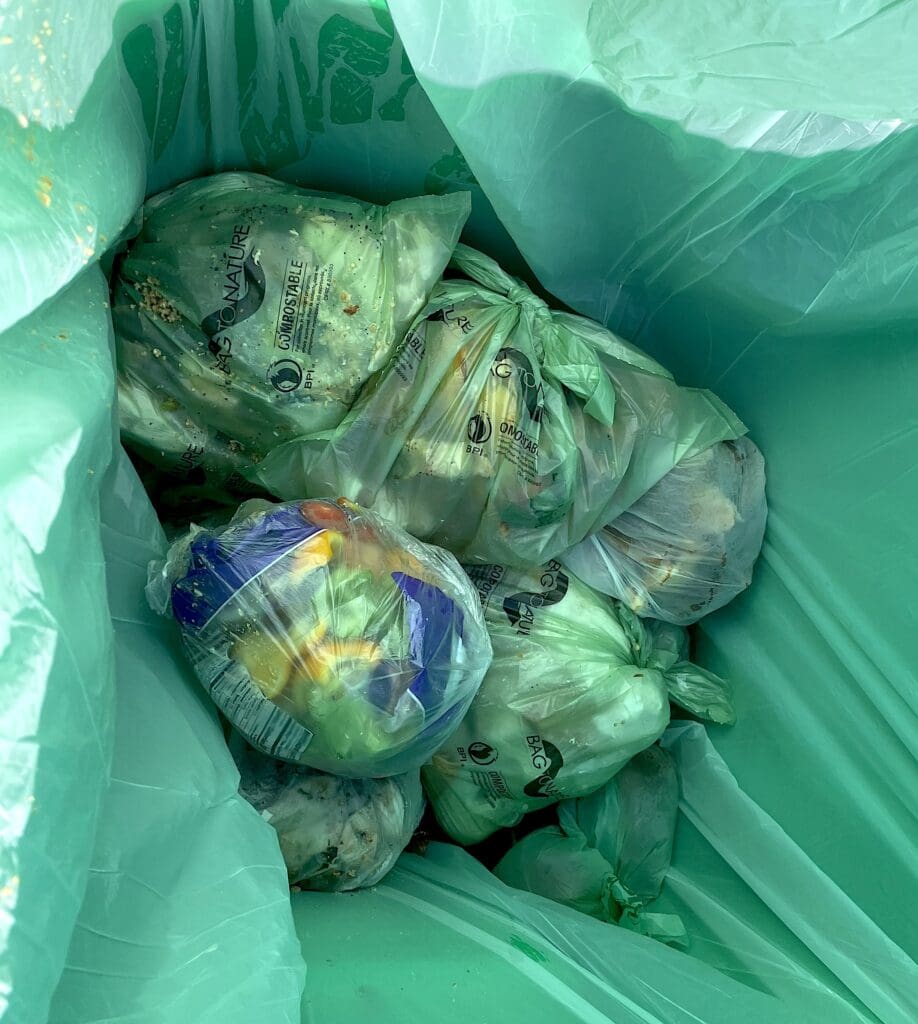
Orange peels, cut flowers, banana peels and other food waste, at left, deposited in the food-recycling bin at the town’s transfer station.
“When people start to collect food scraps, they start to pay attention to waste in general,” she said.
Both Adler and Martell are particularly enthusiastic about what Westport schools — where plenty of food once ended up in cafeteria trash cans — are doing in support of recycling.
Greens Farms and Saugatuck elementary schools have been recycling food for several years; King’s Highway and Coleytown elementary schools plan to start in December, and Long Lots, the middle schools and Staples High School already are, or will be, recycling food soon, Martell said.
Caring about the environment by recycling food remnants or taking other steps toward reversing climate change is mostly about educating people, she added. And what children learn in school about protecting the environment often is shared with parents at home. When children are involved in environmental projects at school, the concept of sustainability “reaches more households,” Martell said.
Another initiative she’d like to see gain momentum at Westport schools is reducing the number of vehicles idling in school driveways. “You see these crazy, long lines outside of the schools. It’s going to get tougher during the cold weather to ask people to turn off their engines,” she said. “It’s really bad for the environment.”
The elimination of single-use plastic, such as plastic disposable water bottles or food containers, is another priority of Sustainable Westport.
And as for Thanksgiving dinners, Martell’s advice is: “Don’t overbuy … The best technique to avoid food waste is to buy the right amount of food. It’s really about meal planning and making sure you buy the right amount, and not waste.”
Three ways to recycle food scraps in Westport:
- Collect discarded foods at home and bring them to the transfer station’s drop-off area.
- Hire a Westport-licensed food scrap hauler to pick up the remainders at home.
- Compost food waste at home. Food recycling kits, bins and compostable bags are available at Earthplace, and compostable bags are available at Westport Hardware, 616 Post Road East.
For specific guidance and information about composting, click here.












Recent Comments