
Editor’s note: This is the first installment of a two-part report on the southern California wildfires by Westport native Jarret Liotta, a Los Angeles-based freelance writer and photographer. The first executive editor of the Westport Journal, Liotta also has worked for several other Connecticut news outlets.
By Jarret Liotta
“I see your hair is burning / Hills are filled with fire / If they say I never loved you / You know they are a liar.” / “L.A. Woman,” by The Doors
Though in L.A. terms I live far on the other side of town in West Hollywood, coincidentally, I was in Pacific Palisades on Monday, Jan. 6, the evening before the fires started.
I’d parked my car downtown on Via de la Paz, an arrow-straight historic road that crosses Sunset Boulevard — the main drag through the Palisades — to attend a meeting at the Community United Methodist Church of Pacific Palisades. It’s the church group that literally started the town in 1921.
Being an hour early that evening, I strolled the downtown area, never imagining what would happen the next day. It’s a town I was familiar with, having lived in adjacent Santa Monica from 2002-08. My kids and I would often go hiking in magnificent Tesmescal Canyon on weekends, where the Palisades fire started, and I knew friends in town too and often spent time visiting there.
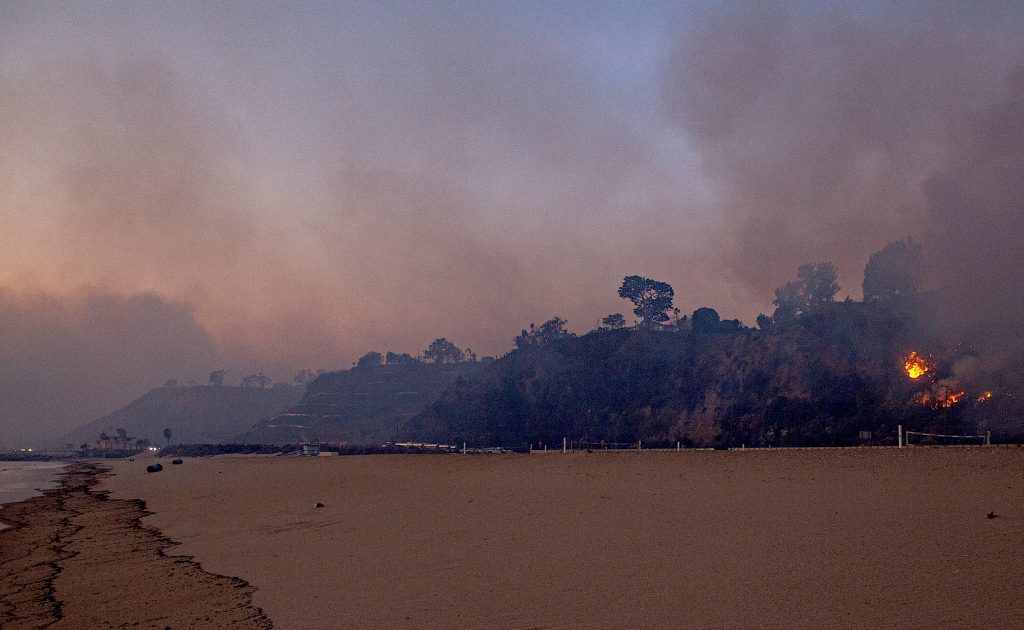
The Palisades, in particular The Village, was almost a mirror image of Westport or, more exactly, New Canaan. Despite it’s close proximity to the sprawl of L.A., it was an isolated suburb-like hamlet nestled between forested canyons, hills and the Santa Monica Bay.
Along with hosting a galaxy of top-end luxury stores, it was home to a constellation of mega-incomes and celebrity personalities too numerous to name. (One distinctly strange memory from years ago was pulling into a gas station on Sunset and watching Tom Hanks pump his gas.)
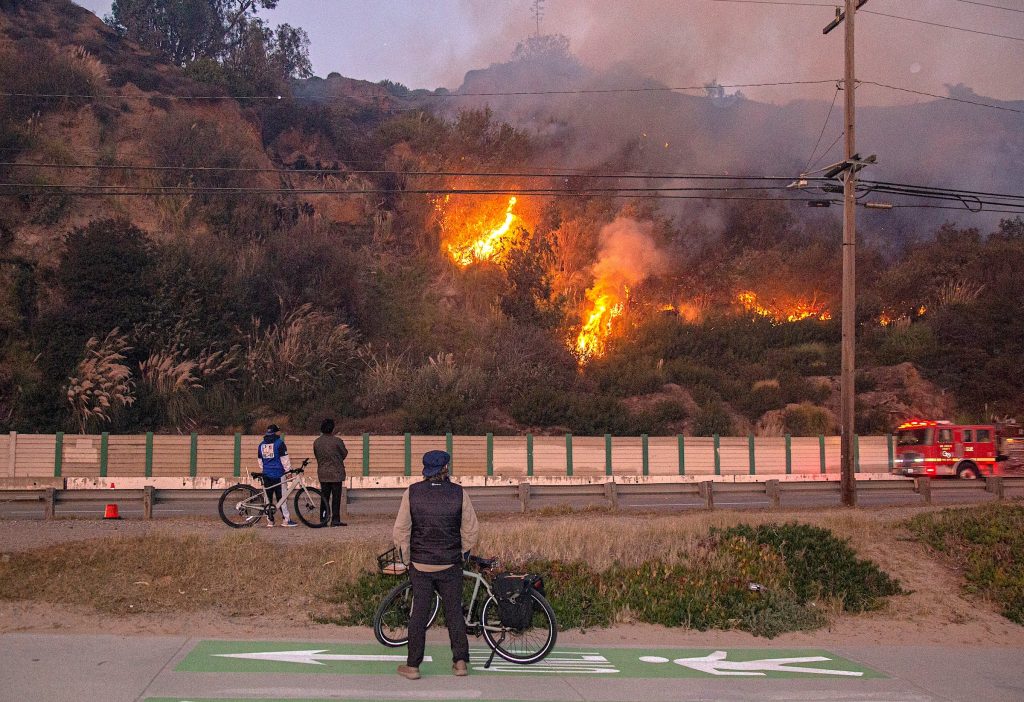
The Santa Ana winds, which sometimes offer gentle tepid air in winter, were gusting strong that next day, Tuesday, Jan. 7. The fire started and then spread quickly, but it was unimaginable to believe it wouldn’t be tamed by firefighters long before it inflicted significant damage.
That evening, quite by chance at a supermarket in West Hollywood, I ran into a woman from the San Fernando Valley with whom I’d spoken at the church in the Palisades the night before. “The church is gone,” she said solemnly. “The town’ll be gone by tomorrow.”
I was speechless. Meanwhile, as we both stood puzzled and shaking our heads, the next enormous fire, the Eaton fire, north of Pasadena to the east, had just ignited.
“There was only like 7,000 people there when I was growing up. Now it’s like 24,000 people … or was. Not anymore.”
Woman taking refuge in wildfire shelter
While I can’t begin to speak to the upset, fear, frustration and despair of the many, many people whose lives have been threatened and uprooted, their possessions completely destroyed, I am witnessing the shock and reaction of the city at large.
The feelings of disbelief and awe are palpable, with the fires the only topic of conversation. Everyone has a story about loss or fear. Everyone knows people who have been displaced or lost homes. Everyone is charged with shock and confusion, somewhat timid, somber, slightly dazed and always a little wary.
The number of people that noticeably declines over the holidays in L.A. has not rebounded, as many have either not returned from out-of-town visits or have left since Tuesday.
Traffic is light, shops and stores seem less populated, and — at least in West Hollywood — the city sounds and bustle familiar to regulars prior to the holiday season, are absent, even this past Saturday night at some of the most popular clubbing areas on Sunset and Santa Monica Boulevard.
Overall, Los Angeles seems to be experiencing the same pervasive fear and wonder that came with the early days of the pandemic. People go about their business with a gentle attitude of compassionate camaraderie combined with a subtle suspicious worry.
The city is full of angels striving to pitch in, driven to help out, but also peppered with a few fear-tinged jerks coyly hoarding groceries and double parking to do so.
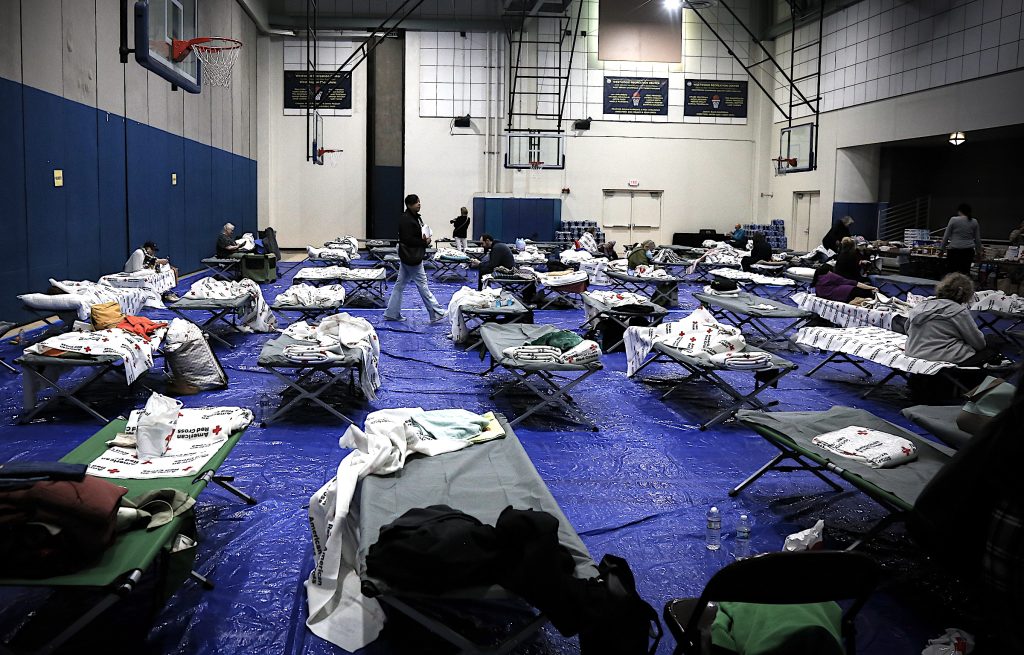
On Wednesday, work brought me to the Westwood evacuation center located at the Westwood Recreation Center on Sepulveda Boulevard. This is near the line of the 405 freeway, which run north to south and separates what is known as the “West Side,” including the beach communities like Marina del Rey, Venice, Santa Monica and the Palisades.
The American Red Cross is currently overseeing a Westwood shelter that, frankly, seems to have more volunteers and news reporters than evacuees.
It’s evident that most people — at least on the West Side — have found shelter with friends, hotels or second homes. Still, there were some people staying there and I had the chance to speak with a couple of them.
“It’s a beautiful, idyllic community,” said one woman who lost her condo in the fire after having lived in town almost 60 years.
“There was only like 7,000 people there when I was growing up,” she said, having grown up in two different houses on Via de la Paz, just down the street from the Methodist church.
“Now it’s like 24,000 people … or was,” she said. “Not anymore.”
The city is full of angels striving to pitch in, driven to help out, but also peppered with a few fear-tinged jerks coyly hoarding groceries and double parking to do so.
The woman was working from home at her place on Sunset, just west of The Village, where she lived with her brother. As the afternoon waned, she looked outside and saw palm trees on fire and flames advancing on their condo toward the hills.
“They seemed to put them out, but then it just got worse,” she said of the flames. With darkness falling, they could see smoky red skies encircling the area.
They decided to leave, but since there was a power outage they couldn’t leave with their car because the community’s gate operates electronically. They tried to open it manually, but couldn’t.
They phoned 9-1-1 twice for help, but none arrived.
Finally, by chance, they flagged down a paramedic team driving along Sunset and hitched a ride down to the Pacific Coast Highway.
Having seen other wildfires break in the past, the woman said this was an entirely new experience.
“Nothing like it. It was really bad … It’s scary … It’s just crazy.”
“We don’t know what we’re gonna do … We just kind of left in a daze, just freaking out,” she said.






Recent Comments