
By Thane Grauel
WESTPORT — The first big weekend of the season is upon us, and this year beachgoers at Compo are joined by feathered shoreline fans, freshly hatched from their eggs.
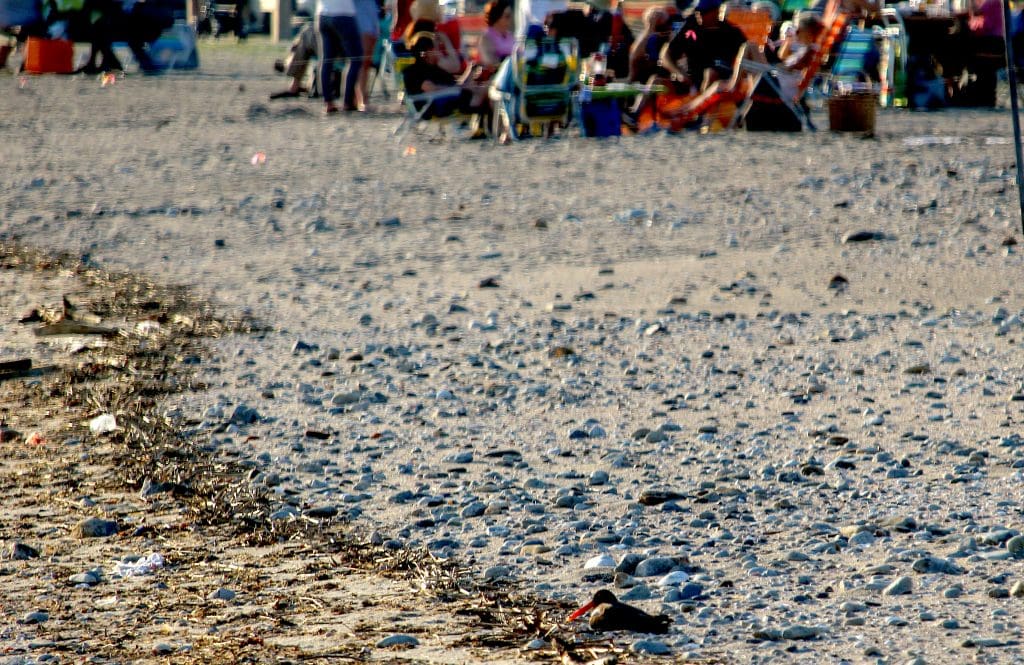
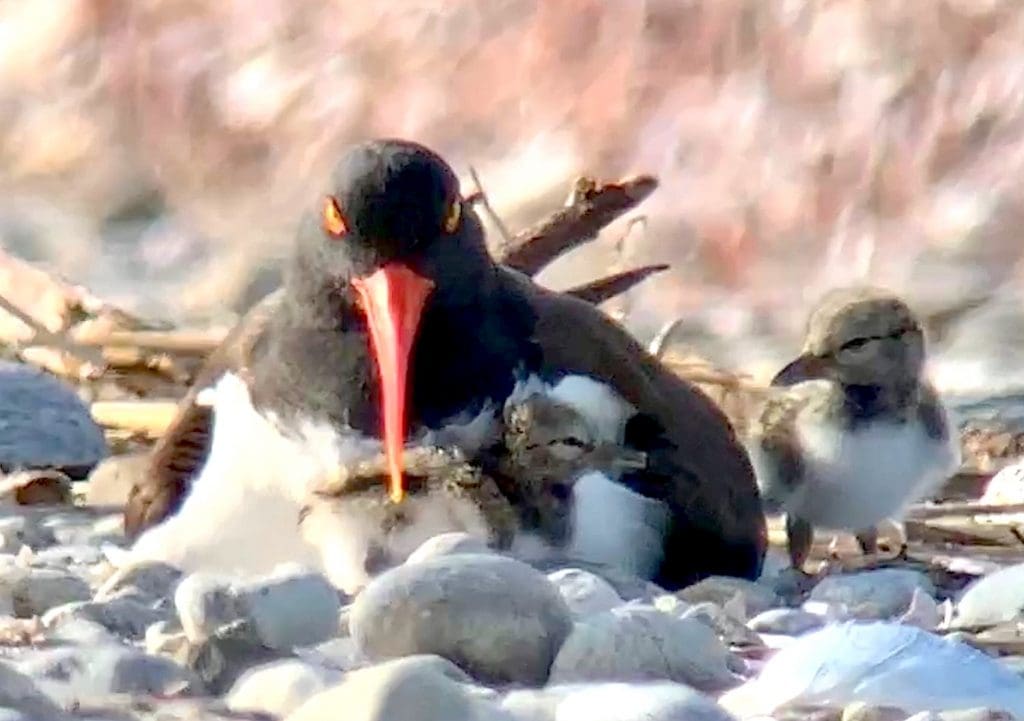
On Wednesday, two American oystercatcher chicks emerged from a sandy nest on South Beach, a stone’s throw from the cannons. They are now scurrying around the waterfront under the watchful eye of the parents.
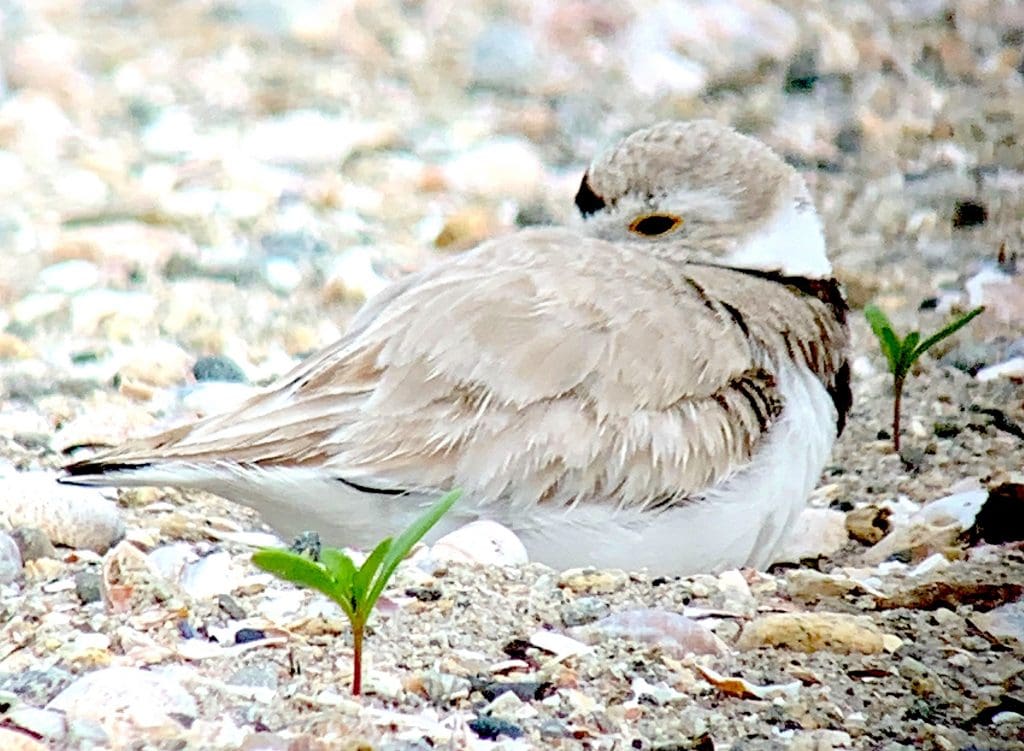
Next door, a pair of nesting piping plovers — a threatened species in Connecticut with special protections — should see chicks hatch as well this weekend.
The area has been fenced off by an alliance of government entities and environmental groups that includes the Audubon Society, the Nature Conservancy, the state Department of Energy and Environmental Protection and the U.S. Fish and Wildlife Service.
Trying to share the shore
“We’re trying to share the shore,” said Elizabeth Amendola of the National Audubon Society.
She keeps a close eye on shorebirds and their nesting in the region. She’s helped by a crew of trained volunteer monitors that this year is the largest ever, about 150.
Informational signs punctuate the post-and-rope fence line. They provide information about shorebird species, and ask that people keep their distance.
The fencing at Compo is in its fourth nesting season, but this year the plovers have the added protection of an “exclosure,” a cylindrical cage-like structure designed not to keep them in, but predators out.
The wire mesh ring is wide enough for the plovers to pass through, but not so much for raccoons, opossums, foxes, coyotes and predatory birds such as gulls and fish crows.
Last weekend, plenty of people were hanging out at the beach. They gave the birds a wide berth, setting up beach chairs and pop-up awnings many feet from the roped-off area.

With beach season beginning in earnest, Amendola asks that humans visiting Compo and other shoreline areas do three things to help protect the birds:
• Give them space.
• Pack out trash or put it in an appropriate receptacle. (It can attract gulls, fish crows and other animals that like to snack on hatchlings.)
• Keeps dogs off the beach — they are banned by official town policy through Oct. 1. Dogs might be a good girl or good boy, but nesting birds view them as they would a fox or coyote. If a dog gets too close, and birds might abandon a nest.
Westport Parks Supt. Michael West said that to accommodate the nesting birds, activities for maintenance crews have been scaled back.
“What we try to do is to avoid that area with beach grooming so don’t impact them,” West said.
And when they do work nearby, monitors from the alliance are on hand to act as spotters.
One of those monitors is Tina Green, a Westporter and experienced birder.
She and Amendola both said that piping plovers are difficult to discern, even for an experienced spotter.
Piping plovers blend in with sand, smooth stones and tidal debris.
Oystercatchers are more conspicuous. There’s no sneak in their beak — the outsized, bright orange appendage is something of a power tool evolved for extricating oyster and clam innards from their clamped-down shells.

Accommodating the return of shorebirds
Both species are relatively new returns to Compo. The plovers stayed away since the 1980s, returning about six years ago. The oystercatchers, more recently.
Green noted that this year seems to be the earliest both species have nested at Compo, which means ideally, the young ones will be sufficiently independent in about six weeks.
“Which is fantastic,” she said. “We have fireworks and crowds at Compo in July.”
If the young birds are not successful, the parents usually will nest again.
Amendola said Westporters and town officials have been accommodating.
“The town has been really great working with us,” she said.
Conservation Director Alicia Mozian staggers rentals of Cockenoe Island campsites to keep campers away from sensitive areas until nesting nearby is over, Amendola said. (Cockenoe has the most nesting pairs of oystercatchers, 14, in the state, and is one of the state’s largest shorebird rookeries.)
And, Amendola said, “Compo is one of the places we have really positive interactions with the public.”
“People are curious, and thank us for protecting the birds,” she said. “We have a really high interaction.”
It seems the birds have been somewhat accommodating as well.
Amendola said she’s heard from counterparts down south that piping plovers are much more sensitive to humans than here, staking out larger territories around nesting areas.
“Our birds in Connecticut are learning to be a little more tolerant,” she said. “They’re fairly comfortable with having human activity.”
So, local birds are city slickers?
“They’re getting there,” she said. “It will help them be more successful.”
Thane Grauel is a freelance writer and frequent contributor to Westport Journal. Learn more about us here.








Recent Comments