
By Gretchen Webster
WESTPORT — The full “Flower Moon” blossomed into a celestial spectacular Sunday night — but was eclipsed by another astrological phenomenon.
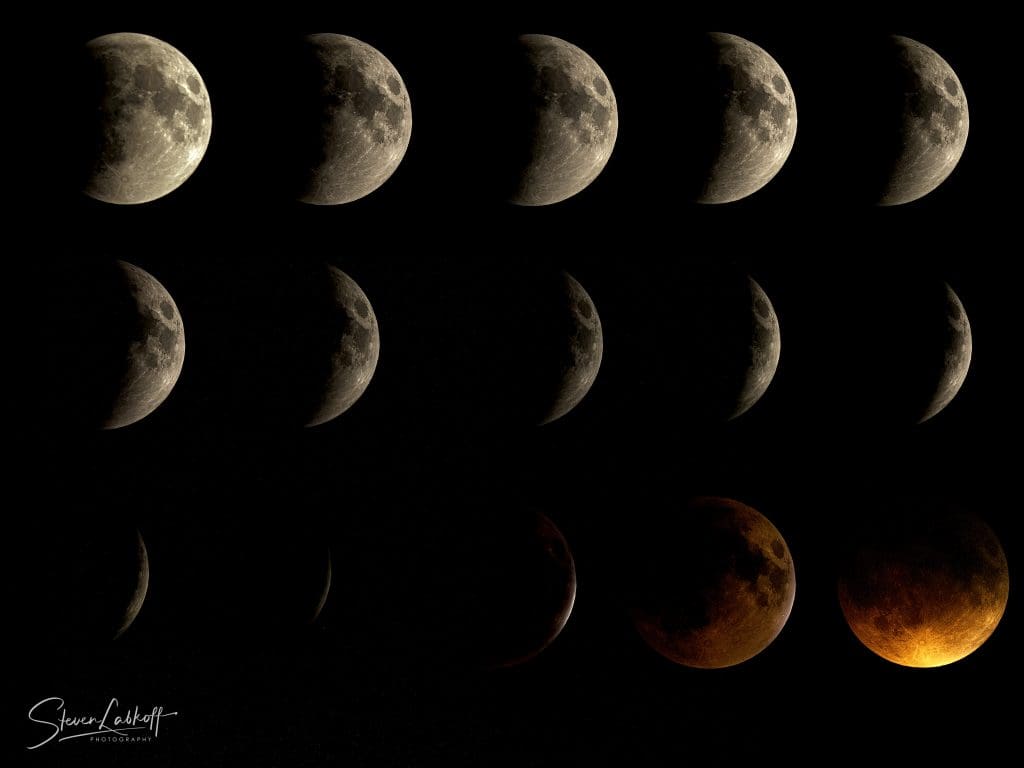
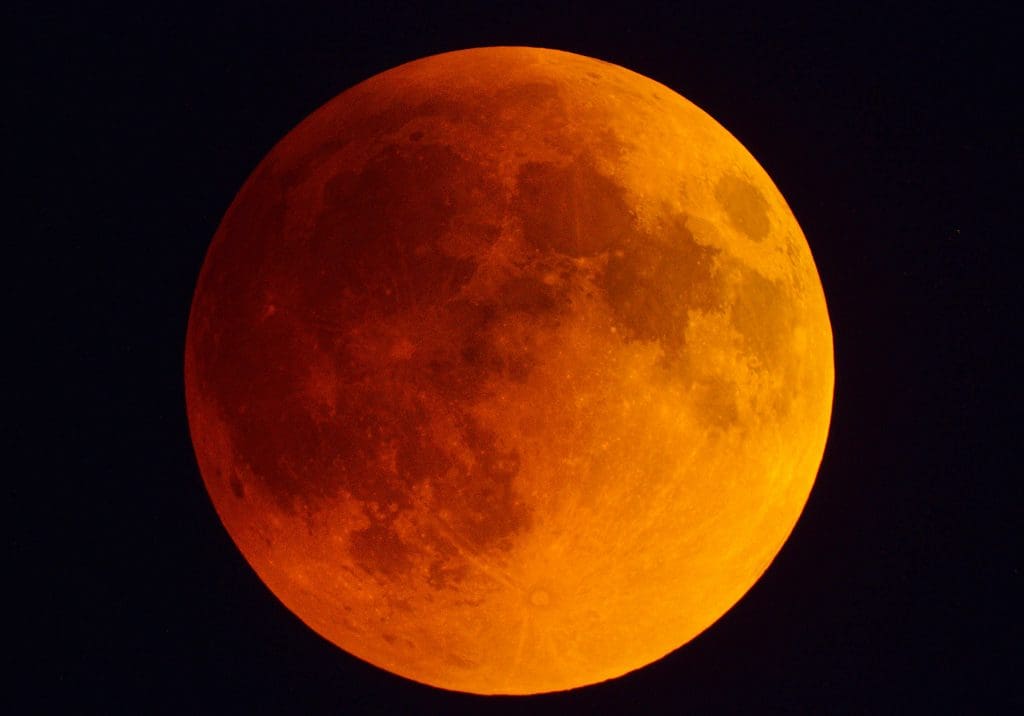
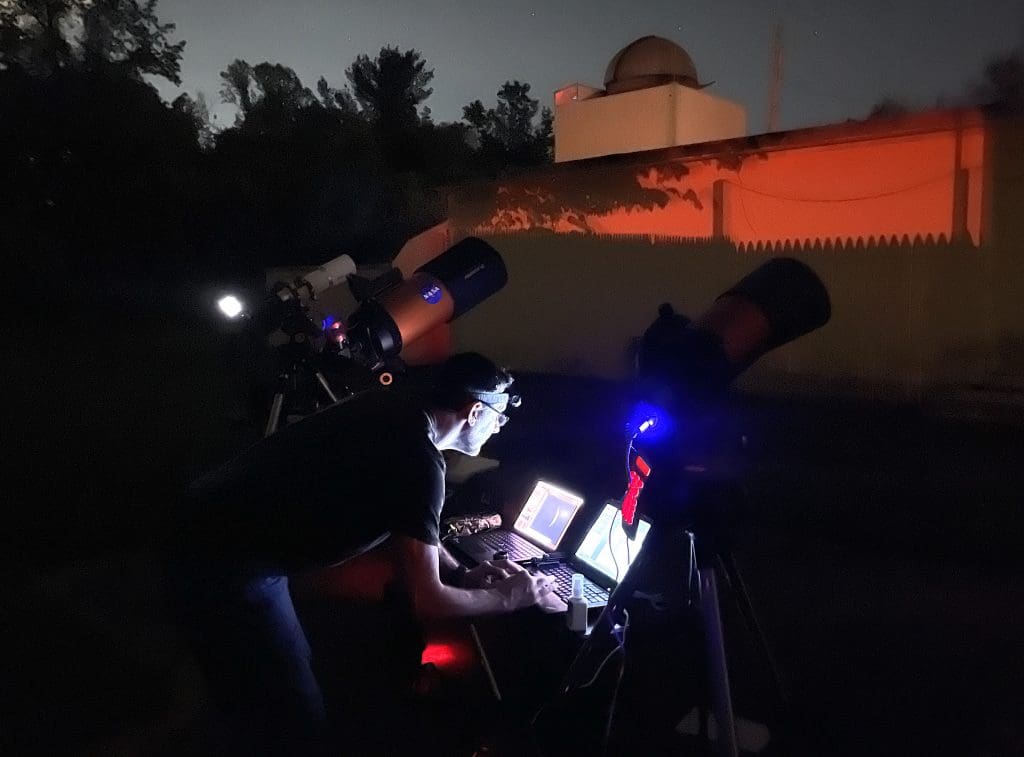
May’s full moon — known as the Flower Moon — turned blood red in the night skies over Westport as a result of a full lunar eclipse. More than 30 members of the Westport Astronomical Society, joined by others, gathered at the town’s observatory on Bayberry Lane to watch the eclipse and take photos.
“The moon and the earth and the sun have two ways of aligning,” said Stephen Labkoff, a member of the society. One is a lunar eclipse, which occurred Sunday night, and the other is a solar eclipse, which is much rarer. A lunar eclipse takes place when the moon rotates around earth passing fully into the earth’s shadow, he explained.
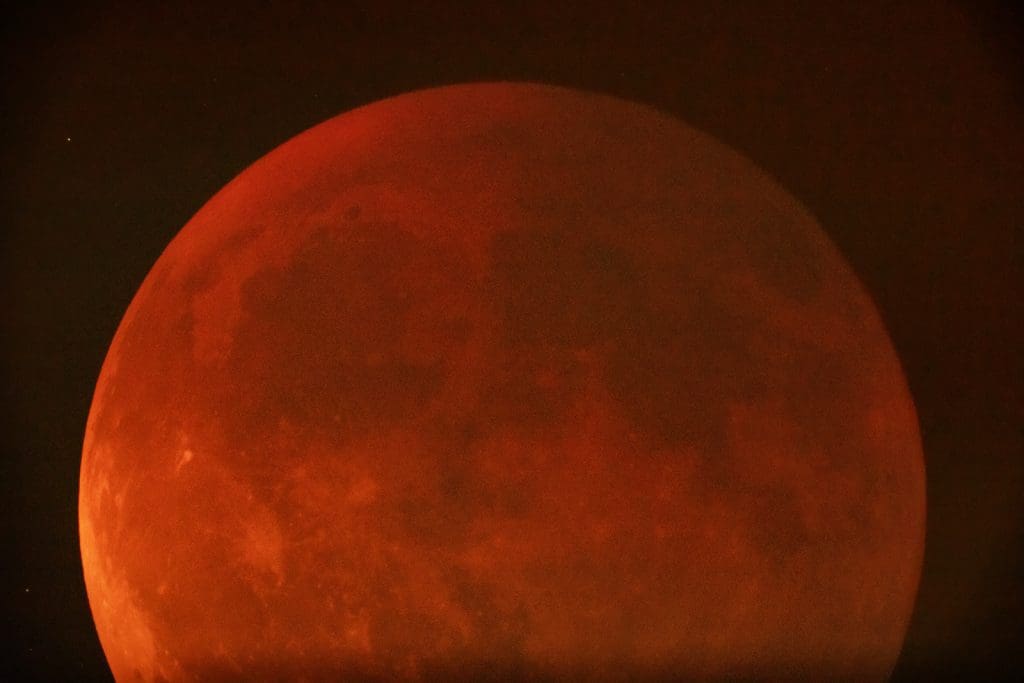
The lunar eclipse was visible Sunday night in Westport for only part of its transit because of clouds, said Labkoff, a physician with a passion for astronomy and astrophotography.
But he and the other star gazers at the observatory late Sunday still were able to get some photos of the orange/red moon in full eclipse.
The next full lunar eclipse won’t occur until March 2023, Labkoff said, with a partial eclipse occurring Nov. 8 and 9 this year. “Last night was an especially good one,” he said.
Photos of the heavens taken by Labkoff and several other members of the Westport Astronomical Society will be on view in an astro-photography exhibit, “How Beautiful the Universe,” at the Housatonic Museum of Housatonic Community College, 900 Lafayette Boulevard in Bridgeport through June 1, and opening at the Stamford Jaycee Community Center, 1035 Newfield St., Stanford on June 14.
The Westport Astronomical Society is a nonprofit organization founded in 1975. Free lectures are offered monthly and speakers include astro-photographers, astronomers and other scientists.
On Tuesday, May 17, the speaker will be Larry Gladney of Yale, an American experimental particle physicist and cosmologist. He will discuss how the Rubin Observatory in Chile is conducting a survey of the entire observable Southern hemisphere sky every three nights for a period of ten years.
The 8 p.m. lecture is available with a Zoom link on the society’s website and on its YouTube channel.
The society also offers star-gazing sessions for the public on Wednesday nights from 8 to 10 p.m. when skies are clear, both on the lawn and in the dome of the observatory, 182 Bayberry Lane. All events are free and open to the public.
For more information, visit the Westport Astronomical Society’s website, call 203-227-0925 or email observatory@was-ct.org.
Gretchen Webster is a freelance writer and frequent contributor to Westport Journal. Learn more about us here.







Recent Comments