
By Gretchen Webster
WESTPORT — More than 30 people attending Monday’s Planning and Zoning Commission public hearing on proposed changes for permitted uses on the Baron’s South open space seemed to agree on only two aspects of managing the property:
- Many Westporters have never even visited the 23-acre tract near downtown.
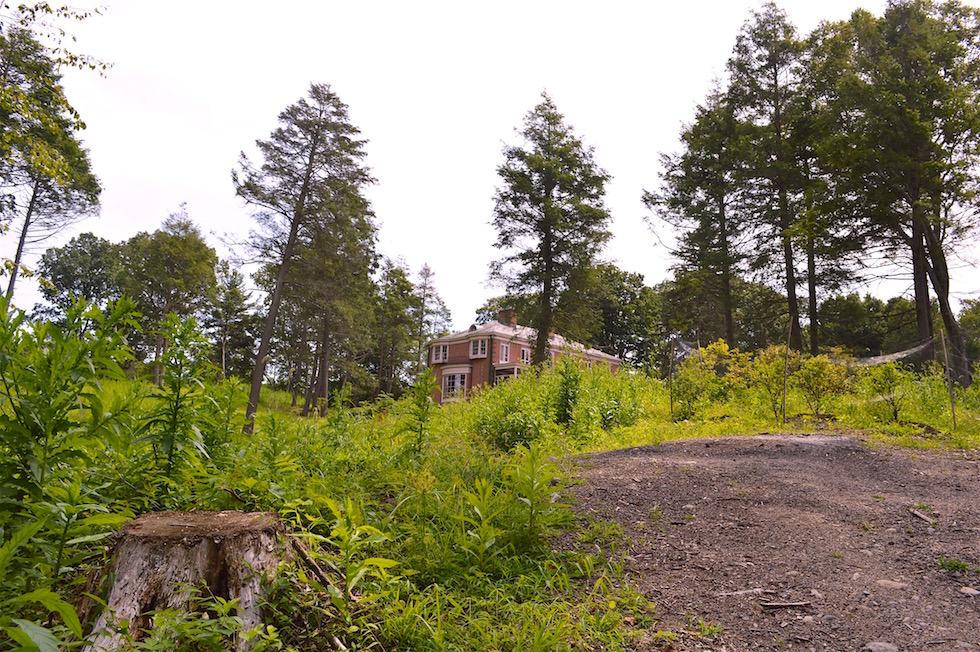
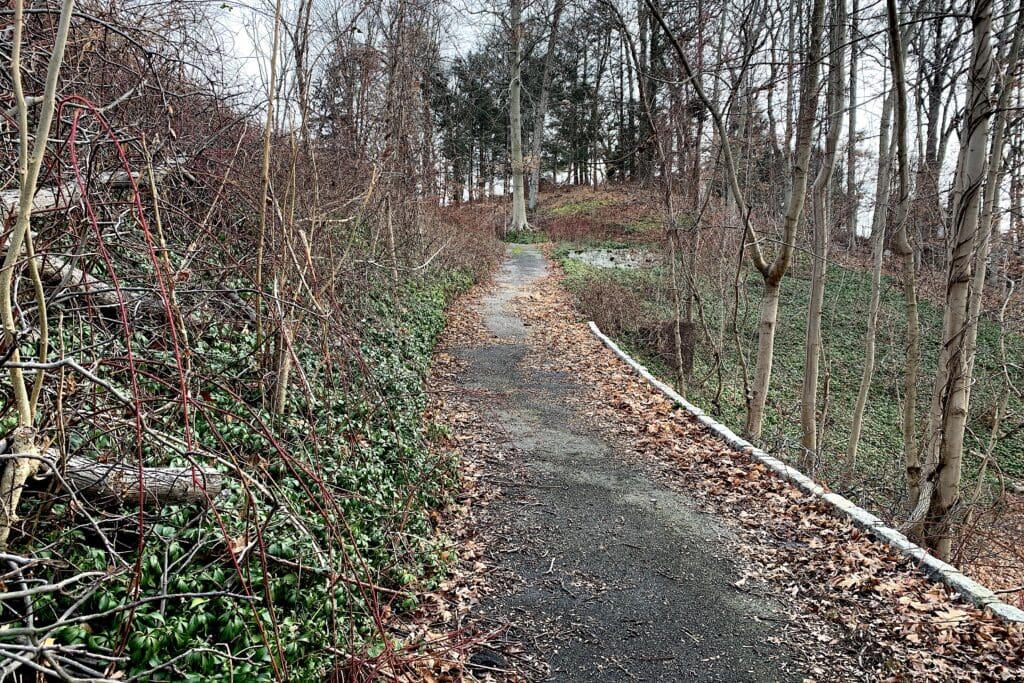
- The land has been poorly managed since the town acquired it in 1999.
Speakers at the commission’s Zoom hearing suggested that improved signs should be posted to direct people to the property, and that the land must be cleaned up and better maintained by the town.
Clash over “passive” vs. “organized, non-team” uses
They did not agree, however, on adopting a zoning amendment that would allow broader, “organized, non-team” use of the property by the public.
After two hours of squabbling over language proposed for the proposed zoning amendment to allow “organized, non-team” activities and to add “generally” passive activities, such as yoga lessons and guided hikes, as permitted uses, the P&Z voted to continue its review of the proposal at a future meeting.
Disagreement over the property’s use did not arise between P&Z members themselves, however, but mostly between the commissioners and six members of the Representative Town Meeting who attended the hearing.
Access to using the property proved to be divisive.
P&Z Chairwoman Danielle Dobin said that organizations such as school groups and classes at the Westport Center for Senior Activities don’t use the property because existing zoning rules do not allow organized activity.
“It is a public space and should be accessible and used by the public,” Dobin said. “It’s so important to bring … this text amendment even though we knew it would be controversial and bring about a lot of discussion.”
Others, including Wendy Batteau, District 8, the chairwoman of the RTM Environment Committee, said there is no need to change the existing regulation’s language because there is no reason that people can’t enjoy hikes, conduct a yoga lesson or use the property for similar activities now.
“There is absolutely nothing preventing people from walking or picnicking or doing anything passive there now … except that [the property] is a mess,” she said. “I think that the language of this revision is very vague and could result in problems,” she said of the proposed amendment.
Change might endanger preservation of open space
Some speakers at the hearing said they had been involved with saving the Baron’s South property from development, and that the proposed amendment is unnecessary and will negate the work they did to preserve the acreage as open space.
“I’ve been involved with this property and hoping to preserve it and save it since it was purchased,” Wendy Crowther told the P&Z. “If it’s not used, it’s because the town has spent more time working on this potential change … than they spent cleaning it up. It is falling into absolute disarray.”
Chip Stephens, a former Westporter and P&Z member who now lives in Maine, agreed.
“I came to you from that group that saved Baron’s South. It was destined for development and large houses,” he said. He and others worked for months to preserve the property as open space, he said.
“Westport is in the bottom three towns in the state of Connecticut with [the amount of preserved] open space,” he said. Baron’s South should be maintained as open space, with only passive uses permitted as described in the current regulations.
If the regulation is changed to allow more active uses, the town would have to police the property, he said, to be sure the land is protected. “Who’s going to enforce it? … Please protect this jewel in Westport,” he said.
Baron’s South in greater need of cleanup, maintenance
RTM member Kristin Schneeman, District 9, said the proposed text amendment doesn’t seem to change how the property can be used now, and what is really needed is a budget to clean up and better maintain the property. “It is deteriorating,” she said.
The discussion came to an end when P&Z member Jon Olefson pointed out the proposal generated a lot of emotion over changing a few words in an amendment that might not make a significant difference in what happens at Baron’s South.
“This is not a monumental change. We’re not building a stadium on the lot,” he said. “We just spent two hours on what does ‘is’ mean — I appreciate the energy and the civic discourse, but this is the wrong hill to die on, whether or not to play bocce ball on an overgrown lot.”
Olefson suggested the proposed revision of the amendment be sent back to P&Z subcommittees “to parse out the language.”
Dobin then moved to continue consideration of the text amendment to Feb. 28. All commissioners voted to postpone the discussion and vote on the proposed amendment, except Amie Tesler.









Of course if the property itself was treated to a major clean-up and maintenance, passive activities would occur naturally. To have to define activities is a mis-step by the P and Z chair. Perhaps she wants to use Baron South as part of her re-election effort, but she is thinking of herself and not the citizens of the Town with this proposed text amendment.
Of course Carolanne Curry is correct. The 30 residents in attendance at this P&Z meeting were unanimous in understanding that the major impediment to enjoying Baron’s South is the abhorrent lack of maintenance by the Parks and Recreation Department, and their failure to enact the rehabilitation plan they were given 6 years ago. Parking is plentiful by the Center for Senior Activities, but this unique open space property has fallen into disrepair due to negligence, and there has been zero promotion of its existence.
As Ms. Curry has stated, the proposed text amendment modification of the existing regulation is unnecessary to permit the passive activities “guided nature walks, hiking and yoga classes” they claim they are trying to permit – these are already permitted. Two of the authors of the existing regulation (Cathy Walsh and Chip Stephens) were in attendance and verified this as fact. I created a detailed analysis of the origin and evolution of Westport’s six Open Space parcels that evidenced this proposed modification language is not only unwarranted, it’s also ill-advised, creates unnecessary ambiguity, and according to prior Director Larry Bradley extends beyond the P&Z’s regulatory purview.
Passive activities – ALL PASSIVE ACTIVITIES – be they “organized” with an instructor or not, are permissible at all of Westport’s open space parcels. Many non-passive activities, such as frisbee, kite flying, lawn games, etc. are also permitted for “the enjoyment of all visitors”.
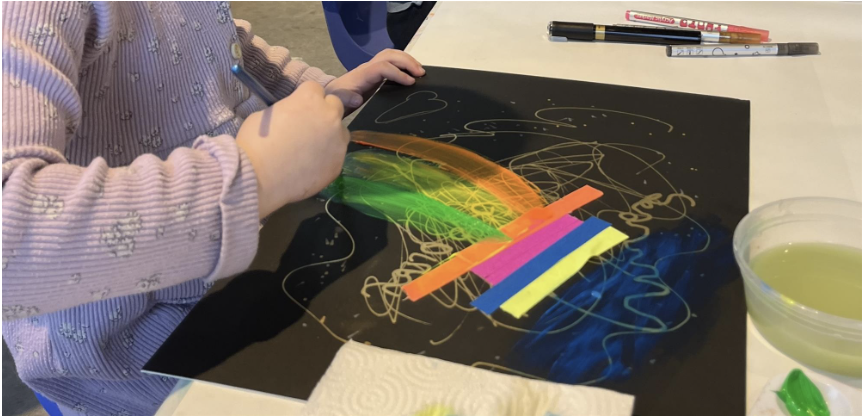
I was informed that last year the WCSA held an outdoor painting class without any objections – however this year “someone” at the “P&Z” has suddenly informed them that holding “classes” at Baron’s South was not permitted and required this proposed regulatory change. This is untrue, and the “someone” who provided our Senior Center that misguidance has yet to be identified.
If someone, anyone or any organization (school, church, rotary, association, club, senior center or our Parks and Recreation Department), wishes to go to Baron’s South to paint, do yoga, perform tai chi, go on a hike, jog, perform nature photography, teach preservation & conservation, guide a nature walk, play catch, play horse-shoes or corn hole, play hide & seek, picnic, star gaze, read a book, meditate, etc., – or have students there do it – they should just do it. No one will stop them, arrest them, or fine them. It is unimaginable that anyone would object to and prohibit a nature photography class or landscape painting class from performing these PASSIVE activities at Baron’s South, Winslow Park or Riverside. Imagine someone attempting to regulate and enforce a distinction between taking a “hike” through Baron’s South vs. walking, ambling, or strolling amongst the trees. It is absurd.
The Parks and Recreation Department must perform the rehabilitation and maintenance of Baron’s South that they were remanded to do over 6 years ago so that all residents of, and visitors to, the Town of Westport can fully appreciate and enjoy the unique Baron’s South property.
In regards to holding “classes” there: all it requires is the understanding and recognition that a PASSIVE activity does not distinguish any degree of “organization” of the passive activity. PASSIVE makes zero qualification as to whether there are 6 individuals painting or whether there are 6 students painting. Just do it – and go enjoy ALL six of Westport’s protected open space properties.
Ms. Curry and Dr. Walshon are correct.
I was a Westport Parks & Rec commissioner when the DOSRD zone was first established (early 2000s) and I served on the subcommittee (composed of commissioners from both Park & Rec
and Planning and Zoning) that determined the original language for the zone. At that time, most of the town’s open spaces were zoned residential, some as business zones. The purpose behind creating a new zone (DOSRD) was to use it to permanently protect these open spaces from residential or commercial development, to preserve their environmental qualities, and to establish them for public recreational enjoyment only.
Back then, we recognized that the town’s open space properties were very different from one another. For example, consider the difference between Longshore Park where sports are played and Winslow Park where activity is non-sport oriented. Without getting into the minutia here, these differences required developing language for a passive-use zone that would not allow active recreational uses.
This is why the phrase “non-organized” came into use. Active recreational uses were considered to be ORGANIZED activities, i.e. team-oriented, sport-oriented, and competition-oriented activities that required demarcated playing fields or hard-scaped playing surfaces and/or permanently installed equipment (like goalposts, nets, backstops, etc). Passive recreational activities required none of these things. Hence, the phrase “OR non-organized recreation” was used to characterize that active, i.e. “organized” recreation was not allowed.
All of Westport’s DOSRD properties (there are six) are zoned for passive OR non-organized recreation. The word “or” is key. There is no debate over the fact that all activities/uses in these DOSRD-zoned properties must be passive. Therefore, a group gathered for yoga or painting or bird-watching or walking, etc. is fully allowed because these are passive uses, whether they involve groups or are organized by town departments or not. They don’t involve teams, competition, permanent equipment, courts, etc.. They are “non-organized” in the sense that they are not active sports, teams, competitive, etc.
Though the “passive OR non-organized” wording in the current DOSRD zoning regs might have caused some confusion for a few people, when you drill into the history and detail, and when you also use common sense, the current language works just fine – no amendment is needed to change it. It must be passive OR unorganized. If its passive, you’re in. If you’re a group doing passive things, you’re in.
Additionally, with all of the recent public debate and attention being paid to this wording issue, we’ve all been newly reminded or educated as to what the intent of the DOSRD zone originally was, and what it allowed and didn’t allow.
The P&Z should abandon this well-intentioned but unnecessary effort. If anything, this recent scrutiny has helped shine a spotlight on Baron’s South. Let’s better direct the town’s eyes and energies toward improving the overall condition of Baron’s South – the town has nearly abandoned all maintenance there for two decades. Words aren’t keeping people away from Baron’s South. Poor maintenance and non-existent publicity have.