
By Gretchen Webster
WESTPORT — When Will Haskell was 22, he won election — against steep odds — to become the first Democrat in decades to represent the 26th state Senate District, a sprawling legislative enclave stretching from his hometown of Westport north to Bethel.
Four years later, Haskell wrote a book about his unlikely electoral success, published just as he decided in early January not to seek election to a third term later this year.
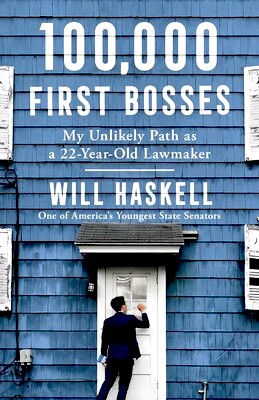
The book is fittingly called “100,000 First Bosses, My Unlikely Path as a 22-Year-Old Lawmaker,” and Haskell discussed the political memoir on stage Thursday night at the Westport Library.
In conversation with journalist Jay Schadler, Haskell spoke about what really propelled him, a recent college grad, to undertake a difficult campaign in 2018 against his opponent, incumbent Republican Toni Boucher, who had held the seat since 2009.
Perspective of youth key to success
It was his youth that made him think he could succeed, Haskell said.
The 2014 Staples High School graduate didn’t really understand what he was getting into at the time, but he knows now that his youth was — and is — an advantage.
“I realized that I should embrace it as a part of my reason for running,” Haskell said about his age. He had only graduated from Georgetown University the preceding May. But he came to the realization that most lawmakers at every level were not the people who would be living under the laws they passed.
“Every day policy makers, whether it’s at town hall or at the state capitol or in Congress decide what the next 20, 50, 100 years of American life will look like, and they’re doing so without any stakeholders in the future, without any of tomorrow’s taxpayers, without any people who are going to have to live out the consequences of those decisions,” he said.
Law school now, politics later
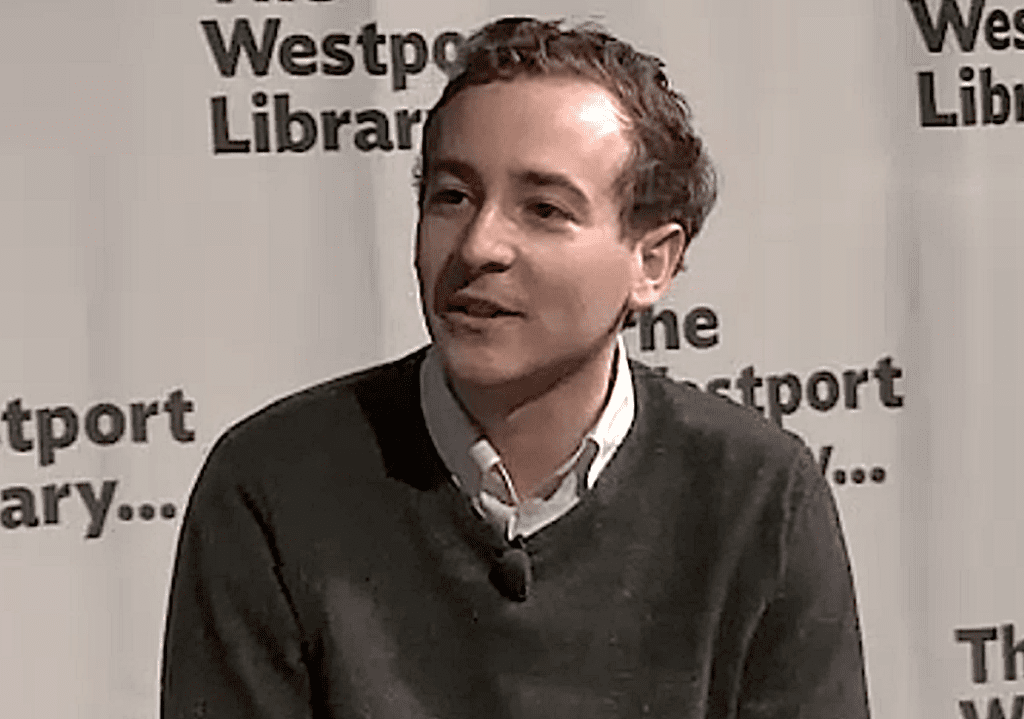
Haskell, who has said he plans to attend law school instead of running again for his state Senate seat again in the fall, may enter politics again he told the in-person and virtual audience. “I’d love to find my way back into politics in the future, if possible,” he said.
Despite Schadler saying he felt divisiveness in society has become so pervasive “sometimes I hate to get out of bed in the morning,” Haskell disagreed. He’s optimistic, especially about the youngest, or “Gen X,” generation in their teens and early 20s.
“They’re not only optimistic about politics, they’re incredibly engaged in public service,” Haskell said. “They’re showing up to vote in record numbers.”
Haskell noted that 55 percent of people between 18 and 29 voted in 2020 — a 10-point increase from the previous presidential election.
“There’s a next generation stepping off of the sidelines,” the legislator said. “While everyone else is throwing up their hands, they’re rolling up their sleeves.”
Haskell’s inspiration to take on a state senatorial campaign came from former President Barack Obama’s farewell speech: “He said, ‘If you’re disappointed by your elected officials, grab a clipboard, get some signatures and run for office yourself,’ so I did.”
Obama later endorsed Haskell, a rare presidential seal of approval for a young state candidate.
Hands-on work of campaigning, legislating
Much of Thursday’s conversation at the library centered on Haskell’s focus on door-to-door campaign during his first bid for office, and once elected, the daily job of trying to solve constituent problems, as well as passing legislation.
Haskell said he believes that it was grassroots “door-knocking” that helped get him into office.
“You can spend a lot of money on digital ads that make sure that your face shows up on everybody’s iPhone, but that won’t tell you anything about the folks that you’re trying to represent,” he said.
“I learned what kept them up at night and eventually how state government could better serve them. It made me a better candidate, but more importantly, it made me a better state senator.”
State legislators get many calls each day from constituents, many of them angry, so Haskell said he made it his practice to respond to those who were the most angry.
Among his legislative accomplishments over the last four years he cited creating the PACT program, Connecticut’s free community college program; helping to pass the “most inclusive” paid family and medical leave program in the nation, and focusing on transportation infrastructure investments, all of which will help not only his own suburban district, but a broad range of Connecticut residents.
Haskell’s state Senate district includes not only Haskell’s hometown of Westport, but all of Wilton, Ridgefield and Redding, and parts of Bethel, New Canaan and Weston — although under redistricting approved this year, the district loses some northerly precincts and spreads westward into Darien and Stamford.
Asked if he found it to be a disadvantage to run as a resident of Westport, Haskell said, “Westport’s support was critical because it was the largest town in my district …Westport is a town that took a chance on me.”






Recent Comments