
By Kerri Williams
WESTPORT – Four candidates, three Democrats and one Republican, are running for three open seats on the Planning & Zoning Commission. With the issues of affordable housing and the future of Saugatuck on the line, they face major challenges.
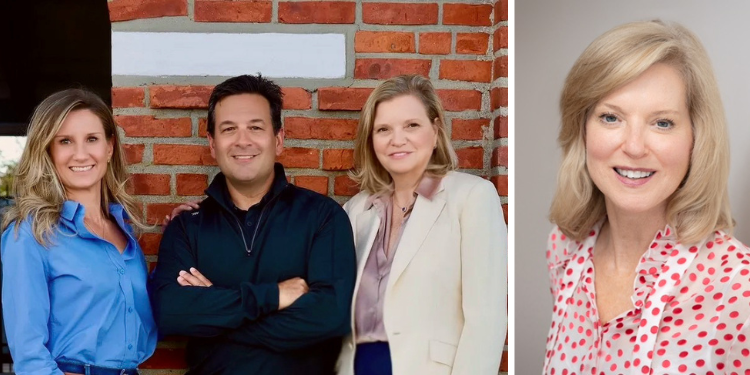
The three Democrats include Michael Cammeyer, who has been on the commission for about 10 years and is currently secretary; Breanne Injeski, who has served as P&Z alternate for the past year and a half; and Craig Schiavone, a longtime resident who would be new to the commission. Running as a Republican is Michele Paquette, a member of the Westport Alliance for Saugatuck who would also be a new member.
The Coalition for Westport nominated the two newcomers from different parties, Schiavone and Paquette, citing that both are “passionate advocates for Westport committed to thoughtful, collaborative planning.”
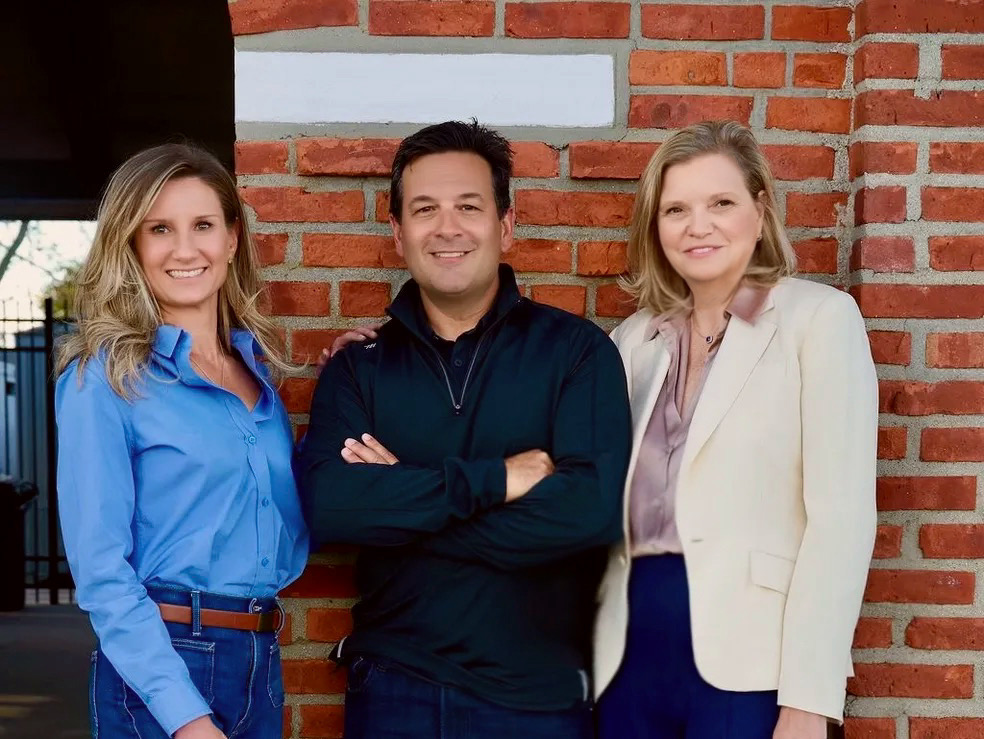
The three Democrats are running a unified campaign, with a shared website all3forpz. Cammeyer, speaking for the three, answered the questions below. “We have a collaborative approach in everything we do,” he said. “It’s a better approach in my mind.”
Paquette, the lone Republican, has retired from her career in biotechnology and now runs a consulting practice. She has lived in Westport for the past nine years and offers expertise in strategic planning. “I’m an experienced leader who will bring active listening, independent thinking, collaborative problem-solving, and courageous decision-making,” she said. If Paquette’s run is successful, the majority of commissioners would flip from Democratic to Republican.
Schiavone is a retired executive with experience in urban planning, historic preservation and nonprofit management. “Craig brings deep planning experience,” Cammeyer said. “She knows how to manage complex, transit-oriented projects.”
Breanne Injeski is an attorney specializing in transportation policy and government ethics living in Westport for the past five years. Cammeyer said that her legal experience helps us “read between the lines of every application.” He added that Injeski is “someone who can’t be intimidated but is not intimidating.”
Cammeyer said he works to be a champion for the environment, open space, and improved recreational spaces. “I like to think that my calm, collaborative style helps build consensus when it matters most,” he said. After 11 years working on Wall Street, Cammeyer joined his family’s mergers and acquisitions healthcare business in 2010.
Following are three questions posed to the candidates and their responses:
What are the biggest issues facing the Commission now?
Cammeyer, Injeski, and Schiavone:
Our team’s overriding goal is simple: preserve what we love and plan for what’s next.
Our biggest challenge is preserving Westport’s character given that state law promotes overdevelopment.
Westport hasn’t had a single new 8-30g application since our moratorium expired almost two years ago while Fairfield has faced applications for thousands of 8-30g units. That’s not luck. That’s our team’s leadership.
We’ve proven collaboration works – approving mixed-income townhomes instead of high-rise 8-30g towers, like behind The Clubhouse. The 8-30g floated for that lot was massive. Instead, we have vibrant, mixed use and a few mixed-income townhomes in the works.
We must build affordable housing on our terms. Our team led the creation of Westport’s affordable plan including our housing trust fund and rezoned town-owned land for low-density cottages. Now we’re ready to work with the next first selectman to implement Westport’s 8-30j plan to secure another moratorium.
We also must protect our commercial zones with text amendments that preserve retail and commercial space. Through key P&Z votes, we’ve protected older office parks and downtown retail from being converted to dense housing. We have allowed productive uses such as medical offices, like the CT Children’s Health Center. We promoted our retail spaces through outdoor dining, which was a mixed vote, and allowed second-floor retail, also a mixed vote where our majority made the difference. Even little things like allowing Cava restaurant to open was controversial and a mixed vote.
As for the future, we’ll engage residents directly as we update Westport’s Plan of Conservation & Development listening through surveys, town events, and open forums. This is how our team managed our town’s affordable housing plan drafting process. Together, we’ll tackle flooding and traffic, balance state mandates with local character, and shape right-sized growth that keeps Westport strong.
Paquette:

The Planning & Zoning Commission is facing three critical challenges: a perceived lack of transparency, residents feeling unheard, and growing concerns about overdevelopment.
First, the commission’s approach to public communication is outdated. Currently, only neighbors within 250 feet of a proposed development are notified. Everyone else must navigate a difficult website or subscribe to broad agenda emails – neither of which is practical for most residents. This leaves many unaware of major proposals, especially text amendments which are not noticed, and they can significantly reshape our town. We need to modernize: expand notification zones, use digital tools to alert residents based on location and where they get their information, and clearly explain how and when they can participate. Residents deserve to be informed and empowered.
Second, when residents do speak up, they often feel dismissed. In 2022, hundreds voiced concerns about the Saugatuck density amendment, which increased allowable density by 800%. One incumbent voted in favor, despite widespread opposition. This erodes trust. Similarly, The Hamlet project drew 1,600 petition signatures and hundreds of letters citing traffic, parking, and river access concerns. Yet the two incumbent candidates supported the application, even though it didn’t meet parking and traffic regulations or river access. Their final abstentions came only after it was clear others would vote to deny. These actions erode public trust. As a commissioner, I will give much weight to the many diverse voices that live here and will follow regulations.
Finally, residents expressed to me their concern about overdevelopment since it impacts their quality of life through flooding, congestion, and projects that don’t reflect Westport’s charm and character. The POCD outlines a vision for a New England sustainable coastal town with community-driven growth. As commissioner, I’ll listen to the voices of those who live here.
What are your thoughts on affordable housing and how to get more in town:
Paquette:
Westport is a beautiful town, and in recent years, housing has become increasingly expensive. Many residents have told me they support the need for affordable housing but care deeply about how it’s implemented. I share that view. Thoughtful planning matters.
There are groups, like empty nesters and first-time home buyers, who want smaller, more attainable homes so they can live in Westport. Yet today, they face limited options. For them and others, we need to assess the true demand of this need, identify appropriate locations, and explore incentives that reflect what residents want. This isn’t just about building—it’s about planning with purpose.
We also face the challenge of Connecticut’s 8-30g statute, an unfunded state mandate that limits our local control. To address it effectively, we need a proactive, multi-pronged strategy—one that’s owned not just by Planning & Zoning, but by the First Selectperson’s office and regional partners.
That means: Partnering with neighboring towns facing similar pressures to advocate for localized zoning solutions. Seeking state funding to support what is currently an unfunded mandate. Assigning clear ownership at Town Hall to execute our Affordable Housing Plan so we can regain control of our future.
Right now, we’re open to any and all applications with limited recourse. We must act now.
As a commissioner, I’ll explore proactive options and creative zoning tools, such as converting existing buildings into affordable housing to avoid increasing density. I’ll support public-private partnerships that align development with resident goals, pursue state funding opportunities, and consider acquiring strategic parcels of land to guide growth responsibly. I also support developing pre-approved site templates to streamline small-scale affordable housing that fits Westport’s character. These are only a few ideas, and I am open to more.
Affordable housing is not just a mandate – it’s an opportunity to plan wisely and protect our town’s identity. If we don’t act with intention, we risk being defined by large, high-density developments that don’t reflect the architectural character or values of our NE coastal community.
Cammeyer, Schiavone, and Injeski:
Westport has a choice – we either lead on right-sized affordable housing or we let private developers decide our future. Our team chose to lead.
Our team’s votes have made the difference. We’ve approved mixed-income, right-sized projects along the Post Road and converted empty offices on Riverside Avenue into homes – projects that add affordability but are properly scaled for our town.
We didn’t just talk about affordability — we delivered it. We created an affordable housing fund, re-zoned town-owned land for cottage clusters, and expanded accessory dwelling units so Westporters can age in place. Every one of those came from our team’s votes.
We even partnered with developers to create fully affordable homes for adults with special needs because no Westport teen with disabilities should have to move away to find housing.
What are your thoughts on the future of Saugatuck?
Injeski, Schiavone, Cammeyer:
We can’t comment on active applications or litigation, but we can share our philosophy.
In a perfect world, our team would love to see development like the Gault Saugatuck Center – walkable, well-designed, and in scale with our community.
Westport is almost that perfect world but not quite because state law limits how much the P&Z can control what happens on privately owned land. We won’t ignore state law or pretend 8-30g doesn’t exist because hope is not a strategy. Pragmatism is. That’s why our goal is to pragmatically guide change in a way that reflects who we are and strengthens our community
In Saugatuck, our focus is clear: reduce traffic as much as possible, protect the river, preserve parking for commuters during commuting hours, and make sure commuters can get to and from the train station safely and easily.
We can’t freeze time – state law doesn’t allow that – but we can work to shape better alternatives than 400-600 unit, 8-story towers that will cannibalize our railroad parking, flood our roads with traffic and create major stresses on town infrastructure. We will deploy all our skills and passion to keep this from becoming Saugatuck’s future.
Paquette:
Everyone agrees that Saugatuck needs an up-glow. We all see the potential to reinvigorate our waterfront and give this historic part of town the facelift it deserves. But growth must be done responsibly. Progress should never come at the expense of our character, our environment, or the everyday livability that makes Westport special.
I’m the only candidate who stood up for a scaled-down, community-minded vision for Saugatuck. I took civic action by submitting 13 opinion letters calling for compliance with parking regulations, identifying flaws in the traffic study, warning of the real-world impact on local congestion and access to the river. Beyond the written record, I spoke at the sole in-person town hall to make sure residents’ concerns were heard. Meanwhile, the two incumbents’ straw-voted “yes” for the plan, and the other candidate never added a word to the conversation. Michele’s Public Opinion | Paquette for P&Z
I spoke out because overdevelopment in this area threatens the quality of life for nearly 2,000 parking-pass holders and thousands more who live nearby or commute through Saugatuck every day. This is one of Westport’s most sensitive and treasured areas — home to the Saugatuck River, a vital natural resource, and a transportation hub that shapes how our community lives and works.
The Plan of Conservation and Development (POCD) offers a clear vision: a vibrant, small-town center that reflects Westport’s character and serves its residents. That vision should guide our decisions.

Kerri Williams
Kerri Williams is an award-winning writer and journalist. She has worked as a reporter at the Norwalk Hour, as Living editor at the Darien News-Review, and managing editor for the Norwalk Citizen-News. For Westport Journal, she is a reporter as well as a gardening columnist, writing ‘Cultivating with Kerri.’ Williams moved from Connecticut to upstate New York in 2021.







Recent Comments