
By Thane Grauel
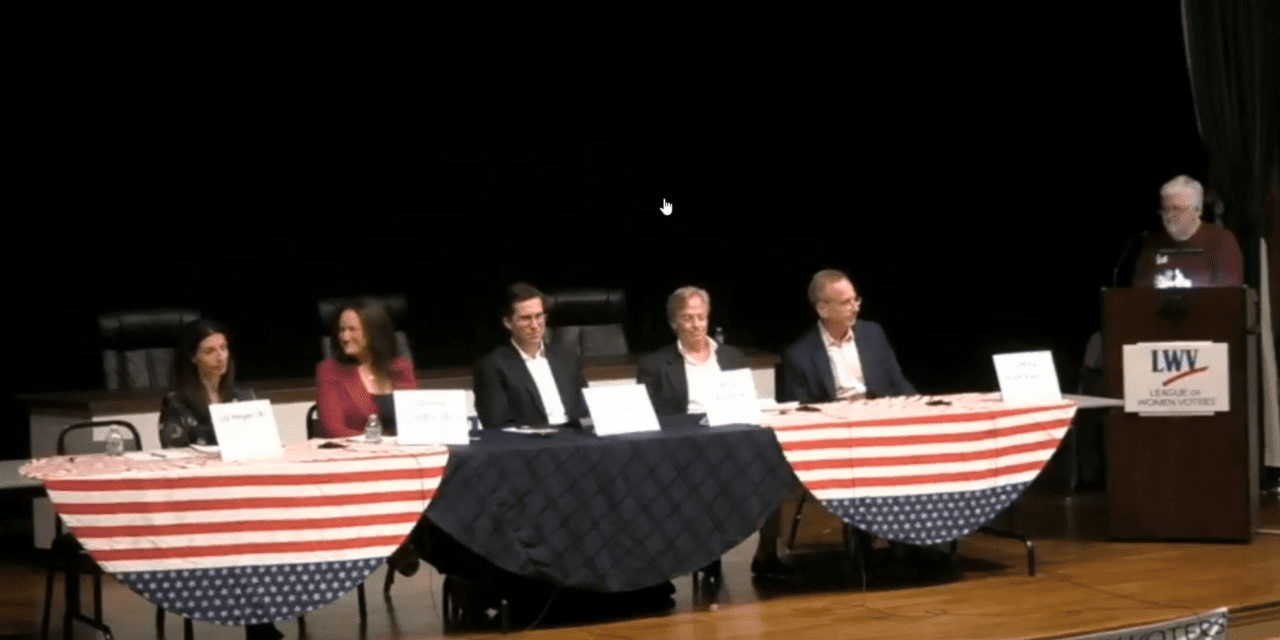
WESTPORT — Five candidates for the Board of Finance engaged in a cordial debate Thursday night at Town Hall.
The discussion was moderated by Laurel Anderson of the Greater Bridgeport League of Women Voters.
The five are running for four seats in the Nov. 7 election. They are incumbent Perry Winter, newcomer Liz Heyer (currently the school board vice chair), and newcomer Rich Hightower, Republicans; and incumbent Jeffrey A. Hammer and newcomer Danielle Dobin (now chair of the Planning and Zoning Commission), Democrats. Winter and Hammer were recently appointed to fill vacancies.
Anderson asked the candidates to identify three critical issues the town faces regarding finances and resources.
“First item I think we need to consider is planning to fulfill the town’s infrastructure and amenity needs while maintaining Westport’s triple-A credit rating and keeping a stable mill rate,” Winter said.
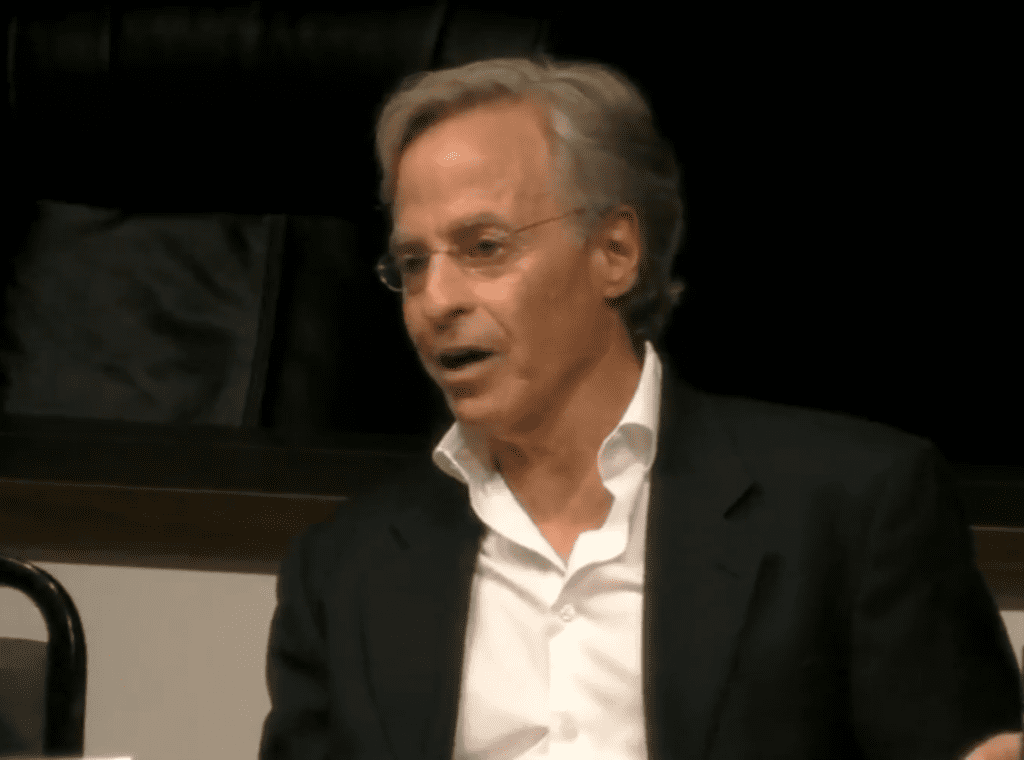
He said affordable housing is another issue.
“It may potentially blindside us because we don’t know what to expect because of mandates coming down from Hartford,” he said.
“Also, we need to invest in a strong safety infrastructure, with regard to our police, fire and EMS capabilities,” Winter said. “Right now, the conditions of our facilities with police and fire … they could use a lot of work.”
“Right now, it’s the capital plan and the issuance of additional debt,” Hightower said. “Two, we’re living in a context of elevated inflation and rising interest rates, obviously that has implications on everything in the budget including additional debt service.”
“And then three, I think it would behoove a lot of us if we could at least make an attempt to have a long-term mill rate forecast,” Hightower said. “I know that’s not easy to do but it would help us sort of understand and plan for the future a little bit better than just the year-by-year way that we sort of think about it now.”
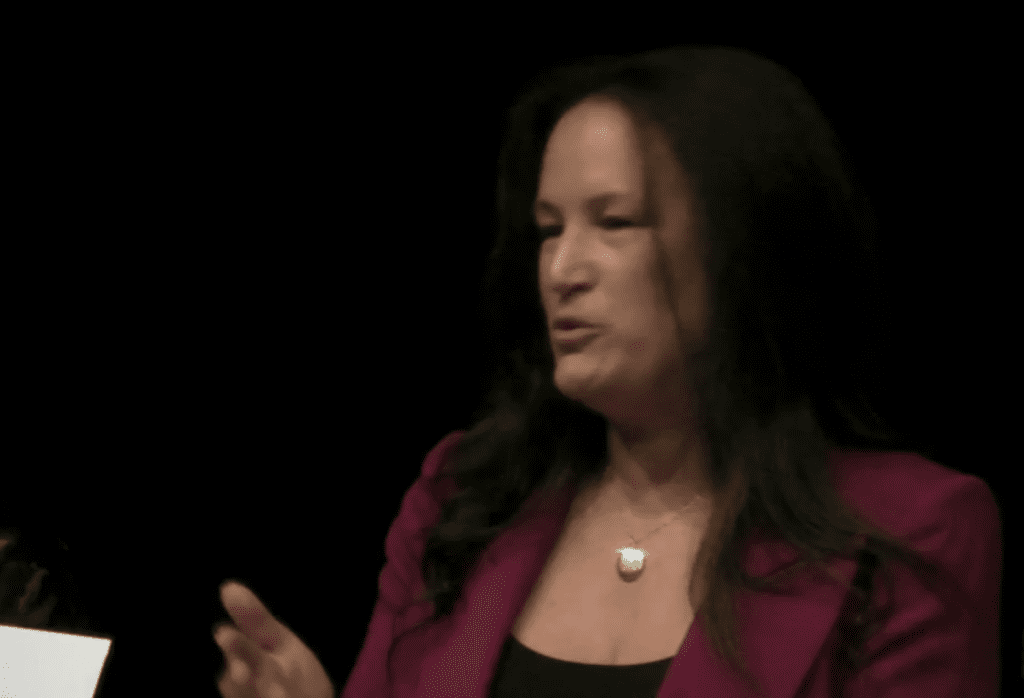
Dobin also listed the capital forecast as No. 1. “Second, our immense traffic issues in Westport, third, trust in government and transparency.”
She said with numerous potential large expenditures coming, more of the annual town budget will go to debt service. That means either taxes will rise or cuts have to be made.
“We have to look critically at the capital forecast …” she said. “We must ensure that when we’re making decisions, we’re tracking out expenditures with our spending priorities.”
She said a lot of the traffic issues are outside the town’s control, but the town needs to make sure it’s getting enough funding from Hartford.
“I’ve heard from a number of Westporters that they don’t feel their elected officials are hearing them,” she said about transparency. “And I think it’s incumbent upon all of us to make sure we do something about that.”
Heyer said the town has some exciting capital projects coming.
“But the amount of debt that will require our town to take on is certainly something that we need strong financial leadership for, to plan for, and to strategically think about how we prioritize the projects that are in front of use,” she said. “Over the last couple of years, the schools and the town have made tremendous strides in putting together a capital forecast, in looking not just five years out but 10 years out.”
“I’d say the third priority is funding our existing infrastructure and the programs and services in Westport, and making Westport an attractive place to live for residents of all ages,” Heyer said.
Hammer said that at last week’s finance board meeting, the first selectwoman came with a 283-item spreadsheet that over 10 years would total over $470 million.
“We have to sit down and make choices,” he said.
“I’ll tell you my framework,” he said. “First off, at the baseline, schools, safety, services. That’s what every town should aspire to produce and should produce at a basic level. So we’re going to have spend to maintain and update those essential services that we provide our citizens.”
Second, he listed recreation.
“Westport is unlike other towns in that recreation is not an option it is a right,” he said. “People here want a great Longshore, they want a great Compo.”
Third he listed culture, and support for organizations like MoCA.
Anderson asked about a lack of transparency some see in local government, particularly in the lengthy budget process.
“I think the budget process is lengthy, but it’s lengthy for a reason,” Heyer said. “It’s to increase the transparency so there’s ample time for every aspect of the budget to be discussed, discussed again, and evaluated and analyzed. And then ample time for residents and other boards to comment as well.”
The budget process, she said, has served the town well and she wouldn’t look for any drastic changes.
Hammer said transparency does exist with the various boards, people are welcome to come, “but what we lack is investment in technology to make the information readily available to our town.”
“We have underinvested in technology in our town in the software, in the training, in the cultural mindset,” he said. “We should have a director of communications, we should have an advisory group that advises individual town employees how to communicate to create more transparency.”
“The willingness to provide transparency is there, the tools right now are not,” Hammer said.
Winter said he believes there’s a strong effort to bring transparency to the budget process.
“But there’s so many inefficiencies in the system right now which prevents us from doing it,” he said. “I’m just reiterating what Jeff [Hammer] has said.
“It slows us down in the planning process and also I think it frustrate people who want to learn more,” Winter said. “But I don’t think there’s, at least from the Board of Finance, there’s any hidden agenda or anything that the Board of Finance is doing that would intentionally try to frustrate the public.”
Hightower said he didn’t have any major complaints about transparency, but he mentioned Hammer’s comments about a lack of tech investment.
“As I was preparing to be here tonight, I thought well maybe it’d be a good idea to run some analysis on the last 10 years of town budgets,” he said. “Of course, you can do that by clicking through six different places on the website, pulling down the pdfs, they’re 400 pages apiece, you’ve gotta find the page you want to go to, it’s not tabulated, there’s no table of contents, there’s nothing in machine-readable format for a data nerd like me who wants to put it into Excel and kind of do some analysis.”
“It should be a pretty simple fix,” Hightower said. “Corporate America’s been doing that at least the last 10 years.”
“I don’t think it’s sufficient to say that people need to show up for meetings in person at often inconvenient times,” Dobin said. “I think that we can do better and I think we should do better.
She said she thinks the existing finance board is transparent, but there are things that could be improved.
“There’s no reason that we can’t post summaries after each Board of Finance budget session updating the public about what was discussed, and what’s still left to discuss,” she said.
Dobin also suggested public forums to get input on the capital forecast. She noted she tries to answer every email and phone message she gets.
“Every single meeting must be streamed,” Dobin said. “Every single town meeting should be recorded. And we should invest in technology so that hybrid meetings are possible.”
Thane Grauel grew up in Westport and has been a journalist in Fairfield County and beyond for 35 years. Reach him at editor@westportjournal.com. Learn more about us here.












Transparency. I have a few thoughts.
I do not think it wise to blame a lack of technology, though it certainly can be improved. Rather, I think there is little desire to be transparent when transparency would be inconvenient. Citizen apathy contributes to a lack of transparency.
It is quite a chore to access public information in Westport. Much public information is not EASILY accessible, nor is it available in a timely manner. Quite a bit is not available at all except through Freedom of Information Act requests. I’ve had to file multiple FOIA requests, not all of which are granted. You have to be persistent to get meaningful information and who has time for that?
Real transparency is achieved through the ACTIVE and PROACTIVE effort on the part of those with power. A required meeting notice does not equate to transparency. A required disclosure is not enough.
To be effective, “knowledge of the facts should be brought home” to the citizens, in large type and plain English. Brandeis suggested it is not enough for a food company to file ingredients with the FDA; you have to put it on the label to tell the story. And we learned from Regulation Fair Disclosure: Tell everyone, not just some.
I ask my public officials: Do you proactively seek out stakeholder input? Do you ensure the public has a voice in deliberative processes by allowing public discussion or citizen petitions for agenda items to be added at public meetings? Do you invite citizens to the table or work to keep things under the table?
The charrette is a great technique for engaging, but you have to do it before the fact, not as an afterthought.
Email seems to be the town’s preferred way for the public to reach elected officials, yet most do not respond. I know from my own experience. (Props to those who do respond to emails! You know who you are, and I appreciate you).
If you can’t be bothered by citizen emails, why did you run for office? Would you prefer phone calls? Publish your number. Live face-to-face? Meet me at the beach.
One of my RTM reps, Sal Liccione, does it so well. He is available, accessible and makes an effort to stay in touch with his constituents every single day, by email and texts, phone and face-to-face.
Citizens have a role to play here, too. Seek out information. Sign up for meeting notices. Subscribe to newsletters issued by town reps (Nancy Kail RTM-9 has a good one). Watch meetings on Westport tv or go to meetings. Don’t complain; Engage. And, maybe, run for office. There are far too many uncontested seats for public office in this election.
Toni,
Well written and accurately expressed.
Town Hall seems to not only rely upon resident apathy, but also citizen’s competing responsibilities, AND eventual fatigue.
Dr J