
By Thane Grauel
WESTPORT — The developer of a Hiawatha Lane Extension apartment complex — entangled in controversy for years — was dealt a setback Tuesday when the Historic District Commission denied six of eight requests to waive a 180-day waiting period to demolish houses on the street.
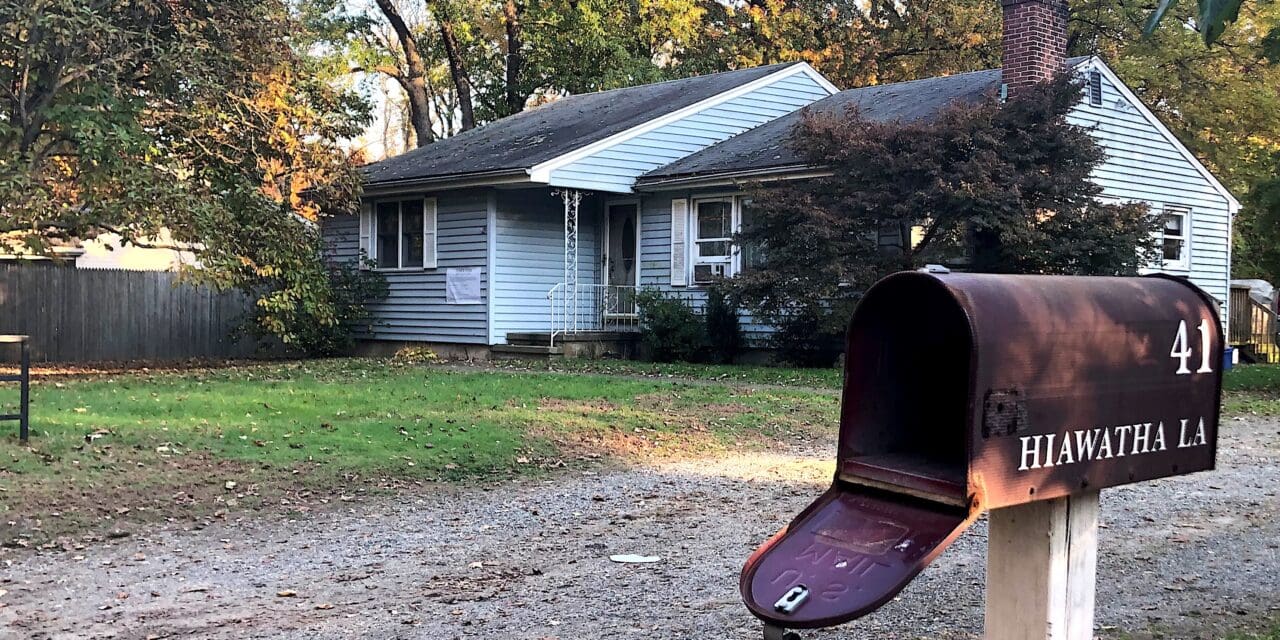
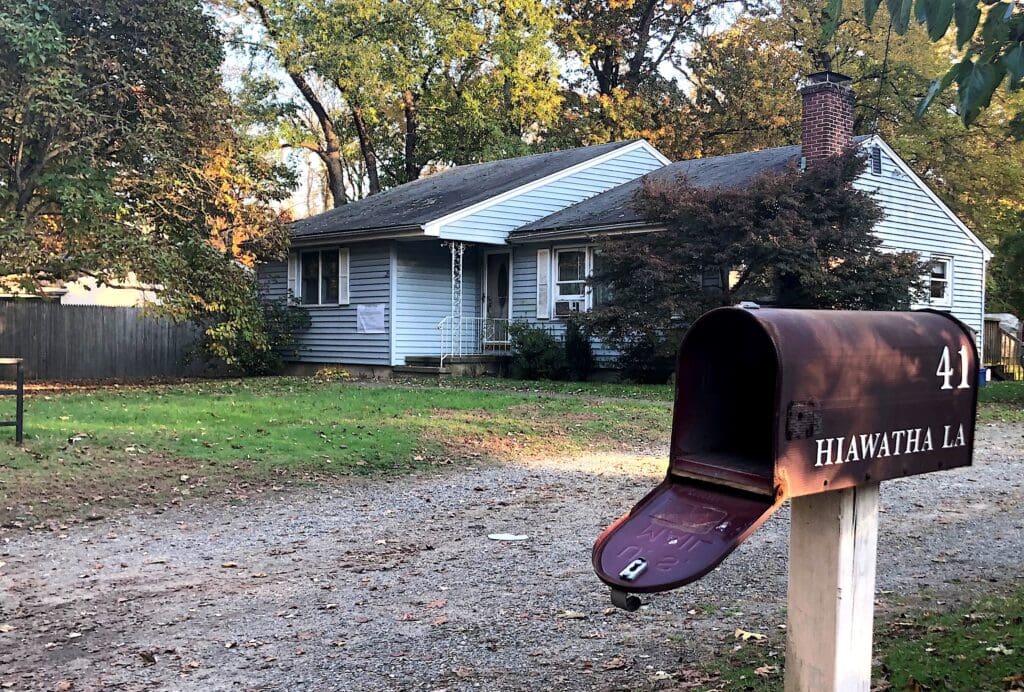
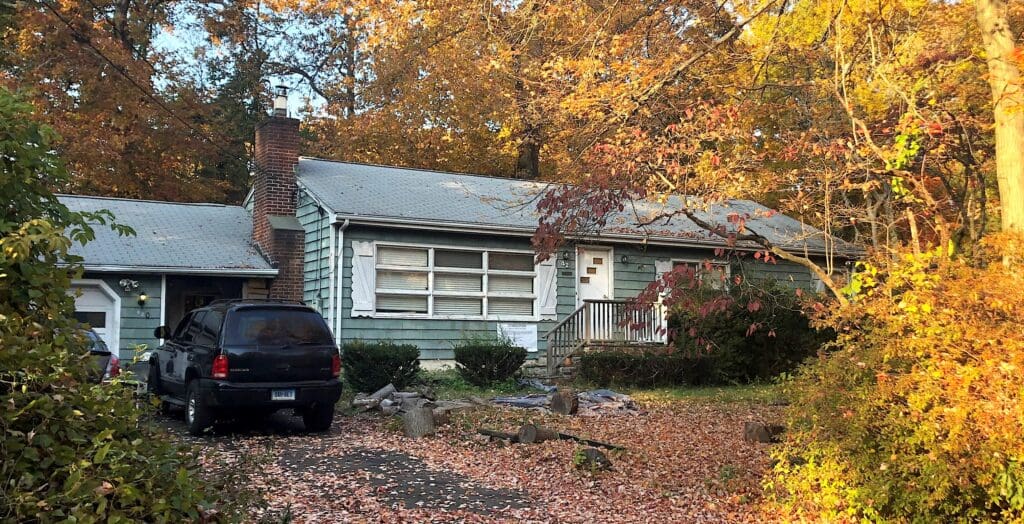
Commission members noted the Hiawatha neighborhood houses are mid-century, middle-class dwellings, which are disappearing across town.
The panel for years has lamented the loss of such houses as demolition requests have been made one by one around town. The eight houses discussed Tuesday constitute an entire neighborhood, members said.
Hiawatha Lane Extension is straddled by Interstate 95, the Metro-North tracks and the Norwalk city line.
Long, litigious history of apartment proposal
Asked about the legal background of the project, Peter Romano of LandTech, speaking on behalf of Summit Development, told commission members that the apartment project came about because of a state law known as 8-30g. That law allows developers greater leeway to build “affordable” housing projects when a town’s inventory of such units fails to meet a state-mandated threshold.
“It’s been going on nearly 20 years,” Romano said. “If a town has not fulfilled their obligation for affordable dwelling units in the town, then a developer has the right to come in under that scenario and suggest a housing development that essentially, he writes his own regulations.”
“It’s a challenging thing for the town. It’s a challenging thing for the developer … because the town has not fulfilled its obligation for affordable units developers can come in here.”
Romano said the town was granted a moratorium on 8-30g developments until it can develop a plan to bring more affordable housing to town.
Neighbors challenge settlement deal
The legal battle over the Hiawatha project was settled last summer when town officials and the developer signed off on a court-approved settlement that calls for reducing the proposed housing units from 187 to 157 in three buildings instead of five, plus a 3.1-acre conservation easement, reconstruction of the drainage culvert and drainage improvements, and pedestrian upgrades.
However, several neighbors filed a new lawsuit against Summit in October, contending the apartments would “irreparably harm” them through increased traffic, impeded roadways and other health and safety risks. There has been no resolution of that action.
“This is an approved development in the town of Westport through a court-stipulated approval,” Romano said when asked by Chairman William Harris if the project is a done deal.
“There’s no historical or architectural significance in any of these homes,” Romano said of the eight slated for demolition.
Commission weighs homes’ architectural, middle-class worth
“This is a larger discussion, we have to start some sort of mid-century preservation as well,” Harris said. “This is very typical of what would we call it, a middle-class Westport 1950s-’60s.
Harris said what is unique about the Hiawatha area is that it is one of the last such neighborhoods in Westport.
“I’ll just focus on these dwellings for what they are,” said commission member Martha Eidman. “These are disappearing from the face of Westport, and they do represent a style and a need for a group of people … it adds to the uniqueness and the character.”
“Our obligation is to defend the town of Westport’s historic inventory,” Harris said. “If we’re wrong, some legal beagle’s going to have to correct us.”
After 180-delay demolition delay, homes “will come down”
Romano said he didn’t understand the desire to save the Hiawatha houses.
“If the town had done its job and provided affordable housing for the residents of Westport and the surrounding areas, things like this would not have happened,” he said.
“We all know they have no real architectural or historical significance to them. You’re going to delay it for 180 days, and you’re right, [after] 181 days these houses will come down,” Romano added.
The commission members voted to impose the 180-day delay on demolition for houses at 38, 39, 41, 42, 44 and 47 Hiawatha Lane Extension. They agreed that house at 43 and 45 Hiawatha have been altered so significantly they could razed.







Very sad to see my childhood neighborhood on the verge of destruction but the fact is the Town of Westport i grew up in was destroyed years ago !
The Historic Commission is correct in asserting the historical value and significance of the Hiawatha Lane homes. ( And Mr. Romano is incorrect. )
Research for the Bridge Street National Registered Historic District by town and state staff includes homes of the era. https://www.westportct.gov/home/showpublisheddocument/12965/636934866377170000
It’s high time they started preserving middle class areas. I am the last renter still living here, We were all suppoed to be gone by Nov 30, in the worst market there’s been in years, I can’t find anything comparable (or for that matter much smaller) that I can afford (not only in westport but even as far as monroe, newtown, bethel, stratford etc). I also have 0 family left here to stay with. I told Felix Charney that this was going to be a struggle for me and A little more time or a break on rent would be helpful (I have been on time and paid in full on rent for the 4 and a half years i’ve been here). He was not receptive to either of these suggestions, but instead gave me a song and dance about how long it took to get approval, and believe me if your unsure where you will be resting your head that is the least thing you care about. He also went on to tell me that he would file eviction immediately. So to all of you who believe Felix Charney when he tells you this “isn’t a greed driven endeavor” and that he “believes in affordable housing”, don’t, he is a greedy snake in the grass who could care less about anyone other than himself. Thankfully he didn’t get the demolition approval, this could turn everything around for me as far as the market and what I have saved. HARTFORD!!!! If you are reading this 8-30g is a poorly written mistake, it just allows developers like Felix Charney to squeeze the last drop of affordability out of westport, instead of just developing open space or empty commercial lots, like other developers have done to bring affordable housing in westport. It’s counter productive to what 8-30g was for, to demolish the middle class neighborhoods especially in a town like westport where there aren’t many left, and the affordability has been getting sucked out over time over my whole life.
Marc Lazar is caught in The jaws of
Developer Felix Charney’s
predatory , profit driven behavior.
Get yourself over to Saveoldsaugatuck.com and catch up on the 18 year story of how one simple working class community has held this guy off since 2003
And we are still going
Hartford court on January 5th….2022
Contact me if you want to help or just to know more about the history about to unfold