
By Gretchen Webster
WESTPORT — At what point are extensive renovations to a historic structure considered demolition?
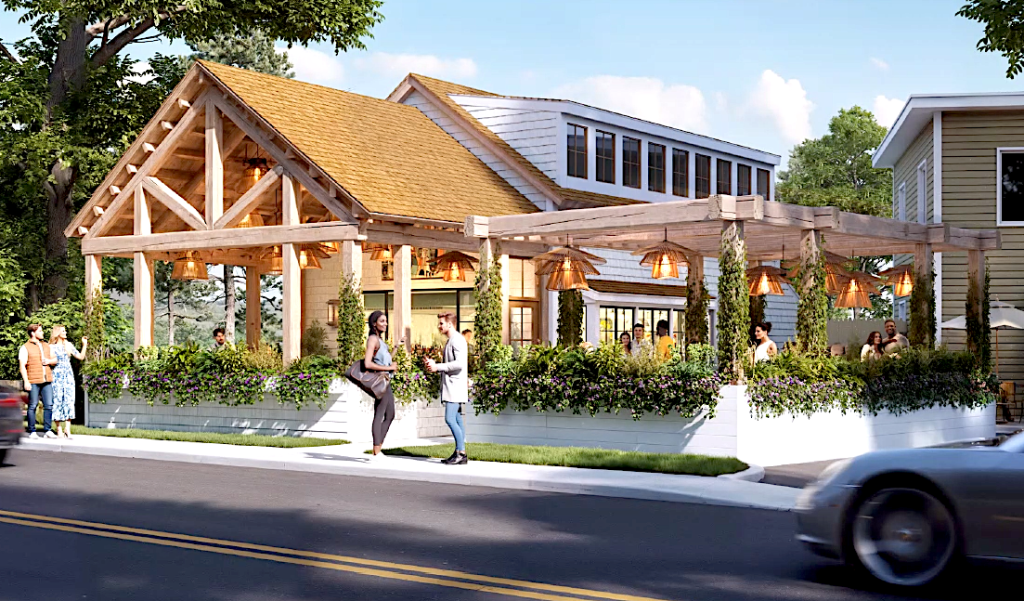
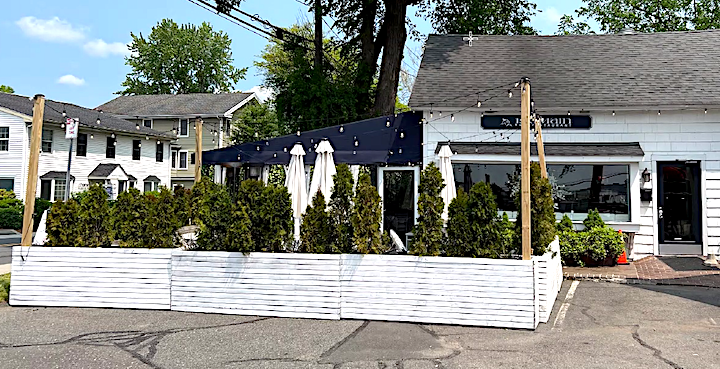
That was the question before the Historic District Commission on Tuesday when the panel again reviewed plans by owners of Nômade restaurant to transform the building at 190 Main St into another restaurant. The building, which previously also had housed a restaurant, is listed in the town’s Historic Resources inventory as the “Farmin Patchin House,” built in 1852.
The structure has endured a lot of wear and tear over the years, architect Mark Blair told the commission as he displayed photos of rotting foundation timbers, damaged siding, plumbing and other features that require renovation, or removal, during the commission’s online meeting.
The latest review of the project was arranged after HDC Chair Grayson Braun noticed a significant part of the building was being demolished, but a demolition permit initially had not been granted for the work. The HDC, along with the Architectural Review Board, had reviewed the proposal last March as required by town ordinance for buildings over 50 years old. The HDC can oppose demolition of a structure older than a half-century and impose a 180-day delay on the project in hopes that owners will reconsider their plans. The Main Street property is owned by WHA Equities Corp., according to the town assessor’s records.
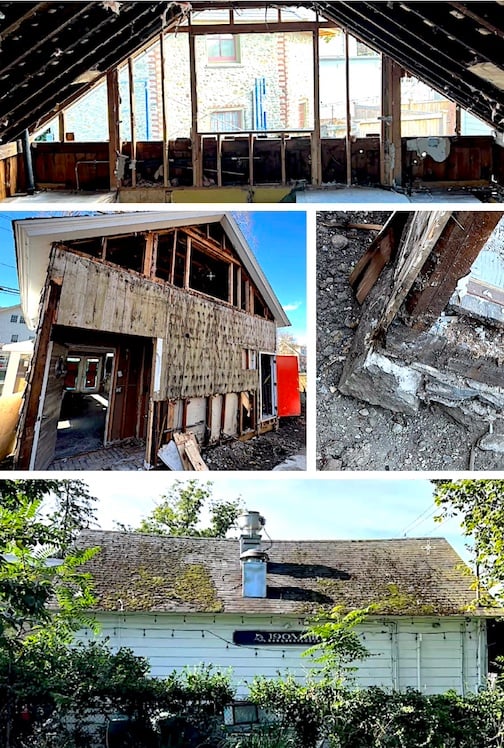
Demolition work associated with the approved 190 Main St. renovations “appeared to be more than 50 percent” of the plans, Braun said.
A demolition permit was not sought at first because the application indicated the project would largely involve renovations to the building and not extensive demolition.
Donna Douglass, the Historic District Commission coordinator, said plans that call for demolishing less than 50 percent of a structure do not need a demolition permit.
“But as the work got started and damage was discovered … is when it was realized it was over 50 percent and then they applied for a demolition permit,” Douglass said after the meeting.
Blair said work at 190 Main St., recommended by a structural engineer, includes:
- Installing new plywood sheeting underneath new siding for lateral stability.
- Replacing the roof and adding dormers to accommodate the kitchen on the second floor.
- Adding new footings and a stronger foundation.
- Replacing all windows and doors.
“Everything that has been done does not have an effect on the design approved [by the HDC/ARB and Zoning Board of Appeals],” the architect said. “It’s just putting the building in a more stable condition.”
Braun said that a demolition permit allows a building to be completely torn down. “There’s no such thing as a ‘partial demolition’ permit,” she said.
But after seeing photos of how much needed to be done to stabilize and repair the building, and Blair’s statement that the plan ultimately is “to put it back together” and not to tear it down, the commission voted unanimously not to enforce an 180-day delay on the remaining demolition.
HDC officers re-elected
In other business, the commission re-elected Braun to a new term as chair, Scott Springer as vice chair and Wendy Van Wie as secretary.
Freelance writer Gretchen Webster, a Fairfield County journalist for many years, was editor of the Fairfield Minuteman and has taught journalism at New York and Southern Connecticut State universities.











Recent Comments