
By Thane Grauel
WESTPORT — After weeks of discussions about whether recreational activities like painting classes or yoga are allowed on the Baron’s South property, the Planning and Zoning Commission this week adopted a revised regulation to permit “passive and/or organized recreation” on the open space.
Not everyone on the commission, or from the public, thought there was a problem to begin with, arguing that such activities sponsored by the nearby Westport Center for Senior Activities, school field trips or hiking clubs were allowed under the text amendment’s original language.
The larger issues, they contended, is the neglected condition of the 23-acre, town-owned property and its underutilization resulting from a lack of signs and easy access.
Proponents of change say rules were too restrictive
But P&Z advocates for the change said the amendment, as originally written, prohibited any kind of “organized” recreation, such as might benefit the senior center, schools or clubs.
The original language, proponents said, was too restrictive and a change was needed to permit broader use of the property.
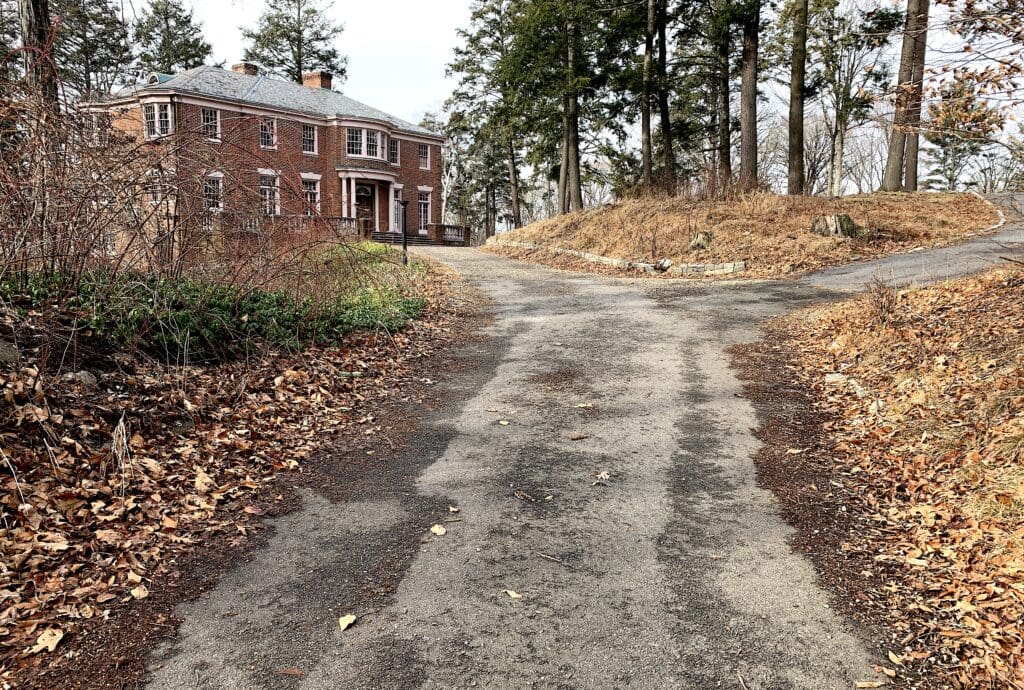
The Baron’s South property sits between Post Road East, Imperial Avenue and Compo Road South. It once was home to Baron Walter Longer von Langendorff, founder of Evyan perfumes.
Final version all came down to “non”
At Monday’s P&Z meeting, opinions once again were divided over what constitutes “organized” recreation.
Much of the discussion concerned what words to remove or add to text amendment for what’s know as DOSRD #2, the zoning designation that applies only to the Baron’s South open space, which the town has owned since 1999.
In the end, the commission settled on changing the text to read the property is “to be maintained for passive and/or organized recreation,” and removed only “non” from the initially proposed revision to permit passive and/or non-organized recreation, while the rest of the amendment’s language remains as is.
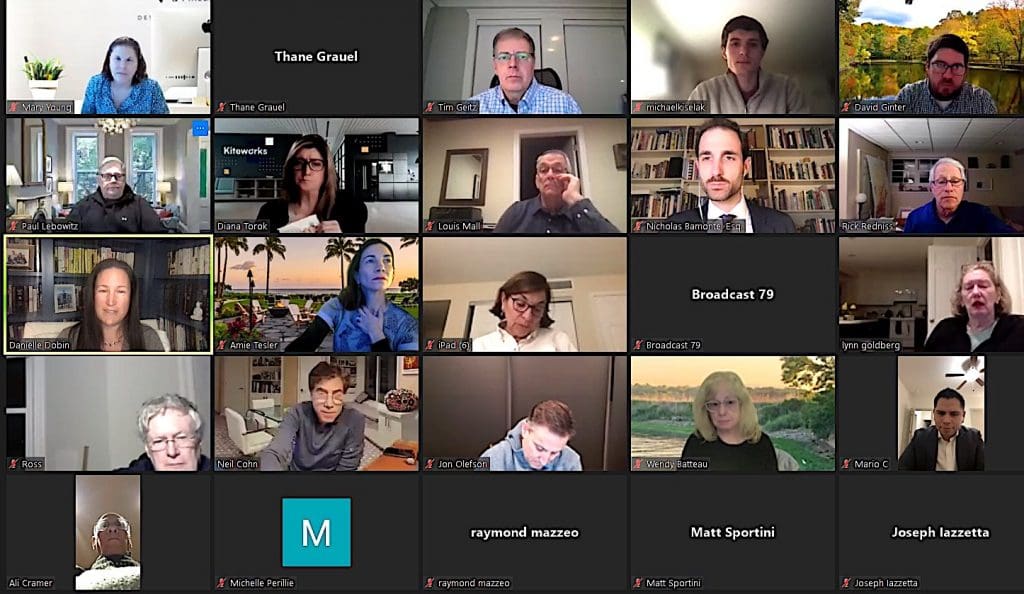
“I think it’s a really simple way to what really everybody wants in the first place,” commission member Neil Cohn said at Monday’s meeting.
“I’m still trying to wrap my head why we’re doing this, we’re not really changing anything,” said member Amie Tesler.
“Again, I just feel like, if people know it’s there, hopefully, they’ll utilize it, and we can get some monies allotted and we can clean it up and it can be truly utilized.”
Concerns arise over rule changes for other properties
P&Z members were also considering removing some words from the DOSRD #3 designation for other park properties, including Riverside Park and the Newman/Poses Preserve.
But language to allow “natural water features” and “picnic tables” was left in that amendment at the request of the Parks and Recreation Department.
Wendy Batteau, a Representative Town Meeting member from District 8, relayed a concern from the Newman family, one of two who donated land to form the preserve, that one of the conditions was that the land would remain in its natural state. No picnics tables and the like.
She was given assurances that any of those agreements for the preserve would be abided by.
Dobin explains reasons for amendment revision
Before the vote, P&Z Chairwoman Danielle Dobin addressed the question of why the commission had undertaken the months-long review of the open space regulations.
“We’re doing this because we’ve heard directly from the senior center staff, as well as the Parks and Rec Department, multiple times, that they do not feel they have permission to create programming outside at Baron’s South,” Dobin said.
“At our last meeting, we had some public comment from a few people that care a lot about this area, and some people proclaim themselves the expert, or shared that it’s a sacred space, etc.,” she said.
“I think that contributes to this idea that town employees feel as though they have to really walk on eggshells when it comes to Baron’s South.”
The vote to revise the amendment was 6-1, with Tesler voting against.








Despite warnings and suggestions made by members of the public as well as by some of the original drafters of the DOSRD zoning regulations, the P&Z voted to approve the above changes. As a result, our passive-use parks will be vulnerable to more intensive uses and more environmentally damaging activity than originally intended when the parks were first zoned DOSRD.