
By Thane Grauel
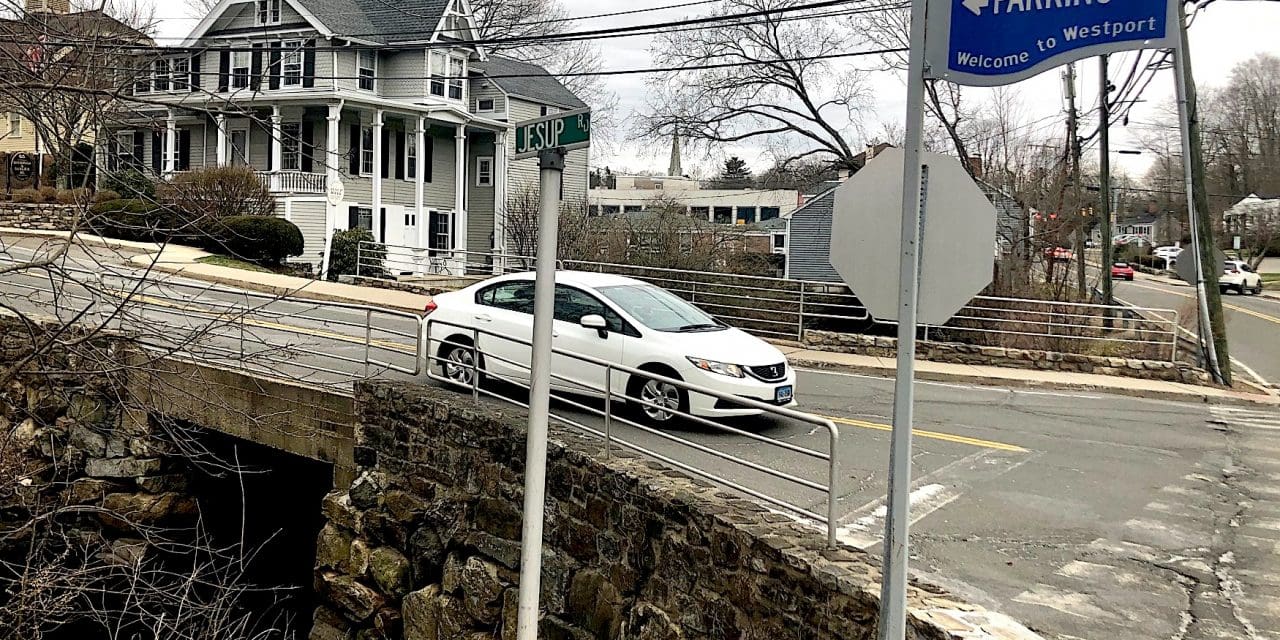
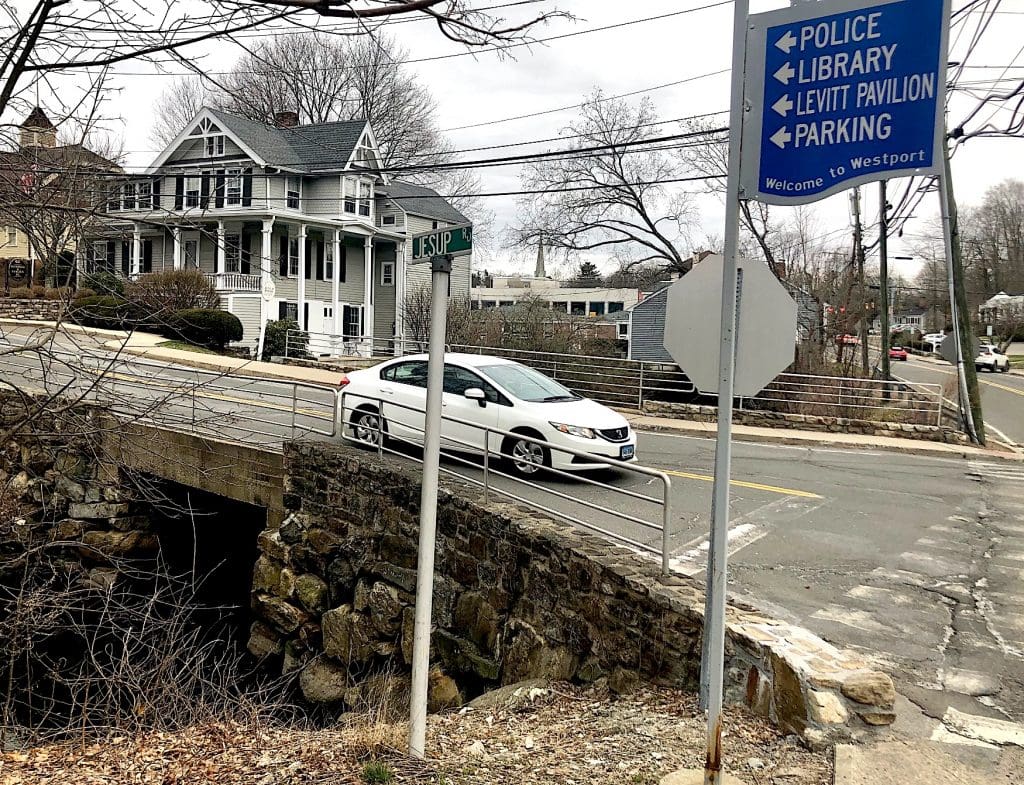
WESTPORT — The Historic District Commission voted Tuesday to do its own study report on several century-or-so-old bridges around town.
The group has been discussing ways to preserve the fieldstone structures for several years, in response to petitioners Morley Boyd and Wendy Crowther.
But that goal has been bumping up against the realities of more frequent flooding, state bureaucracy and funding, and safety issues.
How that will all play out remains to be seen.
The HDC has had a bridge subcommittee looking at the issue, and, as commission Chairwoman Grayson Braun pointed out, commissioning a firm to do a study report incorporating the information it already had would have cost $40,000.
“That’s four times our annual HDC budget so we obviously can’t do that,” Braun said.
“What we are really to do tonight is to have the full commission vote on self-performing the study report and moving it forward,” she said Tuesday.
That’ll depend on not only the commission’s support, but the institutional knowledge of the petitioners.
Nine bridges were eyed early on, but three have dropped off the list:
- The bridge that carries Kings Highway North just west of Main Street has been replaced.
- The structure on Main Street near Willowbrook Cemetery, which is said to be a headwall not a bridge.
- The structure that carries Saugatuck Avenue over Indian Creek is controlled by the state.
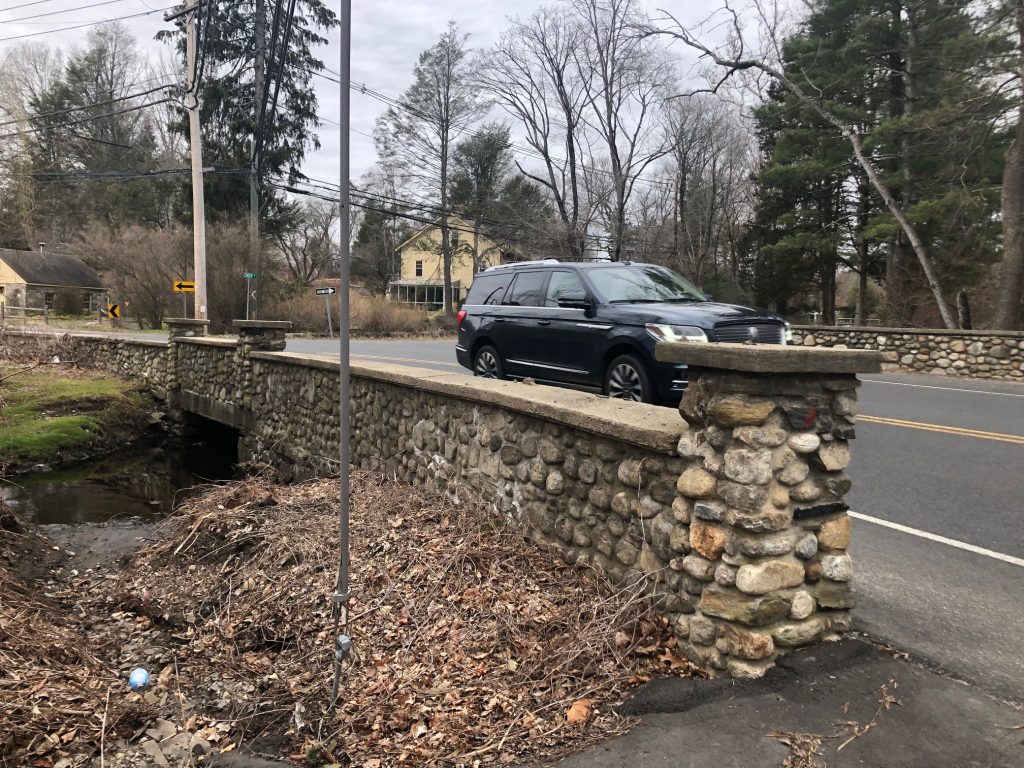
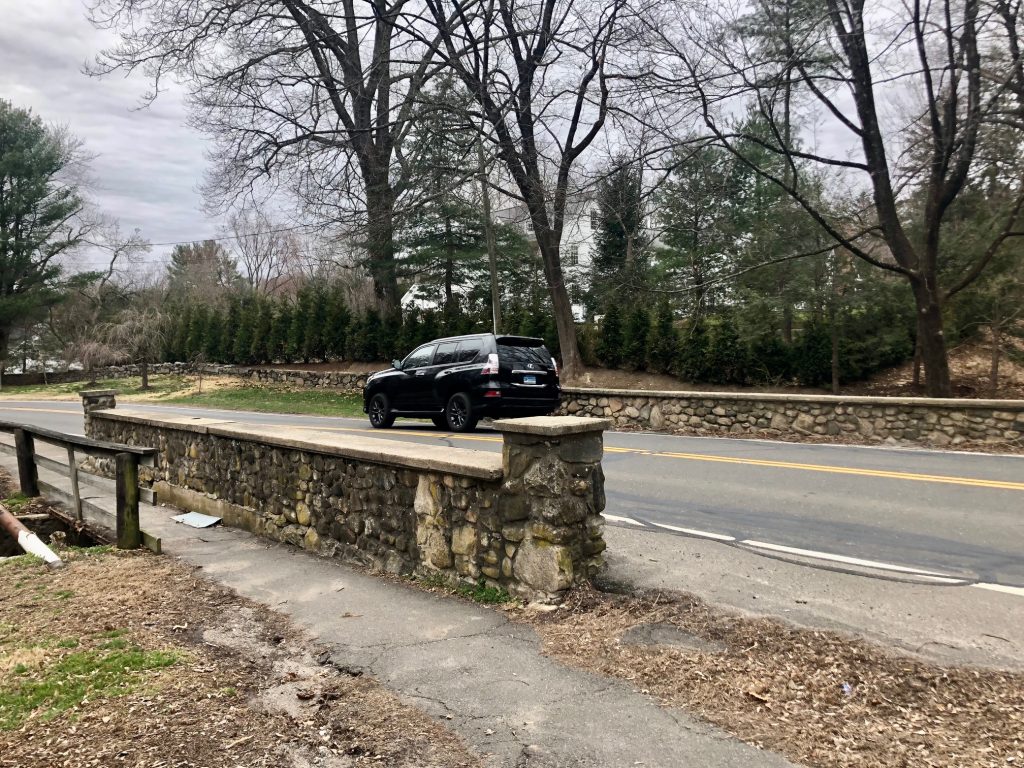
The six bridges still on the list:
- Greens Farms Road at Center Street.
- Cross Highway over Deadman Brook.
- Long Lots Road over Muddy Brook.
- Myrtle Avenue at Violet Lane.
- Evergreen Avenue over Deadman Brook.
- Jesup Road over Deadman Brook.
Braun gave the commission members, many of whom are relatively new, the background.
She said a “thematic nomination” originally was sought to protect them.
“We were informed by the state that we can no longer create a thematic historic nomination, so now what we are looking to do is to make each of these bridges a local historic property,” Braun said. “It has taken a long time to get to this stage.”
“Because the town’s not going to be making necessary repairs to the bridges with its own money, [Public Works Director] Pete Ratkiewich was very clear that for all of these projects he’s going to be seeking state funding,” Braun said.
With state funding comes safety requirements, and even without it, the town would have to follow traffic safety requirements, she said.
“My concern is that we’re going to designate a group of bridges, and then when we get down to issuing a C-of-A [certificate of appropriateness] there’s no ‘there’ there, because we can’t, there won’t be preservation there,” Braun said.
“The Public Works Department has assured us that there’s going to be every attempt made to make these bridges fit within the community and make them look nice for the community, but it’s not preservation, so to speak,” she said.
Commission member Wendy Van Wie said she recently looked at the Kings Highway North bridge.
“The way I see it is the dimensions of the bridges are going to be changed no matter what we do,” she said. “And the only input that we would have is what the stonework would be and I see you tried to do a real nice job with the problem is the historic quality of the bridge is that they were done in the picturesque rustic artistic style.”
“They’re really meant to look part of the environment, that they came from the ground, with fieldstone,” Van Wie said. “All dark gray, slate top … and the Kings Highway North bridge is kind of the opposite, sort of frenetic because it’s kind of the opposite of peaceful. It’s river stone, many, many different colors and light granite, many different colors and the light granite top and the light railing, just kind of is the opposite of what the bridges are now.”
She said could see the bridges need updated dimensions, but hopes they could work with Ratkiewich to get the right aesthetic.
“Aesthetically I think we can recreate the picturesque rustic aesthetic with the new dimensions,” she said. “And for that I don’t think we need to go through the whole process because I think the town wants to work with us on that.”
“We have committed to work with you,” Ratkiewich said.
Boyd made it clear he wanted the Evergreen Avenue bridge included in the study, and said, “We’re not interested in an informal-type arrangement with DPW.”

Crowther said the notion that the bridges date to the 1930s had been refuted when the Kings Highway bridge was discussed.
“They’re really more like 1910,” she said.
“And to Wendy Van Wie’s points, I just have to say that long before COVID, we were paying attention to the Kings Highway bridge and trying to get people to act on preserving that bridge,” Crowther said. “And at that time, DPW and the town came forward with their proposals, paying no attention to the historic-ness of the bridge.”
“I don’t have tremendous confidence that, unless you guys go through with this study, that you’ll have a whole lot of anything to stand on to help really pull together what would make important points for you to demand in a certificate of appropriateness.”
All the sitting commission members voted to have the study prepared, except for Braun.
Braun asked Boyd and Crowther if they were still willing to share their research for the effort.
Boyd, after being reassured the Evergreen Avenue bridge was included in the study, asked what the HDC was bringing to the table.
“We have a certain amount of research,” Braun said. “But as you are aware, we have been denied admission to the Westport Museum of Culture and History vault to do further research. We’ve been denied both as the HDC as well as individual citizens.”
“We can’t get in, we can’t find anything,” Braun said of the organization formerly known as the Westport Historical Society.
‘We have been denied admission to the Westport Museum of Culture and History vault to do further research. We’ve been denied both as the HDC as well as individual citizens.’
Grayson Braun
“And I think you have some information that Donna [Douglass] and I found at Town Hall, and also at the library,” said member Scott Springer.
Grayson said that once the study report is done, the HDC would have to vote to accept it before sending to the State Historical Preservation Office for review. The Planning and Zoning Commission would have to vote on it. Then it would be sent to the town clerk, she said, and would need the approval of the first selectperson before being forwarded to the Representative Town Meeting for a vote.
“The whole process, if it moves very quickly, can take six months,” Braun said. “If it’s not quick, it could take a year, two years, hopefully not.”
Thane Grauel grew up in Westport and has been a journalist in Fairfield County and beyond for 36 years. Reach him at editor@westportjournal.com. Learn more about us here.




The fact that the HDC voted over six years ago to move forward with this modest preservation request brings to mind a quote attributed to Sir Winston Churchill: “Americans will always do the right thing, only after they have tried everything else”.