
By Gretchen Webster
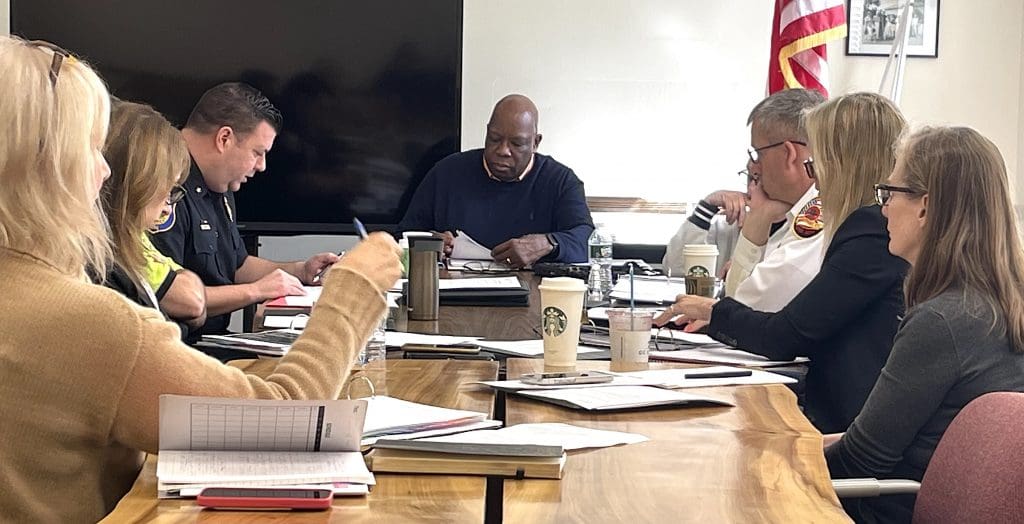
WESTPORT — “What we’re doing here is an experiment,” Harold Bailey Jr. said Friday, opening the first Westport Civilian Review Panel meeting with two newly appointed members.
The five-member panel, chaired by Bailey, met to hammer out policies and procedures for reviewing complaints against the Westport Police and Fire departments, as well as the Westport Volunteer Emergency Medical Service.
The CRP will undertake “an independent review of any complaint that comes through,” Bailey promised the group. “We’ll be taking a look at what works and what doesn’t work.”
Bailey: Process to be “fair” and “welcoming”
Above all, Bailey stressed, the CRP would operate with “a fair process that is welcoming of complaints from citizens.”
Bailey, also the chairman of TEAM Westport, is joined on the panel by Selectwomen Andrea Moore and Candice Savin under the framework established in 2020 by then-First Selectman Jim Marpe and continued by his successor, First Selectwoman Jennifer Tooker.
The recently appointed members are Michael Guthman, a former Representative Town Meeting member, and Teresa Fabi, a lawyer and director of client placement for the Women’s Community Justice Project in New York.
Acting on a proposal by Tooker, the RTM appointed Guthman and Fabi to the panel’s two seats designated for the electorate in March, marking the first time the group’s membership has been complete since it was set up by Marpe.
Public vs. private proceedings
Among the issues discussed Friday were whether CRP members should be present when complainants are interviewed by police; if those sessions should be videotaped, and when CRP meetings should be held in executive session behind closed doors and when the panel’s sessions must be public.
Assistant Town Attorney Eileen Lavigne Flug presented a multi-page document to the panel, outlining rules dictated by the Connecticut Freedom of Information Act.
These policies include making all votes by the panel part of the public record within 48 hours, even if held in executive session; properly publicizing notice of the panel’s meetings, and notify a complainant and any officers involved about an investigation, as well as the outcome of investigations.
Even training sessions for the CRP members must be public, Lavigne Flug said.
“There’s nothing to hide,” agreed Deputy Police Chief David Farrell, the point officer for most complaints received about police.
One question raised was who can be present when a complainant is interviewed by police.
Participate in investigations or review them?
A proposed ordinance to establish a Civilian Police Review Board in Westport — rejected last year by the RTM — wanted civilian members of the board not only to be present at investigative interviews, but also to lead the investigation. Current CRP members, however, said they do not think it is their role to directly participate in investigating complaints against police or the other agencies.
The Civilian Review Panel should review investigations of the complaints, not lead them, several members said.
“If you’re there [during an investigative interview] then you are participating in an investigation, instead of reviewing it,” Fabi said. “That would require a change in our mission statement.”
Tom Prince, a resident who late last year proposed a revised ordinance to establish a Civilian Police Review Board with more direct powers, said he thought all interviews involving complainants must be videotaped. Recording the body language and other aspects of an interview subject’s behavior could help determine if they are telling the truth or not, Prince said.
But Farrell disagreed. He said that police do whatever they can to make a complainant comfortable, and that many people filing complaints refuse to be videotaped.
Some complainants prefer to bring a relative with them, speak on the phone, or even make complaints anonymously, the deputy chief said. Requiring them to be videotaped would discourage some from filing a complaint at all.
It isn’t uncommon for citizens involved in an incident with police to ask that officers’ body cameras be turned off, and usually police comply with that request, Farrell said. However, all interviews are audiotaped for the record.
Panel needs higher public profile
Westport citizens need to be better informed about all CRP procedures, Guthman said. “We need to show the community the active participation of the panel,” he said. “We need to be more proactive in reporting to the community.”
As a start, Guthman will write up information about the panel’s duties to post on the town’s website, he said.
The group also discussed bringing in an outside trainer to coach members on procedures and policies. Farrell said 12 hours of training would cost between $2,275 to $2,600, depending on the number of trainees and the number of sessions to be held.
Bailey and Lavigne Flug volunteered to speak to the trainer recommend by Farrell, and to seek a town appropriation to pay for the training, if necessary.





Recent Comments