
By Kelan Lyons / CTMirror.org
A bill that would allow terminally ill patients access to medication that would end their lives cleared an important hurdle Friday afternoon, passing out of the General Assembly’s Public Health Committee for the second consecutive year.
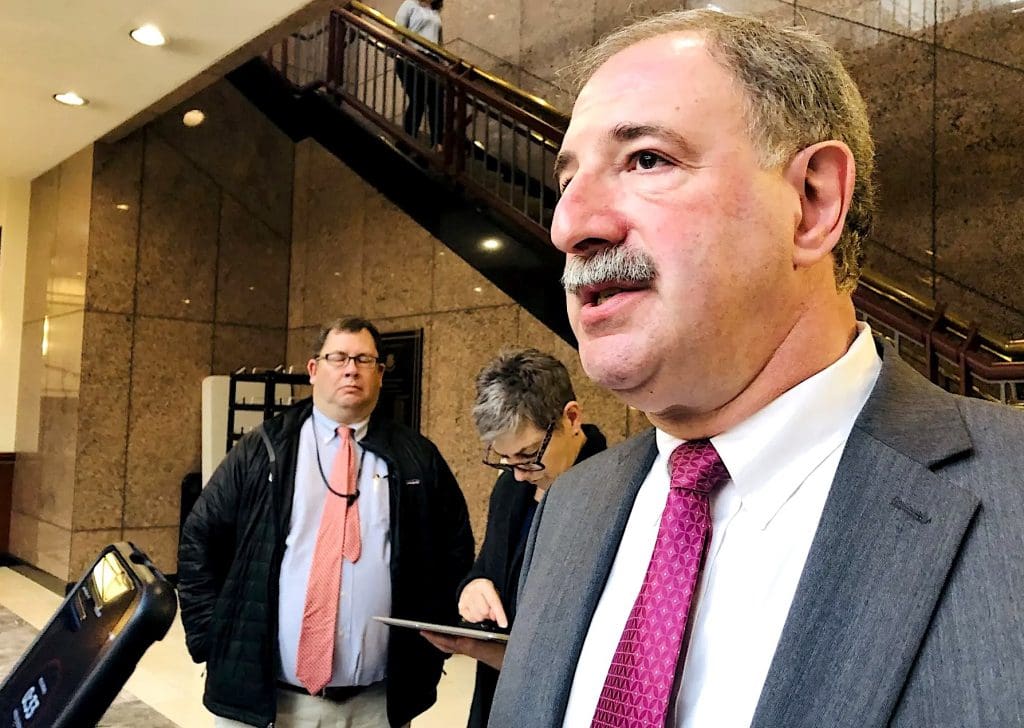
“There are a lot of raw emotions related to even the prospect of even having to avail oneself of this legislation,” said state Rep. Jonathan Steinberg, D-Westport, the co-chairman of the committee.
“I’m sure none of us wish for ourselves, our families or anybody we know, the prospect of having to even contemplate such a choice, but we want to at least afford them that option,” he said.
The bill passed out of the Public Health Committee by a vote of 22-9 after two hours of debate.
The step is one of the first that a measure must take before it can become law. Similar legislation has been raised in more than a dozen prior legislative sessions, but had not been passed out of committee until last year.
Detailed process for ending a life
To qualify for access to life-ending medication, under the bill, patients with a terminal illness must submit two written requests to their attending physician, the second submitted at least 15 days after the first.
Each written request has to be witnessed by two people who are not immediate family members or entitled to a portion of an estate at the time of a person’s death.
Bid to include criminal penalties turned down
Republicans, led by state Sen. Heather Somers, R-Groton, tried to pass an amendment that would have made it a crime to sell or administer the drug to anyone other than a qualified patient. Somers said the amendment was important because it added a level of public safety otherwise missing from the proposal.
“We are talking about drugs that are deadly, and if used improperly could not only kill somebody who is not on the end of their life, but could cause severe and unchangeable consequences should someone take them improperly,” said Somers.
The amendment was notable because, if successful, it would have likely meant the bill would have been sent to the Judiciary Committee, where a similar proposal was sent last year before it died in that committee.
Somers’ proposal was a part of the underlying bill, but was taken out after legislators determined existing state laws and the underlying proposal adequately protected the public from potential abuses.
State Rep. Peter Tercyak, D-New Britain, pointed out that stealing, taking other people’s medications and transporting meds without their original packaging already are all crimes. Ever since lawmakers started reforming the state’s criminal laws, he said, other legislators have proposed criminalizing new acts, making them potentially punishable by prison time.
“Felonies ruin people’s lives,” Tercyak said. “I’m content with them being arrested for stealing, for having a medication that isn’t prescribed for them and for having medication not carried in its original labeled container. I think that’s enough.”
The amendment failed by a vote of 17-12.
Despite the amendment failing, legislators continued discussing the next step for the bill once it passed out of committee.
Steinberg said it was unclear where it would be sent. Regardless, state Sen. Marilyn Moore, D-Bridgeport, expressed confidence it would be sent to the appropriate place.
“If it goes through Senate screening, the attorneys will send it to where it needs to go,” said Moore.
Westport legislators lend support during emotional debate
Steinberg acknowledged the passionate public hearing the committee held last week, during which more than 120 people offered their thoughts on the proposal.
He and his colleagues referenced the pain of family members whose loved ones experienced profound agony before their deaths, and the advocates who lost their lives before legislators passed the bill.
“We have very much heard you,” Steinberg said. “We struggle sometimes to turn these desires, these wishes for better outcomes, into law, but that is indeed our intent today.”
And, in a statement issued after the vote, Steinberg added, “We had a good, if somewhat emotional, debate. The people of the state overwhelmingly support enabling this end-of-life option, and it’s time for us to join other states in making it available.”
He was joined in supporting the legislation by state Sen. Will Haskell, D-Westport.
Haskell, in the statement, said, “This bill is all about allowing patients to be the author of their own final chapter.
“I’m so grateful to the constituents who participated in the public hearing and shared their personal stories about watching a loved one suffer, or suffering themselves, with a terminal diagnosis. Their stories clearly had an impact on our committee, and I’m hopeful that we will finally give patients this choice.”
Additional information by the Westport Journal.











“Aid-in-Dying Bill” by Steinberg Led Panel
To my thinking it’s “Legalized Genocide”
Sincerely,
Gerald F. Romano, Jr.
Some form of “death with dignity” legislation has long been needed in CT. Among many states on this topic, CT has not adopted reasonable and appropriate laws. Thank goodness the additional of section imposing criminal sanctions in certain instances was not supported. Such efforts are often attempts to prevent all legislative support for this significant aspect of contemporary society. Rep. Steinberg has long been a champion of “death with ‘dignity” legislation and is persistent his especially laudable. CT needs to become one of the many states in our nation that acknowledges the importance of this matter and takes action to reflect that importance.
Don Bergmann
In this day and age, for Gerald Romano to make such an ignorant statement is unconscionable. All one has to do is read the bill. Thank you, Rep. Steinberg for taking the lead. Talking about “legalized genocide”, look at how Putin (called wonderful and a genius by Trump for his war on Ukraine) is trying to eradicate the Ukrainian nation! Genocide for sure.
Your body, your choice. We humanely put our animals down because we do not want them to suffer from an incurable health complication, why can’t we choose for ourselves?
Thank you, Jonathan Steinberg, and committee, for taking on this issue. As our population ages, we need more humane and dignified options for those who are terminally Ill. This is brave and necessary legislation that will allow individuals and their families more agency over their end of life decisions, which are not taken lightly. Thank you.