

By Linda Conner Lambeck
WESTPORT — The 2024-25 school year kicks off next week, but Westport public school officials are already back in session.
The Board of Education will meet Thursday. A convocation for staff is set next Monday. And Tuesday, Aug. 27, some 5,300 students return to classes at the town’s eight schools.
“We are preparing for a pretty busy fall,” said Supt. of Schools Thomas Scarice during a Tuesday interview.
There will be a focus on a new Code of Conduct for students approved by the school board last May; discussion about whether to ban students’ cellphones during school hours; continued district efforts to bring out the best in students, and an anticipated board vote to alter school district boundaries for the 2025-26 academic year.
Redistricting & Long Lots
“The big project leading into the new school year is redistricting,” said Scarice. “It’s been very time consuming [this summer].”
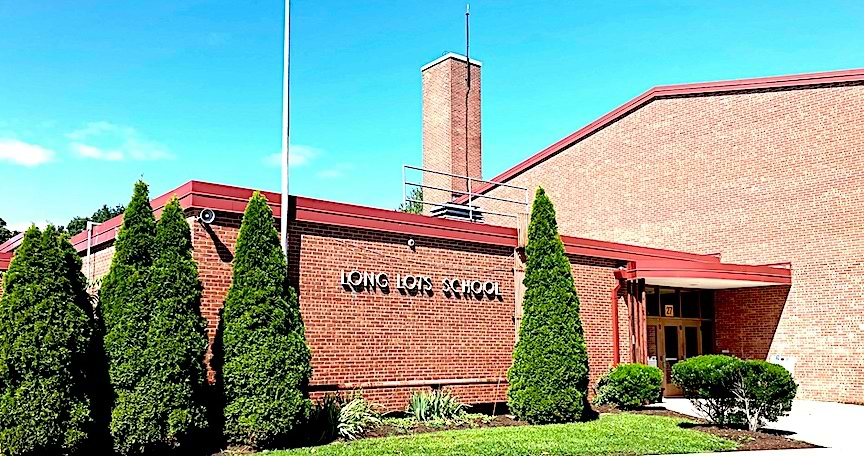
The board decided last year that elementary school redistricting is in order to coincide with opening a new Long Lots Elementary School.
Ground is expected to be broken on the replacement school, with a projected $100 million price tag, late this fall or in early 2025.
Long Lots is overcrowded and currently has two portable classrooms. Redistricting would aim to lessen the pressure on Long Lots and fill more seats at Saugatuck Elementary School by redrawing some boundaries. The process may, or may not, affect Greens Farms Elementary School.

In all, 50 to 80 students could be affected, Scarice said, far fewer than the numbers suggested when the board started contemplating redistricting.
“It’s not a crisis at all, but we do need to reduce some of the population [at Long Lots],” the superintendent said.
Beyond the existing student population at Long Lots — it was 574 last fall — Scarice said the district has to expect that a new school will draw new families. “We cannot build a new school and say it’s not big enough,” he said.
The new school will have 30 home rooms, five per grade level. It will also have a wing dedicated to the district’s Stepping Stones Preschool, now housed at Coleytown Elementary School.
By acting on redistricting in November, after a series of opportunities for parents to weigh in, Scarice said officials will have time to roll out changes.
“It is understandable that families who are in a neighborhood that could be redistricted are concerned,” said Scarice. “We will do our best to mitigate the impact.”
It is not yet clear when the new Long Lots will open. Architectural design work has taken place this summer for the new structure, which will be built adjacent to the existing school on Hyde Lane. A final design and site plan have not been adopted. (For the latest update by the Long Lots School Building Committee, click here.)
Once construction starts, Scarice said that students and staff will see, and maybe hear the work, but officials expect the project will not disrupt the school operations.
A town police officer has been assigned to the campus to handle traffic, the superintendent added
This summer, painting, floor repairs and general maintenance have been carried out throughout the eight schools in the district. Some schools got security camera upgrades and playground work.
Cellphones
Scarice broached the idea of making the school district phone free for students in June, issuing a detailed recommendation on the proposal.
Over the summer, the state Board of Education indicated it would issue guidelines encouraging public schools to ban phones.
Scarice said state efforts amount to little more than what the district does now. Westport’s elementary students can’t bring phones to school and middle school students are supposed to leave them in lockers or back packs. At Staples High School, students are allowed to use phones in hallways and during lunch and free periods.
Scarice wants to ban them altogether — along with ear buds and smart watches — but said he will spend at least a month this fall seeking input from faculty, parents and students.
If the appetite is not there for an outright ban, Scarice said, he will either figure out a better way to sell the idea or drop it.
Scarice said the aim is to relieve teachers of the burden of enforcing the phone policies. He also wants to learn what replacement tools teachers would need if students no longer have phones to use as planners, calculators or instructional aides.
Should the cellphone-ban idea win acceptance, Scarice doesn’t anticipate it taking effect before January.
School climate
Last school year, the first 30 days of the school year were devoted to helping students feel they belong. That continues this year, with data from the district’s Climate and Culture surveys used to address student concerns.
Despite the effort, the school board at several meetings last year heard from parents whose children reported being bullied because of their race, ethnicity or religion.
“I don’t think we can singularly change that with a Code of Conduct or one or two programs,” said Scarice. “I think we have to continue to improve on how we prevent and respond [to such incidents].”
Over the past few years, the district has introduced several Social and Emotional Learning programs, is working to train teachers in Restorative Justice practices and is collaborating with the Anti-Defamation League to earn a designation as a “No Place For Hate” district.
Part of that involves an audit of programs already in place, as well as students, parents and faculty signing onto the effort.
“The problem is we do not function in a vacuum, but in a world,” said Scarice. “Issues of the world will penetrate the walls of the school. That won’t change.”
As the outside world becomes more polarized, Scarice said, those issues become more challenging to deal with in school.
The superintendent said the district has gone to great lengths to become a more comfortable environment. That may lead to more students trusting that they can report incidents of harassment.
“I don’t think the number of reports necessarily indicates a bigger problem,” he added. “It is always important that when we have complaint [that] we do all we can to investigate and get to the bottom of it. We don’t always end up in a place where everyone is happy.”
Student voices
The district will continue to strengthen student voices. In the fall, the board will get a report on student representatives who have been named at all schools. Sometime in the fall, the Board of Education will get a new non-voting student representative to replace the one who graduated in June.
This year, the district is also working on a Growth Mindset project with a group from the University of Connecticut. Growth Mindset is a belief that a person’s trajectory in life is not dictated alone by inborn talents, but that practice and perseverance can also lead to resilience and success.
That is important in a community filled with high-achieving students, Scarice said.
This fall, the school community is being encouraged to read the book “Grit,” by Angela Duckworth, as part of the mindset work.
Reading
Last fall, Westport was one of a number of school districts that challenged state’s Right to Read Law that compelled all districts to switch to one of several programs based on the science of reading.
One of the highest-achieving districts in the state when it comes to reading, Westport officials asked for a waiver, arguing that local schools’ instruction was aligned with the law’s intent. The state wasn’t satisfied.
By July, two state-approved components of the plan had to be in place. Scarice said the district already uses one of those components, a phonemic awareness program called Heggerty.
The district is awaiting approval of the second component, a University of Florida Literary Institute phonics program called UFLI, which was adopted last year and recommended by district staff. UFLI is listed as an approved program on the state Department of Education website.
“We just haven’t had official approval yet,” said Scarice.
State Smarter Balance test reading scores are not out yet for 2024, but the superintendent said he is confident district achievement levels are back to pre-pandemic levels.
“By fifth grade, we are just shy of 90 percent [reaching the state] goal,” Scarice said.
More changes in reading instruction may be necessary for the district to be in full compliance by next July.
“We will continue to work with the state until then,” Scarice said.
It’s an election year!
Social studies teachers in the district are working to prepare students, in a non-partisan way, for this year’s presidential election.
“We expect it to be an active election season,” said Scarice. Teachers have developed instructional material to engage students on topics such as voting rights and the Electoral College.
“I support it but remind [everyone] we are apolitical. The board has a formal policy on that and we will do our best to strike a balance,” Scarice said. “The goal is to teach kids how to think, not what to think.”
Busing
One of the biggest issues confronting the district last fall was busing. There was a new provider. The bus fleet was being replaced. Construction throughout town posed roadblocks.
Despite that, Scarice said the performance by First Student, the new contractor, was a remarkable improvement.
Buses parked last year at several of the schools are now stationed at the Greens Farms Railroad Station and there is reportedly a strong roster of drivers.
An app to let parents know the whereabouts of their child’s bus will be activated in time for the first day of school.
Freelance writer Linda Conner Lambeck, a reporter for more than four decades at the Connecticut Post and other Hearst publications, is a member of the Education Writers Association.






Recent Comments