
By Linda Conner Lambeck
WESTPORT — A state-mandated climate survey conducted last year produced troubling results about how students feel about their classes and connection to adults at school.
Engagement, or interest in classes, was rated least favorably by students at both elementary and secondary levels.
The results helped inform district practices this year, with more time spent trying to build connections between students and staff, making school fun and giving student a greater voice.
It didn’t hurt that many of the restrictions on school activities curtailed during the pandemic have been lifted.
To find out if things have improved, the school board last week voted 7-0 to give the survey again, asking the same questions asked last year but in a streamlined format.
The plan is to administer the survey between May 9 and 23.
Districts are statutorily required to give the climate survey every other year. Last year, however, was the first time it was administered since the pandemic brought in-person learning to an abrupt halt in March 2020.
Assistant Superintendent Michael Rizzo told the school board that the district will once again use Panorama Education to compile and analyze the results.
Like last year, the on-line survey will be given to students in grades 3 through 13, staff and parents. The focus this year is on “belonging” and “school climate.”
Students will be asked things like how much support they receive from adults at their school, how fair they feel school rules are, if their school has a positive or negative energy and if student behavior at their school impacts learning. Students also get the chance to list two things the school can do to improve and what it does well.
Last year, the open-ended questions gave students the opportunity to voice concerns about behaviors at recess, bathroom cleanliness and a desire for more focus on mental health.
Staff, which last year gave the district high marks, will be asked about things like the working environment at their schools, how much respect they receive from colleagues, and what they would change about their school if they could.
The five-minute survey is voluntary and anonymous, but students will be asked to identify their school, gender, race and ethnicity.
Parents will be asked if their children seem to enjoy going to school, if they feel the school values the diversity of their children’s backgrounds and how fair or unfair the school system is in evaluating their children.
Letters to parents about the survey went out the day after the board meeting last week. Parents can decide whether their child takes it and also ask that their child complete a pencil and paper version of the survey. Only a handful opted for that format last year.
“We hope you will join us in this effort to make our school an even better place to learn,” Rizzo and Assistant Superintendent Anthony Buono wrote in the letter parents received.
Last year, 3,143 students, 601 staff members and more than 1,000 families participated in the survey.
During the board meeting, board member Dorie Hordon expressed concern that some 8-year-olds might have trouble interpreting some of the questions. She was told teachers explain the questions to any students who don’t understand them.
Hordon also asked how students with mixed ethnicity would be reported. Valerie Babich, the district’s coordinator of psychological services, said she wasn’t sure but that student responses count just once regardless of how many boxes they check.
Board Chair Lee Goldstein said the demographic information was helpful in determining if some students feel marginalized.
Not everyone agreed.
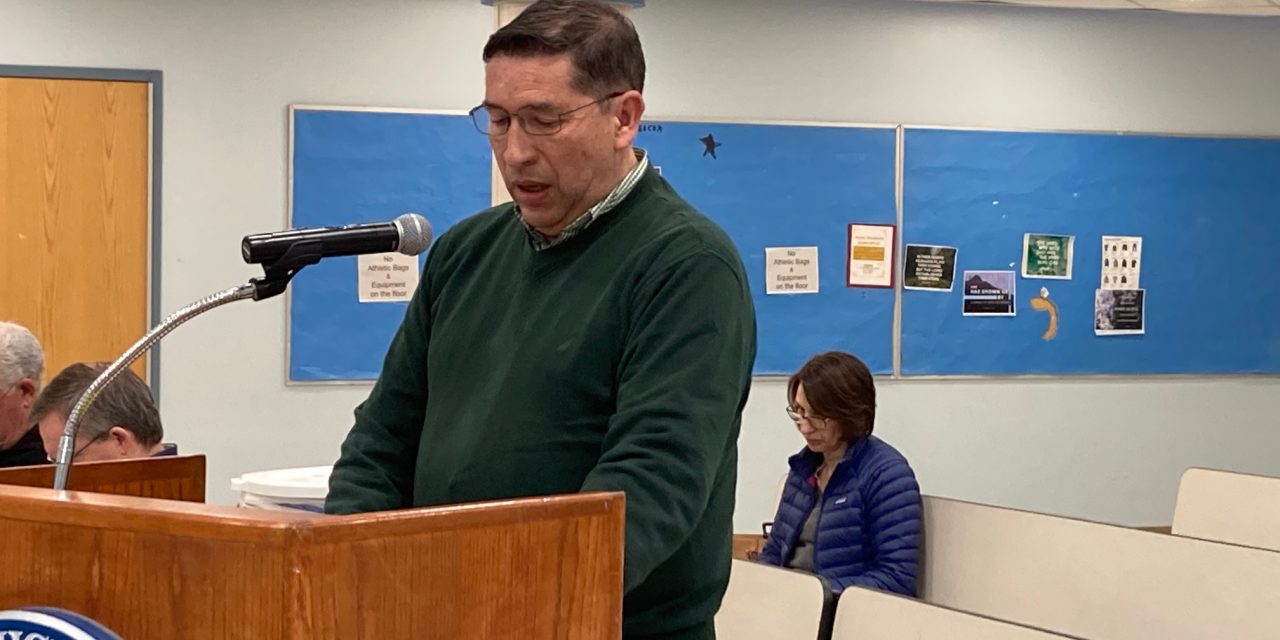
During public comment, Camilo Riano, a parent of four young children, called the categories and surveys a useless way to spend tax dollars.
“They can’t be used for anything,” Riano said of the results.
Riano said by not allowing his children to participate, he was controlling “50 percent” of the Hispanic category at his school.
“It messes up your survey,” Riano said. “There is nothing to (statistically) conclude.”
Riano also asked if the district would start allow students to identify as non-binary or as some other “gender creation” instead of just male and female.
He continued commenting until Board Secretary Neil Phillips told him his three minutes to speak were up.
Freelance writer Linda Conner Lambeck, a reporter for more than four decades at the Connecticut Post and other Hearst publications, is a member of the Education Writers Association.











Recent Comments