
By Meghan Muldoon.
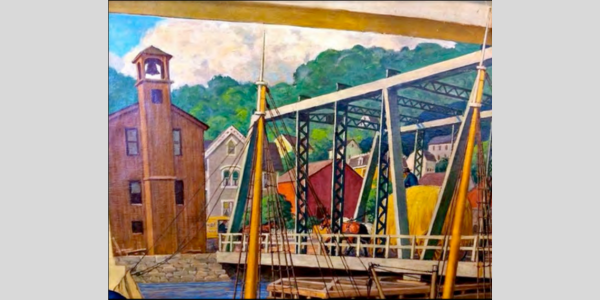
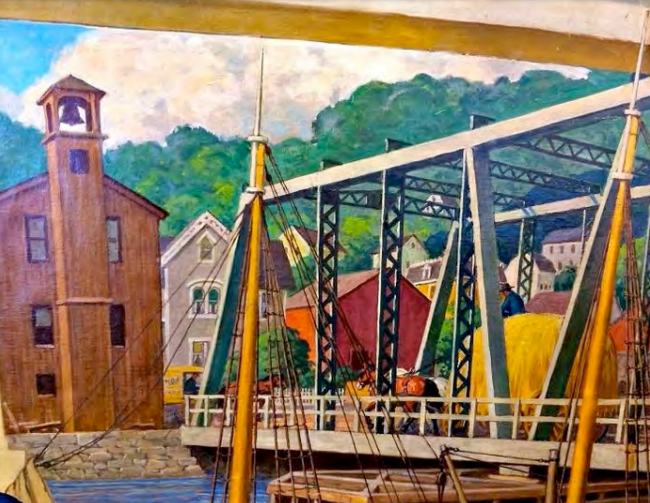
WESTPORT — The Connecticut Department of Transportation’s (CTDOT) plan to replace the 141-year-old William F. Cribari Memorial Bridge has sparked concern among some residents who claim the process has lacked meaningful public engagement from the outset.
Alarmed by what he sees as a lack of transparency, Werner Liepolt, a resident of the Bridge Street National Historic District, recently launched an online petition calling for federal oversight of the project to ensure that historic preservation laws are followed and that the public is fully informed and involved. Readers can read and sign the petition here.
“Simply put, there has been zero attempt to involve the public,” Liepolt said. “And that is mandated by federal regulations to happen from the start.”
Section 106 of the National Historic Preservation Act requires agencies to seek and consider public input when federally-funded projects affect historic resources.
The steel truss bridge, built in 1884 and listed on the National Register of Historic Places in 1987, carries Connecticut Route 136, also known as Bridge Street, over the Saugatuck River. The structure has long been identified by the state as deteriorating and the state’s Department of Transportation has estimated that replacing it would cost between $78 million and $80 million. The bridge was flagged more than a decade ago as “severely deficient,” prompting the current planning process.
At an invitation-only meeting last month, CTDOT officials said no final decision has been made and that multiple alternatives, including rehabilitation, are still being evaluated.
Residents criticized the meeting’s limited notice, saying the process has left much of the community in the dark.
Petition calls for federal oversight
Liepolt’s petition asks for the federal government to step in to guarantee that all alternatives are fully evaluated and that the bridge’s “richly historic and irreplaceable nature” is given appropriate consideration.
“Public involvement must occur before decisions are functionally made,” Liepold said, referencing federal regulations.
Liepolt contends that consultants may have already been meeting without public awareness or participation, undermining the spirit and letter of the law.
“If consultants were meeting to evaluate historic resources, assess effects, discuss alternatives or shape mitigation and those discussions occurred before the public was informed or invited, and all this happened, then my petition for federal oversight is well-founded,” he said.
Liepolt said he has repeatedly been promised public hearings by CTDOT but that subsequent meetings continued to be invitational. He has filed Freedom of Information requests with both the state and the Town of Westport seeking records related to meeting notices and planning decisions.
“It is only through my notification that any of the people owning and residing in the thirty or more properties that will be affected by this project even know about it,” he said.
Concerns beyond historic preservation
While preservation is a key issue, Liepolt says he and his neighbors in the Bridge Street Historic District are also worried about the long-term impacts on the community if a replacement bridge is designed to accommodate heavier truck traffic.
“The current project, already announced, plunks a bridge down that can carry any traffic down where 18-wheelers can and are likely to use it,” Liepolt said. “What I don’t want is a project that has potentially immense consequences for traffic, safety, health, and property values to be decided, shaped, and tailored to private interests whether they be commercial, developer-favored, or whatever.”
He also pointed to past experience with state infrastructure decisions, noting that an earlier Cribari Bridge project reduced headroom clearance beneath the bridge, creating problems for a local marina owner.
To Liepolt, these examples underscore what he views as a pattern of rushed planning.
“They seem to me to be irresponsible and disorganized middlemen and women who expedite rather than plan projects and give them to contractors who waste taxpayer money,” he said. “I have no faith in their competence or their integrity.”
First Selectman promises public involvement
First Selectman Kevin Christie acknowledged residents’ concerns while emphasizing that the review process is ongoing and that additional opportunities for public input lie ahead.
“CTDOT has evaluated a range of alternatives for the Cribari Bridge, including conservation, rehabilitation and replacement,” Christie said in a statement. “While CTDOT has identified a preferred alternative, the environmental and historic review processes are still underway, and there are additional formal opportunities for public input ahead.”
Christie said CTDOT has committed to publicly noticing future meetings — a key point of contention among residents — and stressed the importance of balancing safety with community impact.
“The 140-plus-year-old bridge is aging, and safety and long-term reliability are critical,” he said. “At the same time, the bridge’s history and its location in the heart of Saugatuck mean that traffic, truck impacts and neighborhood concerns must be taken seriously as the process continues.”
For Liepolt, assurances of future engagement do not substitute for early involvement. He says that it is the public’s right under federal law to be included from the outset.
“I want the public informed and engaged from the start of the process, not after mitigation is marketed by consultants,” he said.
As of Jan. 5, Liepolt’s online petition has drawn more than 500 supporters toward a goal of 1,000 signatures.

Meghan Muldoon
Meghan Muldoon is a freelance journalist based in Darien, Connecticut. As a television and print journalist, Muldoon has covered state government and politics in Virginia and Connecticut.




Recent Comments