

By Kerri Williams
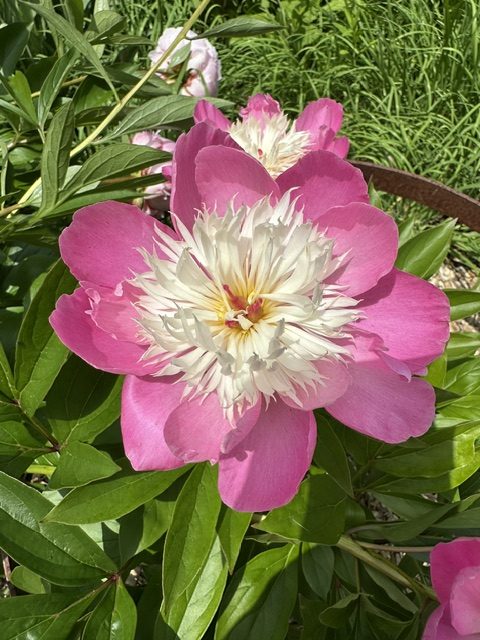
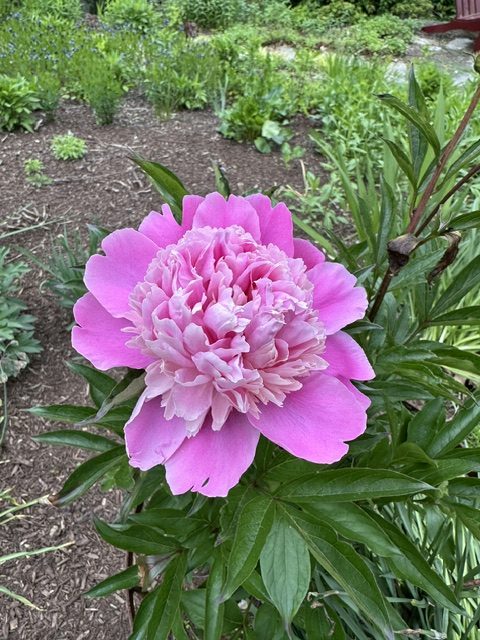
The peonies in Nathalie Fonteyne’s garden make her think of her mom. That’s because Nathalie, president of the Westport Garden Club, had a mom that loved those breathtaking blooms.
Nathalie’s mom is not the only one with a passion for peonies. They also happen to be a favorite of mine as well as of Ellen Greenberg, a former president of the club. On this Mother’s Day, let’s take a moment to learn about a flower often used to celebrate moms.
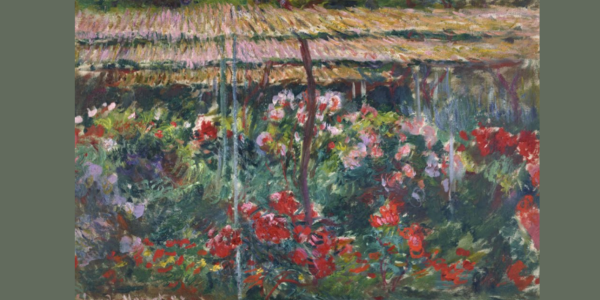
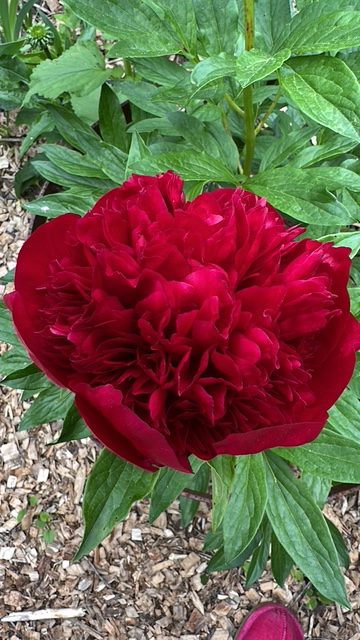
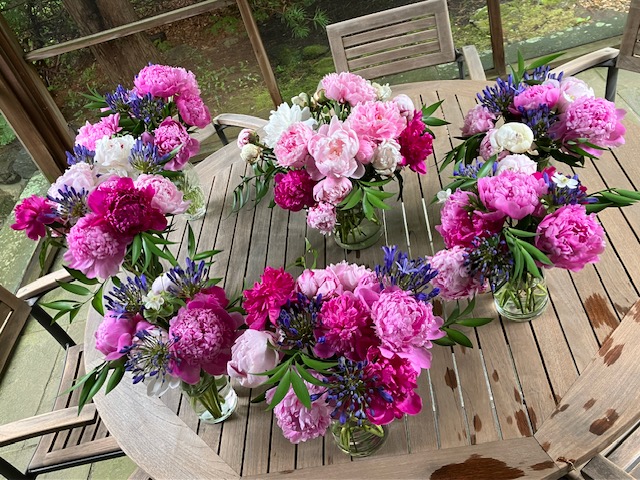
One reason the peony is often linked to Mother’s Day is that it bursts into bloom in May, astounding viewers everywhere with its large, showy flowers. It also makes a show-stopping cut flower and is often included in bouquets.
The peony traditionally symbolizes good fortune and compassion in addition to the beauty and grace of motherhood. Pink peonies are used in arrangements to represent gratitude, and white ones are included for remembrance.
Prospect Gardens, the Westport estate featured in my most recent column, includes a stone wall lined with peony plants. There are two varieties of peony, a herbaceous and a tree peony, and the grounds there include both kinds.
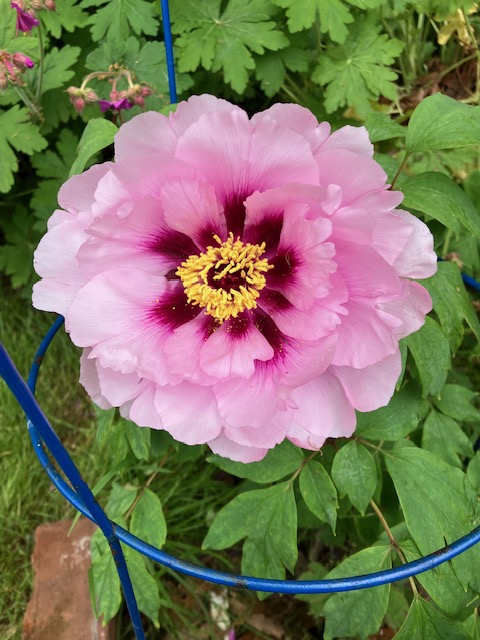
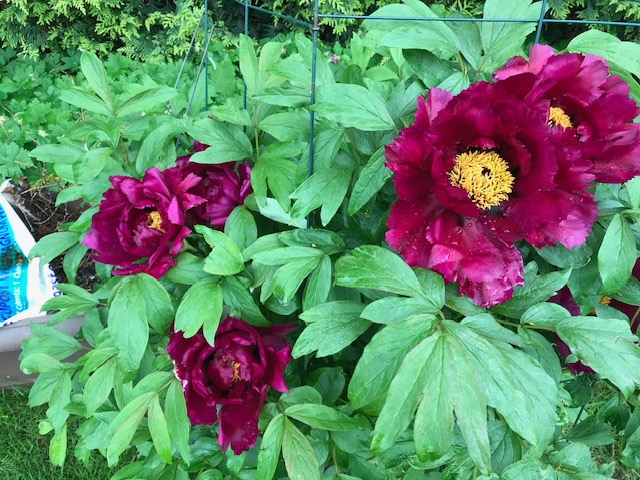
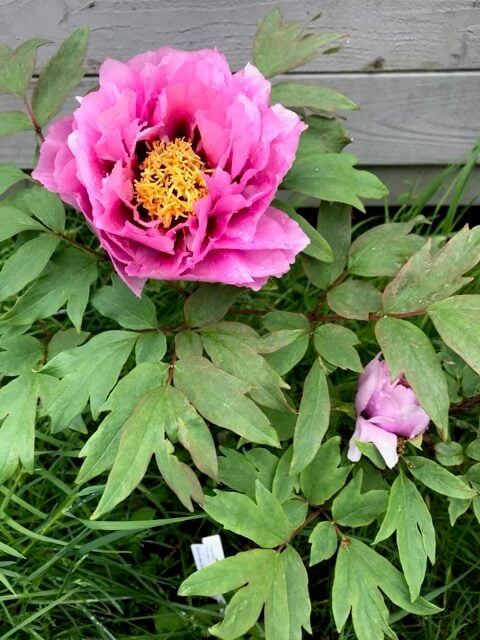
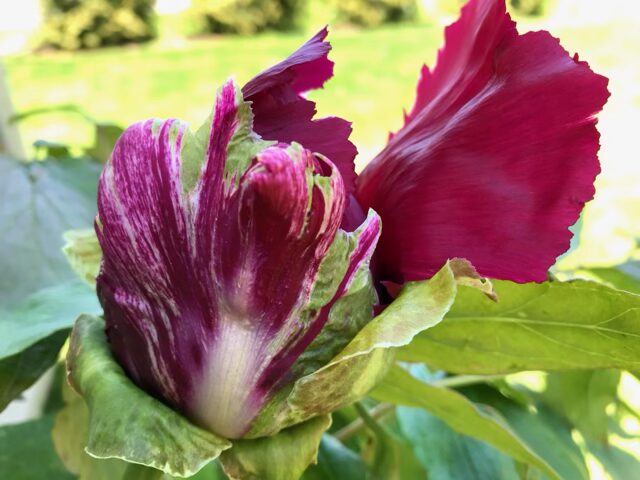
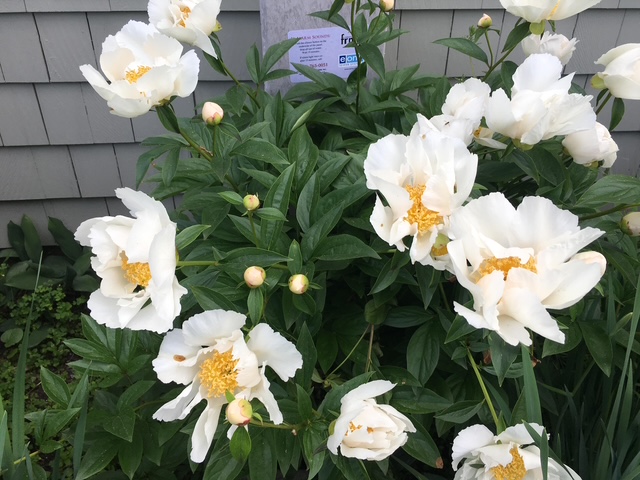
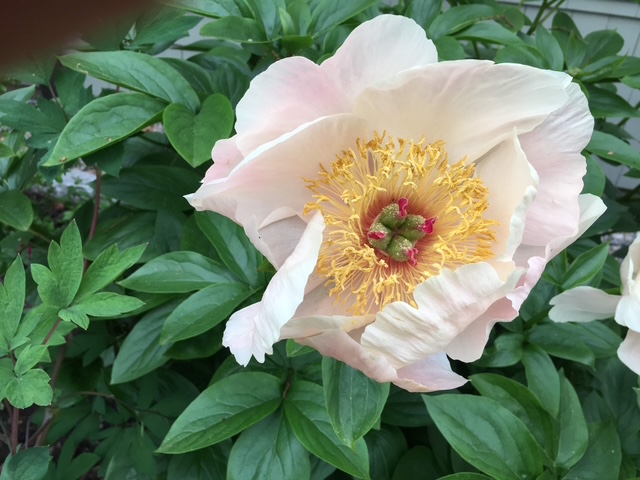
During a recent conversation, Ellen told me about the unique properties of both types of peony and considerations for gardeners when contemplating them. Ellen is known for her love of peonies and has taught classes about them at Wakeman Town Farm.
The herbaceous peony is the most common variety, a perennial plant that needs full sun. They are smaller in stature than the tree peony, and they require staking so that the stalks don’t droop during the first rainfall. Ellen recommends using peony hoops that can be placed over the plant when it first emerges from the ground in early spring so that the stalks grow up within the hoop.
When planting the herbaceous peony, it’s important not to place it deeper than two inches in the earth, according to Ellen. The plant will not bloom if it is planted too deeply.
While some people believe that dividing peony plants is tricky, Ellen said they are actually quite easy to separate and share. In fact, members of the garden club share their peony plants so often that they know the plant by the name of the person who gave it to them rather than by its plant name.
The tree peony is also a perennial, but it is a larger shrub with a woody stem that does not need to be staked. The tree peony thrives in partial shade so is great for people who have a property without full sun. It is slow to grow but will emerge into a good-size shrub, anywhere from three to seven feet tall.
As a shrub, the tree peony costs more than the herbaceous variety and cannot be divided. Ellen has gotten some of hers from house tear downs in town that are learned about by the garden club. Sometimes the developer will allow the club to go in and save plants that would otherwise be discarded, she said.
Both types of peony are known for being low maintenance. While roses are finicky and suspect to issues with fungus and insects, peonies tend to thrive with little care, Ellen said. There are also many different varieties and colors to choose from that can make growing them even more fun.
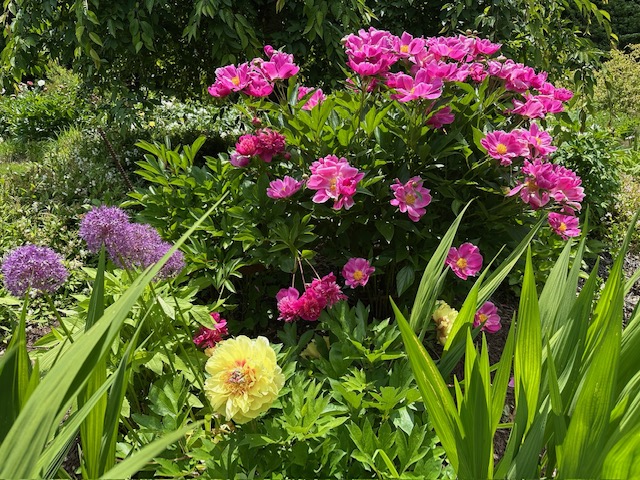
The peony is not a native plant, but it is still a favorite of many gardeners and has some advantages. It is not invasive, so it will not take over a garden. And pollinators are attracted to the single-bloom varieties, those with one row of petals, because they have access to the center stamens.
One way to enhance the benefit to pollinators is to plant peonies alongside other plants that bloom longer, providing more nectar. Examples include coneflowers, alliums or catmint.
You may have noticed ants gathering on your peony buds. While it can appear problematic, the ants are not hurting it. They are feeding on the nectar and protecting the plant from other pests.
Another advantage of the peony is that the greenery looks lovely all season, long after the blossoms are gone. In the fall, the herbaceous peony should be cut back to the ground, while the tree peony needs very little tending.
And let’s not forget the scent of the peony, which is often described as delicate and sweet, a mix between the rose and lily of the valley.
For all these reasons, the peony deserves more than a passing thought this Mother’s Day. When you encounter these spectacular blooms this May, I hope you think of the “moms” both present and past in your life, just as Nathalie is reminded of hers.

Kerri Williams
Kerri Williams is an award-winning writer and journalist. She has worked as a reporter at the Norwalk Hour, as Living editor at the Darien News-Review, and managing editor for the Norwalk Citizen-News. For Westport Journal, she is a reporter as well as a gardening columnist, writing ‘Cultivating with Kerri.’ Williams moved from Connecticut to upstate New York in 2021.








Recent Comments