
By Dirk Langeveld
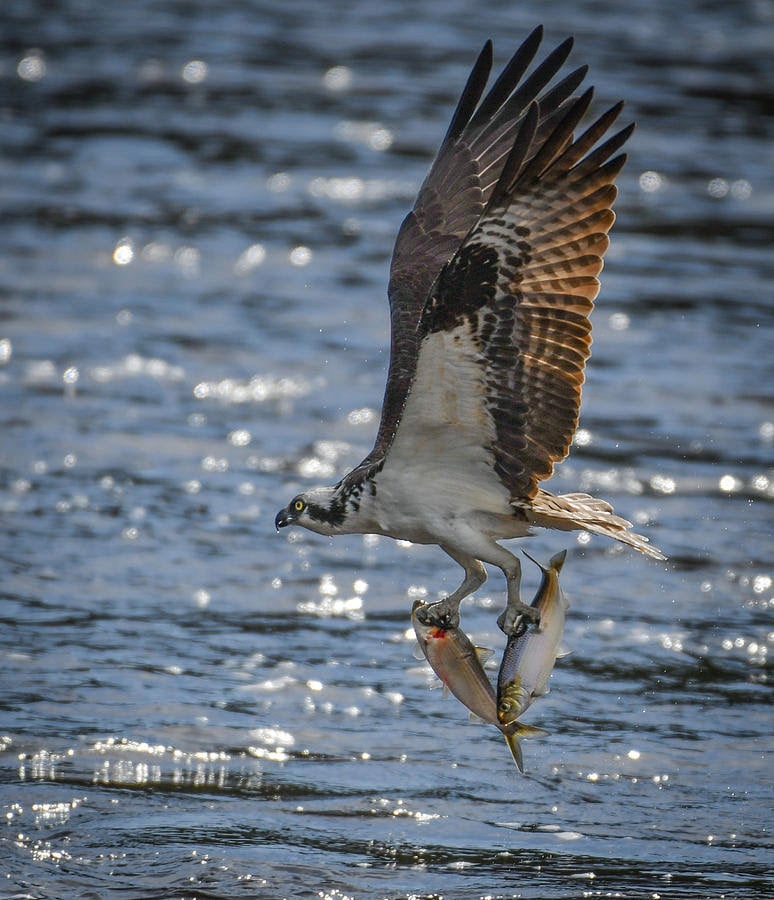
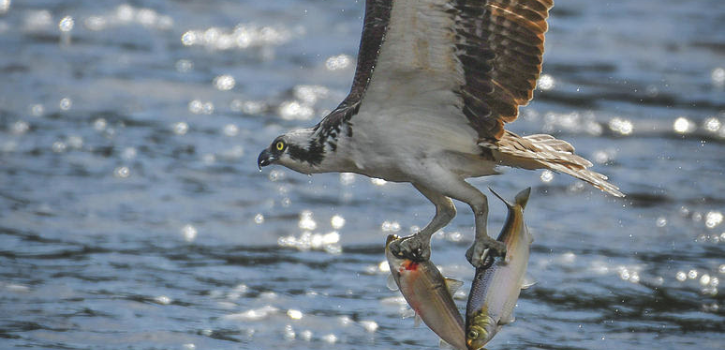
FAIRFIELD — A new study set to take place this spring will look into the diet of Connecticut’s ospreys, with an eye to identifying any potential concerns regarding the birds’ local population.
The Connecticut Audubon Society is planning to begin the Osprey Prey Study in late March or early April, when ospreys return to Connecticut to nest after overwintering in warmer regions to the south. The organization is currently looking for financial support and volunteers to assist with this effort.
The study follows findings from the citizen science group Osprey Nation showing a drop in the local osprey population in 2025. Although osprey numbers in Connecticut are still above what is required to sustain the population, their reproductive rate was at its lowest point since the study began in 2014. Osprey Nation also notes how this decline took place alongside an alarming plunge in osprey populations in the Chesapeake Bay region and New Jersey.
“It’s small enough that we normally wouldn’t be concerned,” said Tom Anderson, director of communications at the Connecticut Audubon Society, about the observed population decline. “The fact that these other things are going on has made us want to look at this a little more closely.”
A historic recovery
The osprey is a hawk that feeds exclusively on fish, making it dependent on waterways for its diet. In North America, its range includes coastal areas and large inland lakes.
Historically, ospreys have made a remarkable recovery after a population crash in the mid-20th century. Dwindling habitats due to expanding human development, coupled with eggshell thinning due to pesticides like DDT, led the estimated number of nests between New York City and Boston to drop from about 1,000 in the late 1940s to 150 by 1969. In 1974, only nine nests were observed in the region.
The banning of DDT and similar pesticides, coupled with conservation efforts, have helped the osprey population rebound. Osprey Nation monitors nests between March and October to track mating pairs, the number of newborn chicks per nest, and their likelihood of making it to fledgling.
In 2014, the first year of Osprey Nation’s efforts, a total of 210 nests were observed in Connecticut. This number has tripled since then.
Several ospreys have made their nests in and around Westport. A full map of nests observed by Osprey Nation can be found here.
The 2025 decline
Concerns about Connecticut’s osprey population have been driven by observations farther south, namely in the Chesapeake Bay. The largest estuary in North America, this region also features the largest concentration of ospreys. However, observers have found that roughly 80 percent of the osprey nests in the saltwater areas of the Bay have failed to produce any young in the past few years, with a productivity rate of just 0.25 chicks per pair in these areas.
This observation has fueled a debate over whether overfishing in the Bay might be to blame for the lower osprey populations. Ospreys in saltwater areas rely on Atlantic menhaden, which are also harvested by commercial fishermen to be processed into fish oil or feed for salmon farms. Conservationists believe the menhaden are being overfished, while the fishing industry has argued that catch limits are already in place and that limiting menhaden harvesting would impact jobs in the region.
The decline of osprey populations in southern New Jersey has been less serious, but still notable. Researchers in that state recently noted a nest failure rate of 58 percent, the highest in monitoring history.
In Connecticut, Osprey Nation observed a drop in active nests from 726 in 2024 to 682 in 2025, with estimated fledglings dropping from 1,077 in 2024 to 862 in 2025. The estimated fledglings per nest fell from 1.48 to 1.26, the lowest in the study’s history.
Osprey Nation’s 2025 report notes that several factors could have contributed to this decline, including heat waves and thunderstorms during the summer months, disruption from human activities, intentional or malicious removal of nests, potential illegal takes, and predation. However, researchers identified starvation as the most common reason for nest failure, with the increase in single chick broods regarded as a reflection of food stress.
“They’ve made an incredible comeback from the years in the middle of the 20th century,” said Anderson. “This is the first sign we’ve seen that anything might possibly be wrong.”
A look at the food supply
The Osprey Prey Study will look into what type of fish ospreys in Connecticut are eating, whether their diet varies by geography, and how much they are able to eat. The Connecticut Audubon Society is still determining how conservation scientists will conduct the study, but it could include trail cameras, machine learning and artificial intelligence, and volunteer efforts.
While Atlantic menhaden is common along the Atlantic coast and commercial fishing of this species is barred in Long Island Sound, anecdotal reports suggest that it is scarce in Connecticut waters. The study will determine whether that is accurate and whether ospreys are pursuing other fish instead, such as alewives or other forage fish.
The Connecticut Audubon Society plans to coordinate its efforts with researchers in the Chesapeake Bay and New Jersey to produce data that is helpful to all three regions. On February 26th, the organization will host a webinar on the osprey situation at 7 p.m. with osprey researchers Michael Academia of William & Mary University and Ben Wurst of Conserve Wildlife Foundation of New Jersey.
People can assist the Osprey Prey Study by joining the Connecticut Audubon Society or donating to the organization, as all dues and contributions support conservation efforts. The Connecticut Audubon Society is also constantly recruiting volunteers for its Osprey Nation efforts.
For more information, contact osprey@ctaudubon.org.








Recent Comments