
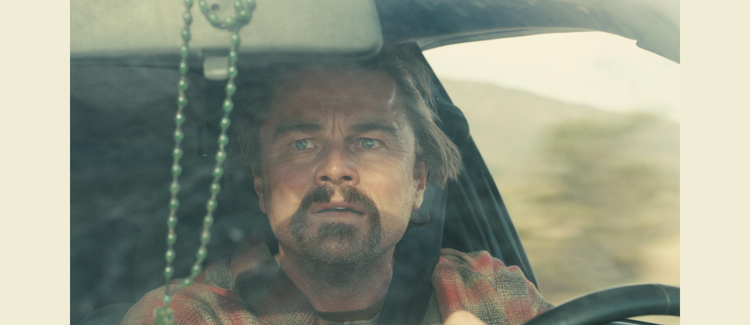

In “One Battle After Another,” auteur Paul Thomas Anderson has created a hyper-sexualized, politically politicized film in which almost every character is contemptible – except the young girl who surfaces halfway through.
Paranoid explosives expert ‘Rocketman’ Bob (Leonardo Di Caprio) works with domineering, manipulative Perfidia Beverly Hills (Teyana Taylor) in a radical, countercultural Black revolutionary group called French 75, raiding government detention camps to free migrants imprisoned by a fascist dictatorship.
One mission finds lascivious Perfidia lewdly taunting and S/M humiliating Army Col. Steven J. Lockjaw (Sean Penn), igniting his ruthless resolve to wreak revenge.
Time passes as perpetually pot-smoking Bob and agitator Perfidia hook up, rob banks, and she gives birth to Willa – after which, she splits – so devoted father Bob assumes a new identity and goes into hiding in a small Northern California hippie enclave called Baktan Cross, distrustfully parenting Willa on his own.
Eventually, skeptical, often stoned Willa (Chase Infiniti) becomes a rebellious teenager, choosing oddball, non-binary pals, which is why it’s not too difficult for obsessed Lockjaw to find and kidnap her.
Determined to prove his worth to join a powerful, elite, white supremacist group known as the ‘Christmas Adventurers Club,’ Lockjaw must ‘eliminate’ Bob and Willa for a variety of reasons best not to divulge.
But burnt-out Bob, clad in a plaid bathrobe, is determined to rescue Willa – with the help of his peace-loving buddy, karate sensei Sergio St. Carlos (Benicio Del Toro), who runs a Harriet Tubman-like underground railroad for undocumented immigrants.
Loosely inspired by Thomas Pynchon’s ‘60s-set novel “Vineland” (1990), Paul Thomas Anderson (“Boogie Nights,” “There Will Be Blood,” “Phantom Thread”, “Licorice Pizza”) combines turgid drama, absurdist comedy and adventure in an R-rated, two hour 50 minutes-long epic that cost $140 million and will inevitably divide audiences.
While the opening segment superficially defines the characters – anti-fascist vs. fascist – the rest of the slyly subversive, conventional narrative finds both male leads – Di Caprio and Penn – representing different sides of the ideological divide: resistance vs. authoritarianism….and on the personal side: love vs. hate.On the Granger Gauge of 1 to 10, “One Battle After Another” is a furious, infuriating 5, playing in theaters.











Recent Comments