
Editor’s note: following is an opinion submitted by Westporter Louis E. D’Onofrio Jr.

George Orwell’s 1984 was written as a warning about a society where the government quietly monitors the daily lives of its citizens. More than 75 years later, Westport has embraced technology that deserves far greater public scrutiny before it becomes an accepted part of everyday life.
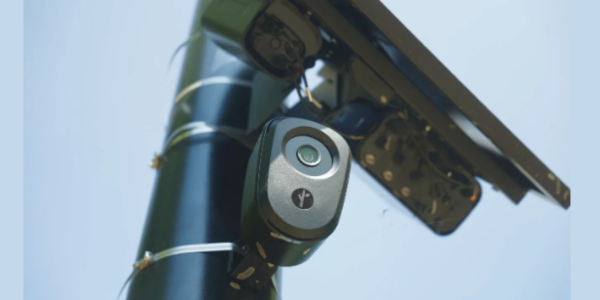
The Westport Police Department currently operates 20 Flock Safety automated license plate reader (ALPR) cameras throughout town. According to the department’s public transparency portal, those cameras detected 441,931 unique vehicles during the past 30 days, generated 990 hot-list alerts, and were queried in 302 user search sessions. The department states that the data are retained for 30 days, are used only for law enforcement purposes, do not employ facial recognition, and are intended to assist in criminal investigations and locating missing persons.
No reasonable person opposes using technology to locate an abducted child or identify a dangerous violent offender. Those are important public safety objectives. The real question is whether collecting information on nearly half a million vehicles every month, including residents who are not suspected of any crime, is an acceptable tradeoff for our community.
That question deserves far more public discussion than it has received.
Unlike traditional security cameras, automated license plate readers continuously record passing vehicles. Modern ALPR systems identify license plates while also cataloging vehicle characteristics such as make, model, color, and other distinguishing features. Privacy organizations, including the Electronic Frontier Foundation (EFF), have warned that when this information is collected over time and across jurisdictions, it can be used to reconstruct a person’s movements and create searchable travel histories of individuals who are not suspected of criminal activity.
These concerns extend well beyond ordinary criminal investigations. Civil liberties organizations have warned that large-scale location databases could be used to identify people attending political demonstrations, journalists meeting confidential sources, individuals traveling across state lines for reproductive healthcare, or communities affected by immigration enforcement. Whether or not those uses occur in Westport, the capability itself deserves public scrutiny because surveillance systems often remain in place long after the policies governing them have changed.
Unfortunately, history shows that surveillance databases can be misused. Investigations by the Electronic Frontier Foundation have documented instances in which automated license plate reader systems were searched in connection with political protests, activist organizations, and for purposes unrelated to legitimate criminal investigations. These examples demonstrate why independent oversight, public transparency, and strong accountability are essential whenever governments collect detailed location information.
Westport is not alone in debating these issues.
In July 2026, Windsor voted to permanently deactivate its 16 Flock Safety cameras, with removal scheduled later this year. According to NBC Connecticut and Yahoo News, town officials cited privacy concerns, questions regarding data sharing, and information obtained through public records requests regarding the volume of database searches. Residents questioned whether the surveillance benefits justified collecting such extensive vehicle location data.
Likewise, Killingworth has ended its contract with Flock Safety. Town officials cited privacy concerns, limited investigative value for their community, and the cost of maintaining the system. These decisions reflect a growing recognition that while surveillance technologies may provide investigative benefits, they also require careful consideration of their impact on civil liberties.
Supporters often argue that ALPR systems reduce crime. The evidence is more nuanced.
Research indicates that automated license plate readers can be valuable investigative tools, particularly in recovering stolen vehicles or identifying vehicles connected to specific crimes. However, reviews of available research have found mixed evidence that widespread ALPR deployment significantly reduces overall crime. Helping solve crimes after they occur is not the same as preventing crime in the first place. Before accepting extensive surveillance of the public, residents deserve to know whether the measurable public safety benefits justify the scale of data collection.
Westport emphasizes that its cameras do not use facial recognition technology. That is reassuring. However, privacy concerns extend well beyond facial recognition.
A person’s daily travels to a physician, a place of worship, a political meeting, an attorney’s office, or a family member’s home can reveal deeply personal information. Recording those movements at scale raises legitimate questions about privacy and government oversight even when names or faces are not collected.
Another issue deserving greater transparency is data governance. Westport states that it owns the data collected through its Flock Safety system. Residents should nevertheless understand how the information is stored, what role Flock Safety plays in maintaining the platform, how information may be shared among participating agencies, what contractual safeguards exist, and what independent audits verify that the system is operating as intended. The more data that are collected, the greater the importance of transparency regarding who can access them, under what circumstances, and what safeguards exist to detect and prevent misuse.
Every connected technology carries cybersecurity risk. Hospitals, banks, retailers, government agencies, and municipalities have all experienced data breaches despite significant investments in security. Surveillance systems should therefore be held to the highest standards of cybersecurity, access controls, encryption, independent auditing, and transparency.
Perhaps the greatest concern is not the technology itself. It is how quietly it becomes permanent.
Many Westport residents likely have no idea that hundreds of thousands of vehicle movements are recorded each month. Decisions affecting the privacy of an entire community should not occur without meaningful public discussion, transparent policymaking, and ongoing independent review.
This is not an argument against the Westport Police Department. Our officers perform difficult work and deserve effective investigative tools. It is an argument for ensuring that public safety and individual liberty advance together rather than at one another’s expense.
Westport should hold public hearings on the future of automated license plate readers, commission independent audits of the program, publish annual reports demonstrating measurable public safety outcomes, and provide residents with an opportunity to decide whether this level of surveillance reflects the values of our community.
Orwell imagined a society where constant observation became ordinary because citizens gradually accepted it.
Westport still has the opportunity to choose a different path.
—
Louis E. D’Onofrio Jr., DNP, MSN, FNP-C, PCCN
Sources
Westport Police Department, Flock Safety Transparency Information
https://transparency.flocksafety.com/westport-ct-pd
Westport Police Department Public Information
https://www.westportct.gov/government/departments-a-z/police-department/press-releases-public-information
NBC Connecticut, “Two Towns End Contracts With Automated License Plate Reader Company Flock Safety”
https://www.nbcconnecticut.com/news/local/two-towns-end-contracts-with-automated-license-plate-reader-company-flock-safety/3755508/
Yahoo News / WTNH, “Connecticut Towns Opting to Turn Off Flock Safety Cameras”
https://www.yahoo.com/news/us/articles/connecticut-towns-opting-turn-off-085226302.html
CT News Junkie, “CT Town Adopts Flock Camera Policy After Privacy Concerns”
https://ctnewsjunkie.com/2026/01/19/ct-town-adopts-flock-camera-policy-after-privacy-concerns/
Electronic Frontier Foundation (EFF), Automated License Plate Readers (ALPRs)
https://www.eff.org/pages/automated-license-plate-readers-alpr
Electronic Frontier Foundation (EFF), What Is ALPR?
https://www.eff.org/pages/what-alpr
Electronic Frontier Foundation (EFF), Atlas of Surveillance
https://atlasofsurveillance.org/
American Civil Liberties Union (ACLU), Surveillance Technology and Privacy Resources
https://www.aclu.org/issues/privacy-technology/surveillance-technologies
Brennan Center for Justice, Policing & Technology
https://www.brennancenter.org/topics/government-power/privacy-free-expression/policing-technology








Interesting study. Thank you. Coincidentally, the issue of security cameras was briefly mentioned during last night’s Planning and Zoning discussion about field lights. They are apparently used at some fields and it is possible more could be on the way. While I appreciate the security benefits with having eyes on town properties, I am wary if the overreach into private property. Anyone with a ring cam knows what I am talking about.
I think everyone should think twice about widespread surveillance on its population. Complacency becomes the gateway to “Big Brother” watching over Society. That’s how Communism took hold over its people to keep them in check so that the government had the upper hand. Is this the road anyone should want to have our Society travel?
New tech is so tempting, but this is scary. https://www.cnet.com/home/security/when-flock-comes-to-town-why-cities-are-axing-the-controversial-surveillance-technology/
We lived in Westport for 31 years and moved to Arizona 3 years ago. I couldn’t agree more with this opinion piece and agree this is not for Westport.
In our area of northern Arizona, Flagstaff and Sedona both experienced Flock “Safety” cameras being installed without public awareness. In both cases after public push-back, the Flock contracts were cancelled and cameras removed. Here are the timelines.
Citizens need to push back.
Flagstaff AZ
Summer 2024: The Flagstaff Police Department deployed 37 automated license plate recognition (ALPR) cameras around the city via Flock Safety.
Late 2025: Community pushback and public comment led to intense scrutiny regarding data sharing and privacy.
December 16, 2025: The Flagstaff City Council voted 0.5.5 unanimously to cancel the contract, leading to immediate system deactivation.
Sedona AZ
June 2025: The Sedona Police Department implemented a $51,146 contract with Flock Group Inc. to install 12 automated license plate recognition (ALPR) cameras across key areas.
August 13, 2025: Following public backlash over a lack of transparency and privacy worries regarding third-party and federal data access, the City Council directed police to turn the system off.
September 9, 2025: The council voted permanently to cancel the contract and remove the hardware, ending the program completely.
Tom Wambach