
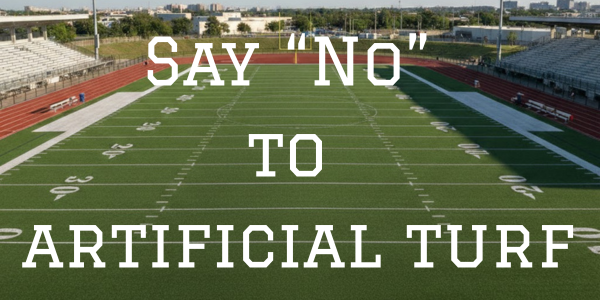
Below is an opinion submitted by Westporter Rachel Precious.
My name is Rachel Precious, I’m a lifelong Westporter, small business owner, and the Chair of the Connecticut chapter of the Surfrider Foundation, a national ocean advocacy nonprofit. As our town continues to consider the use of artificial turf for playing fields, I wanted to share with you a concern that is personal to me as I urge our elected officials to keep Westport natural.
I’m a former Westport oyster farmer and now own an oyster catering business based in East Norwalk. On average, I buy 300-500 locally-grown oysters a week for my events, and I proudly tell my guests all about our area’s oyster industry. I share stories about the nutrient-rich waters of our coastline, the countless oyster companies that once dotted the shores here, and the wonderful efforts of our elected officials and community members to protect and preserve Westport’s environment, both coastal and inland.
Many people have spoken over the years about the harm PFAS and microplastics from artificial turf cause to human health, as well as the irreversible damage they inflict on the environment. It is also well documented that artificial turf harms shellfish, since PFAS and microplastics can cause internal blockages that disrupt their digestive, developmental, and reproductive systems. I would like to draw your attention to an additional, often overlooked impact of artificial turf: zinc.
The runoff from turf fields contains high amounts of zinc, which is toxic to aquatic insects and earthworms, as well as oysters. Much like microplastics and PFAS, zinc disrupts their basic reproductive and digestive functions, impedes their development cycle, and causes severe stress, leading to mortality. Westport is a watershed town riddled with streams and brooks that feed into larger waterways, which ultimately empty into the Long Island Sound. Westport’s riverbanks, marshes, and coastline are teeming with wild oysters, and the Mill Pond is home to a robust commercial oyster farming operation.
Allowing turf fields in Westport poses an irreversible risk to our local oysters, and I find it alarming that members of our community would place recreational sports above the health and well-being of people, our environment, and the waters that support an important part of Westport’s economy and identity. As a former student-athlete myself, I understand the impact heavy rainfall can have on sports when fields are rendered temporarily unusable. But why should one group—athletes—take precedence over others? Why should my livelihood, and that of so many others, come second?
Voting in favor of artificial turf would be narrow-minded and short-sighted, benefitting only one group of people while directly threatening our community at large for generations to come. The impacts of PFAS, microplastics, and other pollutants are irreversible, and this is a matter of convenience versus safety, both for people, our environment, and local industries.
Thank you for your time, and I urge our community to say “No” to artificial turf fields.
Sincerely,
Rachel Precious






Zinc is in the crumb rubber infill which is banned in Westport.
Editor’s note: though Mr. Floyd is the Chairman of the Parks and Recreation Commission, he lodged this comment as a private citizen.
Hi David – thanks for your clarification! It’s important to note, however, that while zinc is often found in the crumb rubber infill, there are also several other components which contain or release zinc. Alternative infill materials, such as Ethylene Propylene Diene Monomer (EPDM) rubber, thermoplastic elastomers (TPE), and even coated sands, can contain zinc. Some of these alternative infills are specifically treated with fungicides and bactericides that contain zinc, such as Zinc Omadine. Studies have also detected metals, including zinc, in the plastic turf fibers and the backing materials. And lastly, some turf fields use infill made from recycled athletic shoes, which has been found to contain zinc.
Rachel, we all want the best for the environment. I am surprised as a student athlete that you do not understand the issue here. We already have a shortage. Your points are conjecture and not factual. Yes, we all know the compounds that are good and bad for the environment. It is not proven that the new fields used all over the world at every major professional sports program, university, or town field set of programs have gotten people sick. You are proposing a drastic change to the lives and trajectories of thousands of kids to possibly, but not proven, help oysters and earthworms. This conversation is pointless unless you can provide a solution to field space, and a rundown of who has gotten sick from fields. It is however proven, how much longer people live with athletics, and they are providing better educational opportunities for many, especially women. Our fields are also used by all ages in town, not just kids. Until there is a solution, and facts are proven, and the best universities such as Harvard, rip up their fields, and FIFA and the World Cup do the same, Westport will not be leading the way on this one. People would leave town. The damage would be catastrophic.
Demanding “alternative facts” be provided has never been a convincing response. Perhaps you would like to provide data proving the research-backed facts wrong, instead of denying them without basis. At minimum, review the huge body of research existing now and coming in every day. For example, the information from studies verifying he contamination of town waters, the number of lawsuits by many states, including ours, against PFAs manufacturers, and multi-million dollar awards in suits., in addition to all the studies showing the toxicity of the substances. You do have it right, though, that “Westport will not be leading the way” – several other cities and states have already created bans. New York state including Manhattan, for example, is more environmentally responsible in this area than Westport. “This conversation is pointless unless you can provide” reputable research-based actual facts that refute all the science detailing the many harms of these toxic substances
Westport claims bragging rights to the much-praised prohibitions of single-use plastics we enacted years ago for reasons of environmental and public health. Each turf field contains 20 TONS of plastics which, becoming degraded by weather and use, must must be replaced every 8 – 10 years. Disposal of those used plastic carpets are is not permitted in any waste sites so they must be buried in the few places that allow them. Then, another 20 tons of plastic is dumped on our town. How many plastic bags do you think we’d have to hold back to equal that tonnage (and the PFAS and other harmful materials used in them)? Have you looked into the huge health consequences of microplastics? Do you understand that the harm doesn’t only affect those using the fields, but everyone in town?
We need to be looking at hardy grass fields and spending our funds on maintaining them rather than plasticizing our environment.
Hi Adam –
Thank you for taking the time to respond to my letter! It’s important that people can share their perspective, and yours is appreciated. I did just want to point out one thing, however, and maybe this is what you meant to say and I misunderstood: FIFA is requiring all games to be played on natural grass fields to ensure player safety, reduce injury risks like abrasions, and provide a consistent, high-quality playing surface where the ball behaves predictably.
Yes! Another great reason to stop buying into the false promise of artificial turf. You can read about others at https://www.ehhi.org/turf.php.
There is another side to the “Natural way” of the Turf issue. As long as the Parks and Recreation maintenance crews adopt an “Organic” fertilizing regiment for the fields and golf course in our town, the runoff of other “not so beneficial to our environment” chemicals will continue to pollute our environment.
Green, healthy grass is a difficult crop to keep in perfect / good enough, shape without some form of additional nutrients, water, pesticides, weed prevention, etc.
Should we as Westporters, go natural for all our athletic fields, golf course, and parks, to keep microplastics from those fields leaching into our oyster beds, yet we purchase plastics all day long, that we don’t / can’t keep out of the environment, and perpetuate the continuous addition of microplastics into our environment. It is a tough call, but we have to start somewhere! Don’t we?
What I appreciate most here is the reminder that opposing artificial turf is not anti-athletics. It’s pro-health, pro-environment, and ultimately pro-community. Investing in safer, more sustainable field solutions protects not only athletes, but also the waterways and coastal ecosystems that define places like Westport. This is exactly the kind of long-term thinking local decisions deserve.
Brava Ms. Precious.
The debate about the health and environmental issues related to artificial turf should be over. The risks of fake grass are well documented, with more every day.
Though extremely difficult to break our habits with respect to the to toxification of our lands, we have to start somewhere. It isn’t easy, including for myself as an active gardener.
Justifying a need for artificial turf because of the overgrowth of athletics in town is not reason enough to create plastic fields.’. Nor is it acceptable because it is easier to maintain.
The town has neither the ability nor capacity to satiate the inflated demand of outdoor athletic programs. We are out of capacity and money to continue to support more growth in field use.
Privatized efforts could help. There are plenty of philanthropic trust funds in Westport to support the acquisition of land and the maintenance of sustainable playfields that are safe for our children and adult athletes.
In the meantime, I will personally try harder to do what I can to preserve the health of Mother Earth.
Generations of children have now played on plastic fields. The legacy of harm is held within the children’s bodies.
The true question is not about more play time.
The questions are about good, healthy play, whether you are okay with letting your kids play on plastic grass, and whether you are okay playing referee or coach, or sitting on the sidelines of plastic fields.
Why not ask the kids if they want to play on plastic fields? Ask them these questions:
Is it fun to play on plastic grass?
Does it feel nice?
Do you ever get scrapes from the plastic grass?
Does the plastic field feel hard or soft to you?
Does it smell good?
Do you ever get really hot on a plastic field?
Do you get a funny taste in your mouth when you play on plastic grass?
Does your water or snack taste funny after you play?
Do have little bits of colored plastic or black crumbs on you after you play on plastic grass?
Would you rather play on plastic or grass?
Moms and dads, ask yourselves these questions:
Do I let my baby or child breathe, eat or drink plastic or from plastic cups or containers?
Do I microwave my baby or child’s food in plastic?
Do I worry if my kid gets too hot playing at school or at a game?
Do I get hot on the side of field during my kid’s game?
What does the coach do if my kid gets scraped or burned by plastic grass?
Does it smell bad when I sit on the side of the field on a hot day during my kid’s game?
Do I worry about my kid drinking or eating on the plastic grass during a game?
Does my child ever feel sick after playing on plastic grass?
Do my other children play in the plastic grass on the sidelines?
Do my other children feel sick after playing on the sidelines of a plastic field?
Do I find colored or black particles on myself or my children who have played on the sidelines?
Are there colored or black particles on my child’s clothing, hair or shoes after school or a game?
Does my car smell funny driving children home after a game?
Are there colored or black particles in my car, washer, dryer, tub or shower after my kid plays on plastic grass?
Knowing that plastics are made from fossil fuels, am I okay with my kids playing on plastic?
Would I prefer plastic or grass for my child’s play surface?
Would I prefer plastic or grass if I were to play on a field?
Would I knowingly eat, drink or breathe in plastic?