
Editor’s note: Following is an opinion submitted by Westporter Dara Lamb, on behalf of the Westport Alliance for Saugatuck.
Last week, The Alliance for Saugatuck submitted petitions to the RTM to review two rulings in the public hearings process for the Hamlet. The rulings pertain to decisions made by the Flood and Erosion Control Board and the Conservation Commission.
We did this because from the beginning of their hearings, we’ve pointed out questions and concerns to these commissions that have not been addressed. They fall into three categories:
- Potential for contaminated groundwater flow into the Saugatuck River, harbor and Long Island Sound, thereby damaging an amenity crucial to all Westport residents, wildlife and real property values on the surrounding shorelines.
- Negative impacts on wildlife, biodiversity, and residents’ quality of life and property values due to light and noise pollution. The text amendment requires no negative impacts to “quality of life”
- Procedural Defects: These two rulings were rushed through to meet time constraints of the developer. The Flood and Erosion commission met literally in the dead of night (1.30 am). The conservation committee wrote their approval before the final public hearing without considering public concerns expressed in writing and in person. Approvals were made subject to dozens of conditions to be met later, including only letters of intent, not final requisite approvals from DEEP because they would have taken more time to obtain.
1 – Groundwater Contamination
This grave concern was pointed out by an alternate to the commission at the very first conservation hearing. His question was sidestepped and never adequately answered. It is the potential for contaminated groundwaters to flow into the Saugatuck River, both during the construction/remediation process and permanently after construction.
How this is handled could be the most important local decision since the nuclear power plant proposed in the 1970s for Cockenoe Island with nearly as concerning environmental implications. Then, as now, a project was being hurtled through regulatory agencies. Had that project not been stopped, the entire shoreline and hundreds of beautiful homes we enjoy today would be unrecognizable.
We admit we don’t know all the answers. However, we would like the questions to be thoroughly examined and answered by unbiased parties who do not have conflicts.
Background
The proposed Hamlet site, at the mouth of the Saugatuck River, leading to the harbor and on to Long Island Sound, abuts waterways essential to area wildlife and residents alike. The value of affected real estate along the shoreline totals in the hundreds of millions. The value of the beaches and river to the community of Westport, many of whom chose Westport specifically to enjoy these amenities, is incalculable.
The majority of the Hamlet site and surrounding acreage is contaminated but has essentially been capped under asphalt for decades.
The Hamlet developer plans remediation in some but not all areas. Contamination will remain in surrounding sites. Apart from the dry-cleaning plant, one of the worst sites of contamination is the site of the former furniture stripping facility at the northeast corner of Franklin and Railroad Place, just across from the proposed barn building. Plans and excavation for the Barn building itself will actually extend the flood plain in this area.
Once the Hamlet excavation begins and is opened up, rain and/or flood waters will penetrate, despite best efforts of water removal plans. Because of the natural direction of groundwater flow, contaminated groundwater will likely flow through the former furniture stripping site, around the sealed off area of the proposed stacked garage with nothing to stop it from ultimately flowing into the river.
Flood water collection plans for this development were only subject to a 25-year storm test, as is the town requirement. However, the site plan peer reviewer urged a 100-year storm test be done in this case. This was not done. This week’s tragic flooding events, triggered by four different 100-year storms in New Mexico, North and South Carolina as well as Texas, highlight the urgency to readdress this.
Saugatuck is also a flood prone area.
While we appreciate the volunteer work of the Westport Conservation and Flood and Erosion commission, most commissioners are not experts. The data they relied on was in large part supplied by the contractor hired by ROAN and scheduled to do the remediation. This contractor was asked repeatedly about the surrounding contamination and what will happen to groundwaters during and after construction. His oft repeated answer was his responsibility stops at the property line, even though the work he and the developer will be performing has impacts to surrounding properties as well as the River. This is not satisfactory.
Our town already suffers closures due to unsafe waters. Yet again, Compo Beach is one of only three beaches in Connecticut closed today due to bacteria contamination.
Were this development taking place In New York, the developer would be required to install a barrier to prevent contaminated groundwaters from flowing into the river. The fact that some regulatory precautions may not be required is not a reason to ignore examination of the plan’s effects on our river.
In fact, this new ruling by CT DEEP indicates it may be taking a more serious look at the impact of development near waterways:
Proposed 45-Unit Housing Development In Fairfield Faces New Hurdle
2 – Wildlife – Conservation – Property
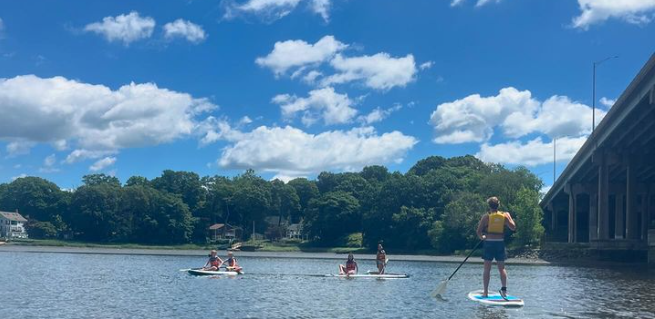
The river and harbor are home to spawning striped bass, mossbunker, herring and smelt as well as precious oyster beds. The shellfish commission pointed out grave concerns with the potential impacts of this development. Also reliant on this ecosystem are nesting Osprey, Bald Eagles, and dozens of other shore birds along Saugatuck River including some endangered, threatened, and special concern bird species. Years ago, no Ospreys could be found here. Bald Eagles have only recently begun to be spotted. Egrets are some of our most skilled fishermen. Their survival relies on the river and harbor remaining uncontaminated.
We strongly feel the potential risks to wildlife and property deserve sufficient inquiry and have not been examined by the developer’s experts, the town’s peers or the conservation commission to any extent reasonable for the scope of this application.
This application does not meet the mission of the Conservation Commission as stated on the town’s website:
“The Westport Conservation Department is committed to preserving and improving the natural beauty and ecological diversity of our town’s inland wetlands and watercourses. Our mission is to ensure that these vital resources remain healthy and vibrant for wildlife and future generations to enjoy.”
This application must be examined and re-examined at every level. The implications of its approval are far too significant to not do everything we can, at every single turn to ensure our quality of life and the quality of our water stays clean.
The alliance and it allies number over 3000 residents committed to ensuring this application is significantly altered to ensure Saugatuck village and the river are not ruined forever.
3 – Procedure and Timing of Reviews
We are disappointed that the RTM moderator, whose district includes shoreline homes in Compo Beach that could be impacted, has put off scheduling a meeting of the RTM until the last week in September to take up these concerns. This is almost 3 months after receiving our petitions and during the Jewish High Holidays when many residents are away or busy with family events, precluding them from involvement. It is also only 10 days before time expires to take up this matter. This is not acceptable. We urge the RTM moderator for an earlier date.
Before the RTM meets, the Environmental Committee and potentially Public Works and Health and Human Services will likely be tasked to meet and report to the RTM with recommendations. We urge the Chairs of these committees to schedule their meetings at the earliest dates possible, for example, mid-August.
As stated above, these two rulings were rushed through to meet time constraints of the developer. It would be highly irresponsible for the same thing to occur with these reviews. The timing of these meetings will not provide adequate time to examine these complicated issues.
With only 4 months to go until elections, this is the moment for RTM’s to speak up and be counted. Voters are counting on you to ensure this process is transparent, comprehensive and given sufficient time for thoughtful evaluation.








I appreciate the work the Westport Planning and Zoning committee is putting into reviewing the Hamlet project. I cannot imagine the hours it has taken to review the developers’ plans and understand all of the potential impacts it will have on the Saugatuck area of Westport. I am also extremely grateful that the Alliance for Saugatuck has also spent hours reviewing the plans, participating in the meetings, and ensuring all areas of impact are getting proper focus and not being overlooked. There is a lot of information. For any Westport resident, and especially those that are in the Saugatuck area regularly for their daily commute on Metro-North or on I-95, I highly recommend you take the time to watch the most recent Planning and Zoning meeting where the Hamlet was discussed. It is several hours long but information well worth hearing. I have copied the link here in case you would like to watch and learn what may happen to the area, so you are aware – https://play.champds.com/westportct/event/883
In this most recent session, the committee went through the developer’s proposal and reviewed areas that did not meet P&Z requirements and would need to be addressed by the developers. It was very thorough however I do agree with the Alliance that there were still topics left out regarding environmental impact. In particular, I would like to echo the Alliance’s concerns regarding several key environmental and procedural issues. These include the potential for groundwater contamination that could affect the Saugatuck River and Long Island Sound, as well as the impact of light and noise pollution on local biodiversity and the quality of life for nearby residents. Additionally, there are valid concerns about the procedural process, including the timing of approvals and the absence of final documentation from the Department of Energy and Environmental Protection (DEEP). These are critical aspects that deserve further scrutiny and public discussion. Especially when I hear that Compo Beach is closed yet again for swimming…..
Thank you to the Alliance for keeping these topics top of mind. Thank you for the P&Z team for making sure Westport continues to be a town for all of us.
This is perhaps the most impactful development to come to Westport, with far reaching negative consequences on our quality of life, the vigor of river habitat, the health of our waterways, and the sanity of commuters trying to catch a train.
Why on God’s great Earth would the RTM not schedule this review as soon as possible — especially while the matter is still open at the Planning and Zoning Commission.
There is a time limit on deliberating this petition. If the RTM can zoom through a $100M tax increase in less than 10 days, you would think they could schedule a one-agenda-item special meeting in the next four weeks.
Get this done, RTM. This is the opportunity to redeem yourselves for not overturning the lousy text amendment in the first place. Didn’t some of you just say, “It’s all about Westport?” Put this at the top of your list.
Get this done.