
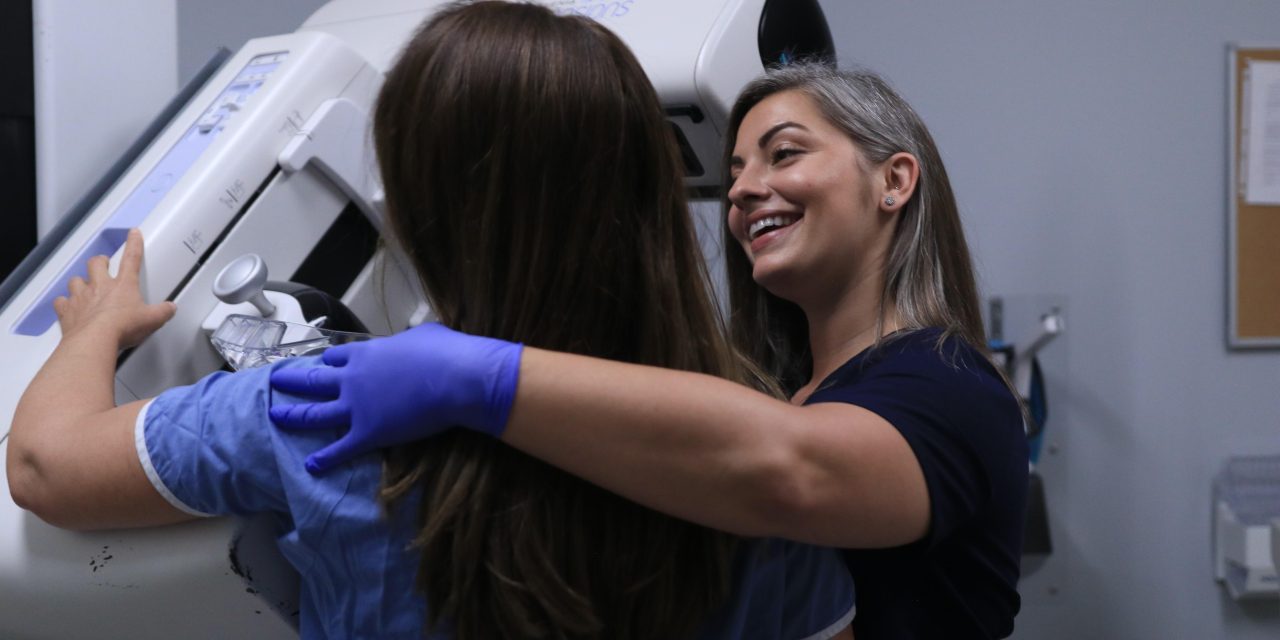
By Jeanne Capasse, MD, Breast Surgery, Norwalk Hospital, part of Nuvance Health

You may have seen the recent news about the breast cancer screening guidelines. My colleagues and I at Norwalk Hospital want to help you and your neighbors understand what they mean and what guidelines to follow for optimal breast health.
It is good news for American women that the U.S. Preventive Services Task Force (USPSTF) has updated the breast cancer screening guidelines. They now recommend screening mammography starting at age 40 for women at average risk of breast cancer.
The American Society of Breast Surgeons and the American College of Radiology have recommended this for several years. Now, the USPSTF is aligned with the starting age for screening mammograms.
However, the USPSTF guidelines recommend biennial (every other year) mammography. They also do not include recommendations for additional screenings in women with dense breast tissue, such as with breast ultrasound or MRI. The above organizations recommend annual screening mammograms and additional imaging for women with dense breasts or who are at high risk for breast cancer.
Breast cancer is the most common cancer in American women, and we are seeing an increase in women diagnosed under the age of 50. This increase in breast cancer in younger women has been disproportionately seen in Black and Hispanic women, who also tend to have worse outcomes. This may be due to late-stage diagnoses because younger women are not having screenings yet. Triple-negative breast cancer, an aggressive type of breast cancer, is also more common in Black women; early detection is critical to start treatment before it spreads.
Annual screening mammograms are proven to be safe and effective. Studies of screening mammography in women aged 40 to 75 show a greater reduction in mortality when they have annual screening (35.2%) versus biennial (28.4%). The USPSTF cites the harms of mammography as the reason they recommend biennial studies. They cite that one of these harms is false positives, resulting in additional testing or biopsies for benign changes. From my decades of experience as a breast surgeon, I can tell you that most women would rather have a false positive result than a late-stage diagnosis that is more difficult to treat.

Fortunately, deaths from breast cancer have been steadily decreasing due to early detection with screenings and improved treatment options. Unfortunately, the mortality in the youngest age group (under 50) is flat. Earlier diagnosis is key to moving the needle on this statistic.
Dense breast tissue is defined as 50% or greater glandular breast tissue compared to fat in the breast. Mammography is less sensitive in women with dense tissue and additional screening studies such as ultrasound and breast MRI can improve the detection rate in women with dense breast tissue. We are fortunate to live in Connecticut and have a Dense Tissue law. This law requires women to be informed of their breast density and health insurance companies to cover additional screening in women with dense tissue.
The purpose of screenings is to detect breast cancer early and before it has spread beyond the breast. The medical community continues to study new screening modalities and breast cancer treatments that hopefully will improve early detection rates and further improve outcomes. Until these are found, our best defense against death from breast cancer is annual screening mammograms starting at age 40 and supplemental screening for women with dense breast tissue.
We want it to be as convenient as possible to get your breast imaging. At Nuvance Health, you can schedule a screening mammogram online without a doctor’s order. Find a breast imaging location near you, including Nuvance Health Smilow Breast Center at iPark, part of Norwalk Hospital. If you need additional imaging or a breast cancer risk assessment, speak with your primary care provider or gynecologist. If you have a breast concern, you can always reach out to me or my partner, Dr. Mandy Greenberg, at Breast Surgery at the Smilow Breast Center, part of Norwalk Hospital. We are here for you!
Note: Nuvance Health has sponsored this content for Westport Journal. Nuvance Health is a system of nonprofit hospitals, medical practices and outpatient healthcare services throughout the Hudson Valley and western Connecticut, including nearby Norwalk Hospital. Visit nuvancehealth.org for more information.
Sources:
- https://www.acog.org/clinical/clinical-guidance/practice-bulletin/articles/2017/07/breast-cancer-risk-assessment-and-screening-in-average-risk-women
- https://www.breastsurgeons.org/docs/statements/Position-Statement-on-Screening-Mammography.pdf
- https://www.cancer.org/cancer/types/breast-cancer/screening-tests-and-early-detection/american-cancer-society-recommendations-for-the-early-detection-of-breast-cancer.html







Recent Comments