

By Gretchen Webster
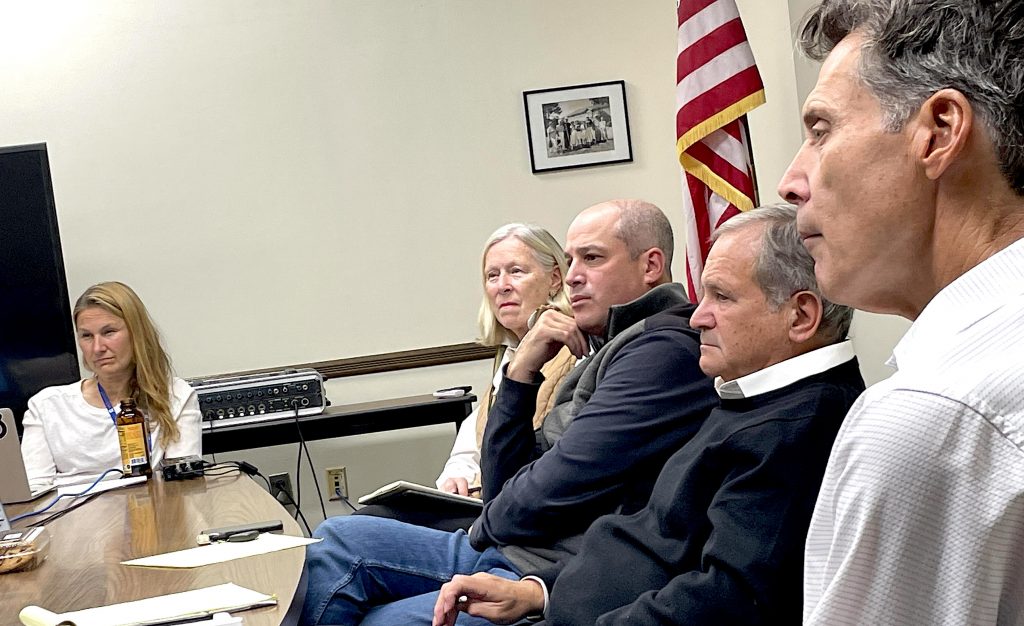
WESTPORT — Five men, representing a “Who’s Who” of past Westport school building projects, joined a special Board of Finance meeting Monday to advise the panel on how to build schools successfully.
The purpose of the meeting was, “to gather some information from our former leaders,” finance member Brian Stern said at the start of the meeting.
The Long Lots Elementary School construction project, estimated to have a price tag of between $80 million to $102 million, is next on the agenda for the town — an undertaking Stern called one of the most important financial decisions the town will make over the next two decades at a meeting last August.
The Boards of Finance and Education have met several times this year to talk about major expenditures the town will face in coming years — and the potential for a big jump in taxes.
Learning from the successes — and mistakes — of earlier building projects could help the town meet its future obligations, current finance members agreed.
“We know we’re going to spend a lot of money on our town and schools. You guys were here in the 1988-2008 era when we did a massive school [building and renovating] program,” Stern said as the meeting opened.
In the end, the five alumni of prior building projects, some now in their 80s, gave what the finance members called invaluable advice regarding the long and sometimes arduous task of building or renovating the town’s schools.
Participants agreed that Westport, and today’s culture, are different now in many respects, and that such changes must be considered in planning today’s building projects.
For instance, Jeffrey Mayer, a former chairman of the Board of Finance, explained that when he was involved with school building projects, concerns about air quality meant “we had to open all the [school] windows.”
“Then when Columbine [school massacre in 1999] happened, we had to bolt all the windows shut,” Steven Halstead, former chairman of the Board of Education, responded.
“What’s different now from what we were looking at then? — Sandy Hook,” said Michael Rea, former chairman of the Bedford Middle School Building Committee, and of the Parks and Recreation Commission.
“All of a sudden you’re concerned about egress and security systems,” he said, pointing out that no one can really predict what changes might have to be made to school buildings or other town projects as a result of unforeseen events or issues.
Each man speaking Monday had particular advice on how to build new schools:
Carl Leaman, a former member of the Board of Selectmen:
- The town must work hard to maintain its triple-A credit rating throughout a project.
- It’s important to “get the general public ready to accept what we’re going to do.”
- The town’s chief elected official is a critical part of the process and should attend building committee meetings and work with residents to support the project.
- Regular maintenance and replacement budgets for equipment and other projects in town, such as road paving, should be maintained at necessary levels. “Don’t cut it or you’ll have to catch up.”
- Don’t routinely take the lowest bidder on a project. “Quality counts.”
Michael Rea, chairman of the Bedford Middle School Building Committee, former chairman of the Parks and Recreation Commission:
- Formulate a districtwide master plan at the start of a project.
- Consider if redistricting will be necessitated in the future.
- Think about energy-consumption and air-quality issues, as well as mold problems.
- Consider that most school projects in Connecticut will cost $100 million or more.
- Consider supply-chain issues.
- Plan a detailed schedule for a project
- Research before starting a project: traffic studies, test drilling, archaeological studies and more.
- Hire an accounting firm.
- Every part of a project should be put out to bid, and every project should be audited.
- Lay out a clear line of communication between all town boards and commissions involved in the project.
Steven Halstead, former Board of Education chairman:
- Projections of school populations are important when planning a project.
- Hire a project manager at the start of the planning stage. “That role is very critical.”
- Consider the educational philosophy now and in the future, and future changes such as the changing needs for technology.
- Remember that what makes Westport special is its school district. Consider, “What we need to do to have it be the best that it could be.”
Jeffrey Mayer, former chairman of the Board of Finance:
- Building committees must include professionals in construction.
- The composition of the building committee is crucial.
- Building committee members must be willing to work hard, sometimes meeting as often as weekly.
- “Everything starts with the educational program. What teachers and students need must be considered first in school building projects.
- A lot can be learned from other school districts and their building projects.
- The Representative Town Meeting must be involved early in the process.
- Future maintenance costs of a building must be part of the initial budget.
- Get opposition to a project out in the open from the beginning. “Open it up to public comment.”
- Have a contingency fund of 15 percent for everything.
Daniel Kail, former chairman of the Staples High School Building Committee, the Library Building Committee and the Westport Country Playhouse Building Committee:
- Look at the zoning for each site. A school project “needs an educational zone.”
- Conduct numerous meetings with the public about a project.
- Get neighbors of a project involved sooner, instead of later.
- Do not defer regular maintenance around town. “Pay me now or pay me a whole lot more later.”
- Hire an architect who has built schools before. They have knowledge of funding programs, such as federal or other grants.
Freelance writer Gretchen Webster, a Fairfield County journalist and journalism teacher for many years, was editor of the Fairfield Minuteman newspaper for 10 years and currently teaches journalism at Southern Connecticut State University.









Recent Comments