
By Linda Conner Lambeck
WESTPORT–A program that has helped district students with complex mental health issues regulate their emotions and stay in school since 2021 is being expanded into the elementary school.
Effective School Solutions costs the district $616,000 this fiscal year, with $48,200 coming from a grant and the rest, the general fund. It will cost an additional $215,000 next year when elementary school services are included, according to Assistant Superintendent Michael Rizzo.
Rizzo said that the program cost is offset by a savings of at least $205,000 by keeping the students being served from being placed in costly out-of-district placements.
“That is looking at it conservatively,” said Rizzo of the avoided costs. When transportation and actual tuition costs are factored in, Rizzo told the board at a meeting last week that the savings are probably higher.
Already in place at Staples High School and the middle schools, the hope is that students helped by ESS at younger ages may be able to exit it sooner.
The 2026-27 budget recommended by Schools Superintendent Thomas Scarice also includes two in-house Board-Certified Behavioral Analyst positions–at a cost of $176,000.
Rizzo said that while Effective School Solutions (ESS) addresses the social, emotional, and therapeutic needs of students, the BCBA’s focus is on students who have behavioral challenges and help staff ensure a consistent, proactive approach to behavior across classrooms.
The proposed additions, Rizzo told the school board at a meeting last week, will allow other district counselors, social workers and school psychologists to focus on the student body at large.
Before the start of the school year, Scarice warned the board that the district was trying to address a rising number of elementary school students with “dysregulation issues,” kids who have a hard time controlling their emotions and behavior. He didn’t say how many.
It was something Scarice said is not unique to Westport.
The district brought the New Jersey-based Effective School Solutions into Staples in the 2021-22 school year. The middle school was added in 2023-24.
The program is designed this year to support up to 35 middle and high school students, providing intensive therapeutic support, and individual, group and family counseling.
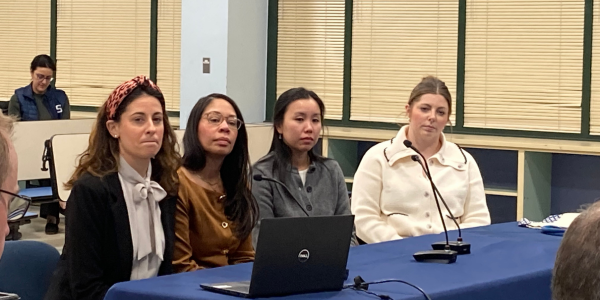
Allison Whitman, a regional director for ESS, told the school board last week that it considers Westport its gold standard of programs and brings other districts considering its services to Westport to see how the program operates.
So far this year, Whitman said ESS has delivered 2,183 therapeutic services, averaging three interactions per student participant each week.
Success is measured in grades, attendance and discipline.
The board was told that at the high school, 90 percent of academically struggling students have better grades, 96 percent of students with chronic absenteeism (meaning they are absent at least 10 percent of the time) show up at school more often, and 100 percent showed improvement in behavior.
The program is also said to have helped prevent or return six students from out of district placements.
This year, the ESS clinicians embedded in the district have also been offering professional development to staff to help students regulate their emotions.
Parents are satisfied, added Maribel Nierenberg, also of ESS. Some 88 percent of those who completed a survey of the program reported improvements in their child’s attendance. In addition, 75 percent of parents reported their child showed relief from mental health conditions and improved self-esteem.
“These are kids who normally are spiraling,” Scarice told the board.
At Bedford and Coleytown Middle Schools, 14 students have been served thus far and similar results are occurring in terms of attendance, grades and discipline.
Board Chair Lee Goldstein asked what the program will look like at the elementary level.
The plan is to house the program in one of the district’s five elementary schools and to relocate students who receive ESS services to that school.
The ability to provide services in the moment is what helps make a difference, the board was told.
“My gut is when families realize the level of support and value it will outweigh the negative of moving to another school,” Rizzo said, adding, “I don’t foresee a situation where (a child) would be forced to leave their home school.”
It is also anticipated the program will start small with just a handful of students.






I read the recent article about Westport’s plan to expand the Effective School Solutions (ESS) mental health program into our elementary schools. While I appreciate the district’s commitment to supporting students’ emotional well-being, I have some concerns about introducing clinical interventions at such a young age.
Elementary-aged children are still developing the cognitive and emotional skills needed to understand complex mental health concepts. Programs that are not carefully tailored to this developmental stage risk confusing children or introducing material they may not be ready to process. Play-based and story-driven approaches are most effective, but even these require careful oversight to avoid unintended effects.
Parental involvement is also essential. Families must be fully informed about the nature of services, how children are selected, and what participation entails. Without clear communication and consent, parents may feel excluded from critical decisions about their children’s care.
I am also concerned about the potential for stigma. Even well-intentioned programs can inadvertently single out children, making them feel different from their peers. For mental health support to be truly effective, it must be integrated seamlessly into the school environment and coordinated closely with teachers, so children receive consistent guidance without feeling labeled or isolated.
The quality of implementation is critical. Expanding a program too quickly without sufficient staff training and oversight could compromise its effectiveness and inadvertently create more challenges than it solves.
I strongly support efforts to help students manage emotional and behavioral challenges, but it is vital that such programs be introduced thoughtfully, with age-appropriate methods, clear parental communication, and careful attention to the potential unintended consequences. Done right, early mental health support can be invaluable—but it must be implemented responsibly to truly benefit our children.
It is important to note that the survey results are based on 6 responses out of 20 surveys distributed, as reflected on page 54 of the presentation that was shared during the Board of Ed meeting. One board member questioned whether the surveys results were sufficient.
It should be concerning that the article describes the program’s success in terms of grades, attendance, and discipline, yet does not note that parent satisfaction data appears to be based on a limited number of survey responses, believed to be only 6 out of 20 families. With such a small sample, it may be difficult to draw meaningful conclusions, and broader family input should be considered before the program is expanded. This is especially important for younger students, whose needs should first be addressed in their classrooms at their home schools before relocation is considered. Supporting classrooms, addressing the root causes of behavioral challenges, and ensuring teachers and students have the resources they need should come first.
I am happy that there was no ESS for our son in elementary school. Instead of ESS, the service was provided by the school psychologist, who was experienced and highly qualified. In middle school, our son does not have much access to the school psychologist, who also seems very well qualified, because he gets the service from ESS. Their therapists are young and don’t stick around too long. ESS seem to have a hard time hiring and retaining employees that are better than the school’s own employees. I understand that it saves money for the town, but it comes at the cost of an inferior service. I am not one of the families that was asked to take the survey, but here you have it.