
By Kerri Williams
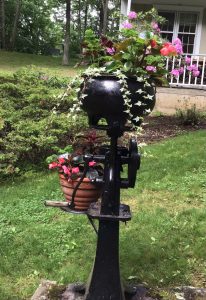
An antique cream separator makes an interesting container for plants, including begonia, coleus, ivy and parsley.
Editor’s note: This is an occasional series of columns by Journal reporter Kerri Williams, exploring her journey with backyard gardening, offering tips for success, and highlighting some of the horticultural beauty found right here in Westport.
Do you have the gardening itch, but you are not ready to start digging a new bed in your backyard? You may want to consider planting your favorite flowers in containers.
Every spring about this time, I get excited to take out my urns and pots to create vignettes of potted plants around the patio and yard. Whether you place one flower pot on the front porch or many around your landscape, you are a container gardener.
For Maybette Waldron, president of the Greens Farms Garden Club, the first step is to take stock of where you want to place your containers.
Each spring, Maybette places pots on the L-shaped porch of her condo. In her mind, she maps out where she will put containers and takes note of whether each location is in full sun, shade, or some combination of the two. That way, she can purchase plants that will fit in each location.
Getting started doesn’t have to be expensive
Another first step is gathering containers. For someone starting out, it could be expensive to purchase pots, so Maybette encourages gardeners to get creative. She suggests yard sales and shops like such as Goodwill as good places to find pots that other people are getting rid of. It’s a great way to give a new home to something that might otherwise be thrown away.
You can also think outside the box by creating pots out of items that were not originally intended for planting. Metal containers or old bowls can make interesting planters. Just remember that any of these improvised pots should contain a hole for drainage.
One of my favorite planters is an old-fashioned, cast iron cream separator that was originally used on a dairy farm. My mother-in-law had the idea of making this antique into a planter. Through the years, I have received many compliments on how it looks when filled with blooming begonias and other plants.

Begonias, ferns, and hydrangeas are perfect for containers. Photo taken at Gilberties Garden Center in Westport.
Maybette also gets creative by placing red, swirly sticks in some of her pots and by using mini lights to decorate them.
“It’s like an art,” she said. “Like making a painting.”
Picking tenants for your planters
The next step is to decide which type of plants you would like to feature in your containers. Traditional flowering plants, such as geraniums, begonias, and hydrangeas, are great choices.
Others may prefer to use only native plants in their pots, such as coneflower, ferns, and foxglove. These have the added benefit of attracting birds and pollinators to your yard.
One of my mentors in container gardening is my friend Kim, who took me plant shopping at several Connecticut nurseries one spring. Kim taught me to purchase a variety of plants and arrange them inside a container before planting them. It’s easy to move the plants around to create the arrangement you like most. This works especially well for planting in a large pot or urn.
A traditional way of arranging plants in a container uses the “Thriller, Filler, and Spiller” method, a phrase coined by Steve Silk, a Farmington resident and contributor to Fine Gardening. In this method, each pot contains a dominant and taller “thriller” plant, smaller plants with interesting foliage as “fillers” and plants that trail over the edge of the container, such as ivies, lobelia, or alyssum, as “spillers.” The result is an interesting container that looks pretty on any porch or patio.
When planting in pots, be sure to fill each container with enough plants to have a good display but also allow some
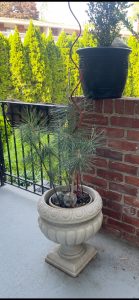
Maybette Waldron places red swirly stakes in her containers to add interest.
room for them to grow during the summer. Planting in good, organic soil is a must, followed by watering and fertilizing.
Container plants do require some attention. They dry out faster than those planted in the ground, so they need to be watered regularly. The best times for watering are in the morning and evening, not during the heat of the day. Deadheading, or picking off the flowers that have gone by, is important to encourage new blooms.
One of the best things about planting in pots is that most of them are easily moved. If your potted plants are not thriving, simply try a sunnier or shadier location.
Even if you have never gardened before, planting a container is a fun way to bring some color and fun to your front step and yard. So, I hope this inspires you to try cultivating in containers this summer.
My next column will feature planting vegetables, herbs, and even shrubs and trees in containers.
Kerri Williams is a freelance writer who has worked in journalism for years, including as a reporter for the Norwalk Hour and managing editor of the Norwalk Citizen-News. If you have pictures or ideas to share, please send her an email at cultivatingwithkerri@gmail.com.




Recent Comments