
WESTPORT–The town’s annual literary prize finalists are set.
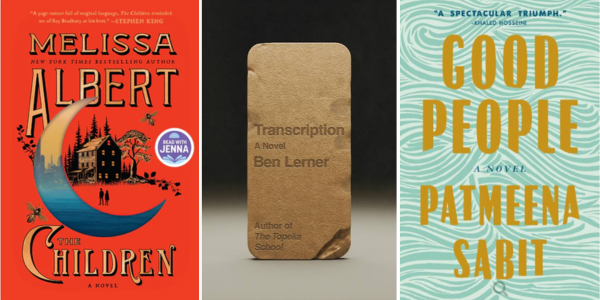
The three novels vying for the 2006 Westport Prize for Literature are:
- “Transcription” by Ben Lerner.
- “The Children” by Melissa Albert.
- “Good People” by Patmeena Sabit.
The winner, who takes home a $10,000 prize, is expected to be announced in late summer or early fall and will be honored at The Westport Library on Nov. 12.
This year’s winner will be the fourth recipient of the prize that was inaugurated in 2023, when it was awarded to Zadie Smith for “The Fraud.” Alejandro Puyana received the 2024 prize for his debut novel “Freedom is a Feast,” and Olufunke Grace Bankole won last year for her debut novel “The Edge of Water.”
“Every year I’m struck by the caliber of submissions this prize attracts,” said Candice Savin, chair of the Westport Prize for Literature steering committee. “This year’s finalists are proof that the prize continues to draw extraordinary literary talent, and I know this November’s conversation at The Westport Library will be a memorable one.”
The jurors for 2026 are playwright and author Tommy Greenwald, book blogger and aggregator Suzanne Leopold, publishing industry veteran Erica Melnichok, “The Lifeboat” author Charlotte Rogan and freelance editor Stephanie Klose.
Here are the finalists at a glance:
“Transcription” by Ben Lerner
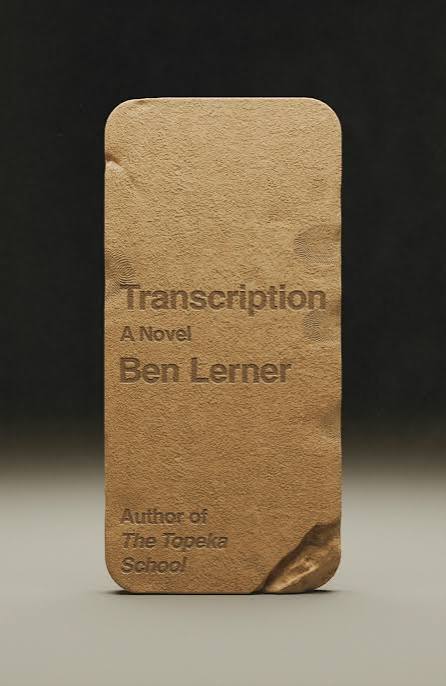
In “Transcription,” the narrator has the opportunity to conduct what will be the final published interview with Thomas, his 90-year-old mentor, father of his college friend Max and a giant in the arts – without the benefit of a recording device.
“What unfolds from this dreamlike circumstance is the unforgettable story of the triangle formed by Thomas, Max, and the narrator, and an exploration of fathers and sons, male friendship and rivalry, and the challenges of parenting in a burning world,” according to the book’s promotional material.
Lerner is the author of eight previous books of poetry and prose, as well as several collaborations with visual artists. A recipient of Fulbright, MacArthur, and Guggenheim fellowships, he has been a finalist for the National Book Award for Poetry and the Pulitzer Prize for Fiction, among other honors, according to a press release from the Westport Library. He is a Distinguished Professor of English at Brooklyn College.
“’Transcription’ is my attempt to think about what literature can capture that our phones and other recording devices miss,” the author said. “It is, among many other things, about the power of the book as a handheld device.”
“The Children” by Melissa Albert
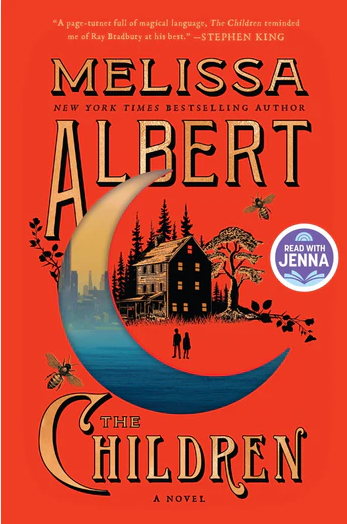
Guinevere Sharpe and her brother, Ennis, grow up neglected and near-feral in an isolated Vermont farmhouse while their mother becomes famous writing fantasy books that depict their childhoods as enchanting and magical. In adulthood, Guinevere is promoting a ghost-written memoir when her now-estranged brother, an artist, returns, bringing back a painful past.
“’The Children’ is wise to the mythic weight childhood memories gather over time, and the way our most beloved stories grow up with us,” Albert said. “It’s for anyone who’s ever revisited an old favorite and found its pages cast in a darker light, the line separating magic from reality blurring as we discover the books that once comforted us carry shadows of their own.”
Albert is the New York Times and indie bestselling author of “The Bad Ones,” “Our Crooked Hearts,” and the Hazel Wood series. Her work has been translated into more than 20 languages and included in the New York Times list of Notable Children’s Books. “The Children” is her first adult novel.
“Good People” by Patmeena Sabit
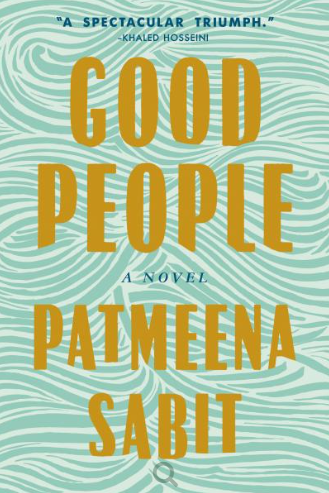
Told through a kaleidoscope of perspectives, “Good People” is the story of the Sharaf family, who arrived in this country as refugees and, after years of struggle, appear prosperous and happy – until a private tragedy thrusts the family into the public eye.
“I wrote the book as a way of exploring, in a nuanced way, the dynamics within a community that could give rise to such a crime, while also exploring the sensationalist media coverage and larger Islamophobic discourse that a discussion of such crimes give rise to,” Sabit said. “The novel is also informed by the Afghan experience of exile from a country where for over 40 years the only constant has been war and bloodshed, and by what it means to be Muslim in the West in a post-9/11 world.”
Sabit was born in Kabul a few years after the Soviet invasion of Afghanistan. When she was a month old, her family fled the conflict and became refugees in Pakistan, joining the millions of other Afghans who had sought refuge there. They later moved to the United States, where she grew up in Virginia. She currently lives in Toronto.



Recent Comments