
By Jarret Liotta
WESTPORT — Try as they might, opponents of putting $1.3 million in ARPA money into the Burying Hill Beach groin were ultimately washed away.
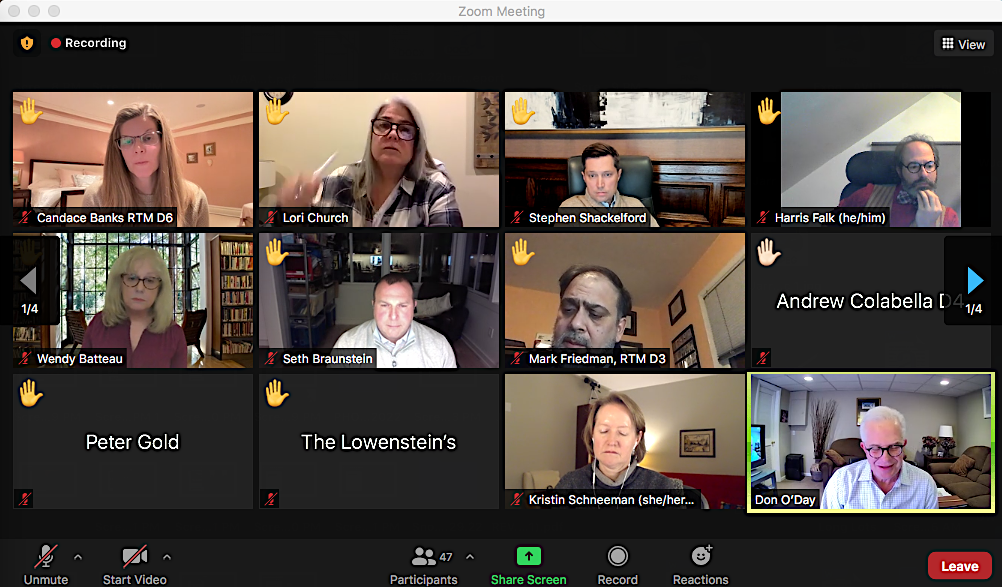
In a vote that took place after midnight on Wednesday morning, the Representative Town Meeting voted 30-to-4 to approve the allocation of funds to address the decaying water breaker originally built by the federal government around 1950 on the east side of New Creek.
Sometimes Testy Debate
Prior to the conclusion of a lengthy and sometimes testy debate among members, however, a push was made to table the vote entirely in the hopes of having the project instead funded through a bond.
“I do not, by any stretch of the imagination, see how this can be called amenable to the ARPA funding … I absolutely cannot support this,” said member Jessica Bram, District 6.
She was one of only four members who stood by that conviction, along with Lori Church, District 9, Mark Friedman, District 3, and Louis Mall, District 2.
Prior to that, a failed vote to postpone the funding for a month until the Board of Finance might have potentially approved a bond, split the legislative body 15 to 19.
“To be clear, the project has to happen (but) I support bonding the project,” said member Stephen Shackelford, District 8, who along with Mall led the push to postpone the vote.

The spirit of the guidelines were a key component for he and other members, who felt that while the project officially fit criteria for the funding, it was not a suitable use of money aimed at helping people with recovery from the pandemic.
“When I think about the people who’ve been hardest hit by COVID … we may not be allocating to projects that may have a more direct impact on that community, that’s more consistent with the spirit of the funds,” Friedman said.
Mall argued that the project should be done in tandem with the state, noting that the adjacent groin across New Creek, on the east side of Sherwood Island State Park, likewise needed repair.
“Why aren’t we coordinating with the state?” he said, also noting that expanding the project to include dredging the creek could alleviate flooding on the adjacent road.
“I think that this is a rushed project,” he said.
Delay Would Increase Cost
Acknowledging the desire to rush, Peter Ratkiewich, director of the Department of Public Works, said any delay — even the month required to get Board of Finance approval to bond the project — would increase costs.
“I believe that the total cost of this would go from 1.3 to maybe like 1.6, or maybe further north of that,” he said.
He said permits, which would soon be expiring, were already in place, and that bids were expected in very soon based on a planned project that is scheduled to conclude by the end of June before the beach becomes active with summer visitors.
“It doesn’t make sense not to do it,” Ratkiewich said. “This is infrastructure … It is a structure that’s protecting one of our best assets … and it’s in disrepair.”
Art Schoeller, president of the Greens Farms Association, voiced support for the allocation, citing the longstanding decay of the groin and delays in a remedy.

“I’m concerned about the delay this would incur,” he said. “The town does not work that fast.”
While there were initial questions about the validity of the project in relation to federal requirements for the spending of the $8.4 million the town has been promised in ARPA money, Eileen Lavigne Flug, assistant town attorney, put them to rest.
She said that the ARPA rules included four categories that the funding could fall into, including the third category that involved a provision of governmental services.
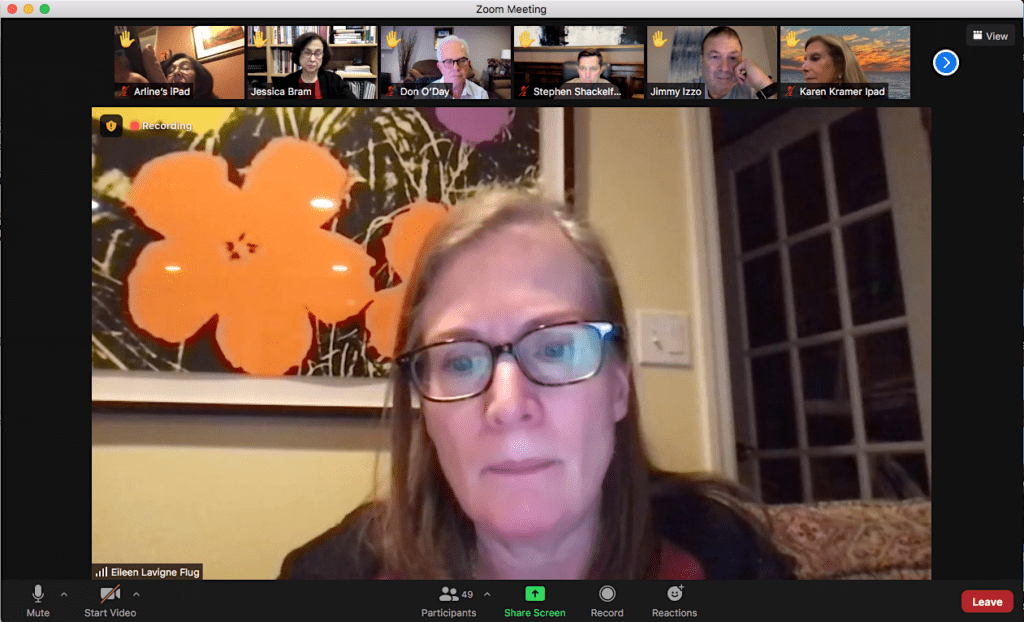
“Every community is assumed to have suffered $10 million in reduced revenues,” she said, according to the federal guidelines. Thus, as Westport is receiving less than that, the town can essentially categorize any town-related project under that umbrella, which includes infrastructure, modernization, and maintenance of various kinds.
“We saw this money as an opportunity to accelerate priorities that were already exhibited in our five-year forecast, and to do it in a conservative way, to do it with less borrowing,” First Selectwoman Jennifer Tooker said.








Recent Comments